
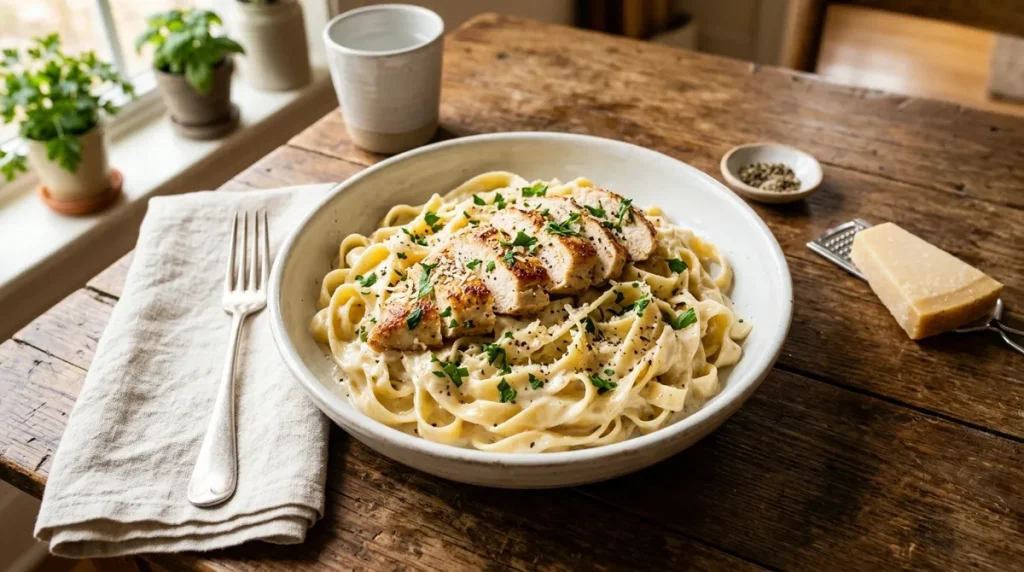
Gluten-free chicken Alfredo is one of the most satisfying meals you can make at home — creamy, rich, and ready in about 30 minutes. The best part? Nobody at your table will know it’s gluten-free.
When I first went gluten-free, pasta night felt like a casualty. My boys loved Alfredo, and the idea of giving that up on top of everything else was honestly heartbreaking. It took me a few tries, but I figured out that the secret isn’t in some complicated flour substitute — it’s in using the right GF pasta and building the sauce from scratch.
Traditional Alfredo sauce is naturally gluten-free (butter, cream, Parmesan). The pasta is the only swap you need to make. Once I nailed that part, this became one of our most-requested weeknight dinners.
In this post, I’ll share my family’s go-to gluten-free chicken Alfredo recipe, plus tips for the best pasta brands, how to avoid a gluey sauce, and what to watch out for on labels.
Key Takeaways
- Traditional Alfredo sauce (butter, heavy cream, Parmesan) is naturally gluten-free — the only swap needed is a certified GF pasta.
- You’ll have dinner on the table in 30 minutes or less with simple, whole ingredients.
- Choosing the right GF pasta brand makes a big difference in texture — rice-based or brown rice/corn blends hold up best.
- Homemade Alfredo sauce tastes far better than jarred versions and takes only 10 minutes to make.
- This recipe is kid-approved — Austin and Alex request it almost every week.
💚 Why You’ll Love This Recipe
- Ready in 30 minutes — perfect for busy weeknights
- Uses one pan for the chicken and one pot for the pasta and sauce
- Rich, creamy homemade Alfredo sauce with no flour required
- Family-friendly — even gluten-eating guests won’t notice the difference
- Easily customizable with veggies, shrimp, or different pasta shapes
What Makes a Great Gluten-Free Alfredo
The magic of a classic Alfredo sauce is that it’s built on fat and dairy — no flour, no roux, no thickener. Butter, heavy cream, and freshly grated Parmesan are all you need. That means the sauce itself has always been gluten-free.
The challenge is getting the sauce silky instead of clumpy. The trick I learned is to keep the heat low when you add the Parmesan and to grate it yourself rather than using pre-shredded. Pre-shredded cheese contains anti-caking agents that can make your sauce grainy.
The pasta is the only real substitution here. I always reach for a certified gluten-free pasta made from rice flour or a brown rice and corn blend. These hold their shape and don’t turn to mush when tossed in a warm, creamy sauce.
The Best Gluten-Free Pasta for Alfredo
Not all GF pasta is created equal. Some brands turn gummy, fall apart, or have a strong aftertaste that clashes with a delicate cream sauce. I’ve tried a lot of them so you don’t have to.
For Alfredo specifically, you want a pasta that holds its shape when tossed and doesn’t clump into a brick as it cools. Fettuccine is the classic choice, but penne and rigatoni work great too — especially for kids who prefer smaller bites.
Made from a corn and rice flour blend, Barilla Gluten Free pasta has the closest texture to traditional pasta I’ve found. It holds up beautifully in Alfredo sauce and doesn’t get gluey. Widely available at mainstream grocery stores and reasonably priced around $2–$3 per box.
Certified gluten-free by GFCO. Clean ingredient label — just brown rice and water. Slightly firmer bite, great for Alfredo. Around $4–$5 per box.
Another GFCO-certified option with a great texture. Takes well to creamy sauces without breaking down. Around $3–$4 per box.
Higher in protein and fiber. Texture is slightly different from traditional pasta, but works well if you want a nutritional boost. Around $3–$4 per box.
Hidden Gluten in Alfredo: What to Watch For
Homemade Alfredo from scratch is naturally gluten-free. The danger is in shortcuts — jarred sauces, restaurant versions, and certain seasoning blends that can harbor hidden gluten.
Always read labels on jarred Alfredo sauces. Some brands thicken their sauce with wheat flour or modified food starch derived from wheat. Even products that look simple on the label can have a “may contain wheat” advisory.
Watch Out for Hidden Gluten In:
- Jarred Alfredo and pasta sauces (check for wheat flour or modified wheat starch)
- Pre-shredded Parmesan (anti-caking agents — opt for a block and grate it yourself)
- Chicken broth or stock (some brands contain malt extract or barley)
- Garlic powder and Italian seasoning blends (check for shared facility warnings)
- Restaurant chicken Alfredo (almost always uses regular pasta — always ask)
- Rotisserie chicken or pre-marinated chicken (may contain gluten in the marinade)
Common Mistakes to Avoid
- Overcooking the GF pasta. Gluten-free pasta goes from al dente to mushy fast. Start checking it 2 minutes before the package says it’s done.
- Using high heat for the Alfredo sauce. High heat causes the sauce to break and the cheese to clump. Keep it on medium-low the whole time.
- Adding cold cream to a hot pan. Let your heavy cream come to room temperature before adding it to the pan. This helps emulsification.
- Using pre-grated Parmesan from a green can. The powdery stuff doesn’t melt into a sauce. Buy a wedge and grate it yourself — it makes a real difference.
- Skipping the pasta water. GF pasta releases less starch than regular pasta, so save that cooking water. A splash or two helps bind the sauce to the noodles.
- Not drying the chicken before searing. Patting the chicken dry before it goes in the pan gives you a golden crust instead of steam-cooked chicken.
Gluten-Free Chicken Alfredo Recipe
This is the version my family makes on repeat. It’s simple, creamy, and comes together in about 30 minutes from start to finish.
Ingredients
- 12 oz gluten-free fettuccine (Barilla Gluten Free or Jovial Brown Rice Fettuccine)
- 1.5 lbs boneless, skinless chicken breasts
- 2 tablespoons olive oil
- Salt and black pepper to taste
- 1 teaspoon garlic powder (certified GF)
- 1 teaspoon Italian seasoning (certified GF)
- 4 tablespoons unsalted butter
- 4 cloves garlic, minced
- 2 cups heavy cream
- 1.5 cups freshly grated Parmesan cheese
- ¼ teaspoon ground nutmeg (optional, but traditional)
- Salt and white pepper to taste
- Fresh parsley for garnish (optional)
Instructions
- Cook the pasta. Bring a large pot of salted water to a boil. Cook GF fettuccine according to package directions, but start checking 2 minutes early. Reserve ½ cup pasta water before draining. Drain and toss lightly with a drizzle of olive oil to prevent sticking.
- Season and sear the chicken. Pat chicken breasts dry with paper towels. Season both sides with salt, pepper, garlic powder, and Italian seasoning. Heat olive oil in a large skillet over medium-high heat. Cook chicken 6–7 minutes per side until golden and cooked through (internal temp 165°F). Transfer to a cutting board and let rest 5 minutes, then slice.
- Build the Alfredo sauce. In the same skillet, reduce heat to medium-low. Add butter and minced garlic. Cook, stirring, for 1–2 minutes until fragrant — don’t let the garlic brown. Pour in the heavy cream and stir to combine. Let it simmer gently for 3–4 minutes.
- Add the Parmesan. Remove the pan from heat and stir in the grated Parmesan cheese a handful at a time, stirring between additions. Add nutmeg if using. Season with salt and white pepper to taste. If the sauce is too thick, add pasta water a tablespoon at a time until you reach your desired consistency.
- Combine and serve. Add the drained pasta to the sauce and toss gently to coat. Plate the pasta, top with sliced chicken, garnish with fresh parsley, and serve immediately.
👩🍳 Pro Tips
- Slice chicken against the grain for the most tender bites — this matters more than people think.
- Pull the pasta off heat just before it’s done (it will finish cooking in the warm sauce).
- Freshly grated Parmesan from a block — not a bag or a can — is the single biggest upgrade you can make to this dish.
- If the sauce sits too long before serving, it will thicken. Keep that reserved pasta water nearby and add a splash to loosen it up.
🔄 Easy Substitutions
- Heavy cream → Half-and-half: A lighter option, though the sauce will be thinner. Add an extra tablespoon of butter to compensate.
- Chicken → Shrimp: Sauté shrimp in butter for 2 minutes per side. Faster and equally delicious.
- Fettuccine → Penne GF pasta: Any certified GF pasta shape works — penne or rigatoni are great for kids.
- Fresh garlic → Garlic powder: Use ½ teaspoon garlic powder in the sauce if you’re out of fresh cloves.
- Parmesan → Pecorino Romano: Sharper and saltier — use slightly less and adjust salt accordingly.
- Add veggies → Broccoli, peas, spinach: Stir in steamed broccoli or baby spinach right before serving to boost nutrition.
📦 Storage & Reheating
- Refrigerator: Store in an airtight container for up to 3 days. The sauce will thicken as it cools.
- Freezer: Not recommended — cream-based sauces tend to separate when frozen and thawed.
- Reheat: Warm gently in a skillet over low heat with a splash of milk or cream, stirring frequently. Avoid the microwave if possible — it can make the sauce grainy.
Frequently Asked Questions
Traditional homemade Alfredo sauce made with butter, heavy cream, and Parmesan cheese is naturally gluten-free. The risk comes with jarred or restaurant versions, which may use wheat flour as a thickener. Always check labels on store-bought sauces and ask about ingredients when dining out.
For Alfredo, you want a GF pasta that holds its shape and doesn’t get gluey in a creamy sauce. Barilla Gluten Free fettuccine (corn and rice blend) and Jovial Brown Rice Fettuccine are both excellent choices. Look for GFCO-certified options if you have celiac disease.
Clumpy Alfredo is almost always caused by one of two things: heat that’s too high, or cheese that won’t melt properly. Always use low to medium-low heat, remove the pan from the heat before adding Parmesan, and grate your cheese fresh from a block rather than using pre-shredded varieties.
You can make a dairy-free version, but it will taste quite different from classic Alfredo. Full-fat coconut cream works as a heavy cream substitute, and nutritional yeast can stand in for some of the Parmesan flavor. The result is still tasty but more of a “dairy-free pasta with Alfredo-style sauce” than a true Alfredo.
This recipe is designed to be celiac-safe when you use certified gluten-free pasta and verify all other ingredients (seasoning blends, broth if used, etc.) are free from gluten or shared-facility cross-contamination risks. Always check labels, as formulations can change. If you’re cooking for someone with celiac disease, also make sure your cookware, utensils, and strainer are not shared with gluten-containing foods. For more, see the Celiac Disease Foundation.
Final Thoughts
Gluten-free chicken Alfredo is one of those recipes that proves going gluten-free doesn’t mean giving up the meals you love most. The sauce is naturally GF, the chicken is naturally GF, and all it takes is the right pasta to pull the whole thing together into something that feels completely normal — because it is.
My boys have no idea they’re eating a “special” version of Alfredo. To them it’s just Tuesday night dinner, and that’s exactly how I want it. Once you nail the technique — low heat, fresh Parmesan, a splash of pasta water — this will be in your regular rotation too.
If you found this recipe helpful, I’d love for you to join our community. We send out new recipes, product picks, and real-talk gluten-free tips every week. Download our free 4-Week Gluten-Free Family Meal Plan and let us take some of the “what’s for dinner?” pressure off your week.