

On this page
Leaky gut — medically known as increased intestinal permeability — is a real, measurable phenomenon supported by decades of peer-reviewed research. In people with celiac disease and non-celiac gluten sensitivity, gluten triggers the release of zonulin, which opens the tight junctions in the intestinal lining and allows substances to cross into the bloodstream that shouldn’t be there. The science is solid, even though the term “leaky gut” remains controversial in mainstream medicine.
Key Takeaways
- Intestinal permeability is clinically documented — it’s measurable via lactulose-mannitol testing and zonulin blood levels, and is well-established in celiac disease research.
- “Leaky gut syndrome” is the controversial part — the disagreement isn’t about whether permeability exists, but whether it causes the wide range of conditions some practitioners claim.
- Gluten is one of the best-documented triggers — Dr. Alessio Fasano’s zonulin research at Massachusetts General Hospital directly links gliadin to increased intestinal permeability.
- Removing gluten restores barrier function — studies show that intestinal permeability normalizes in most celiac patients within months of starting a strict gluten-free diet.
What “Leaky Gut” Actually Means in Medical Terms
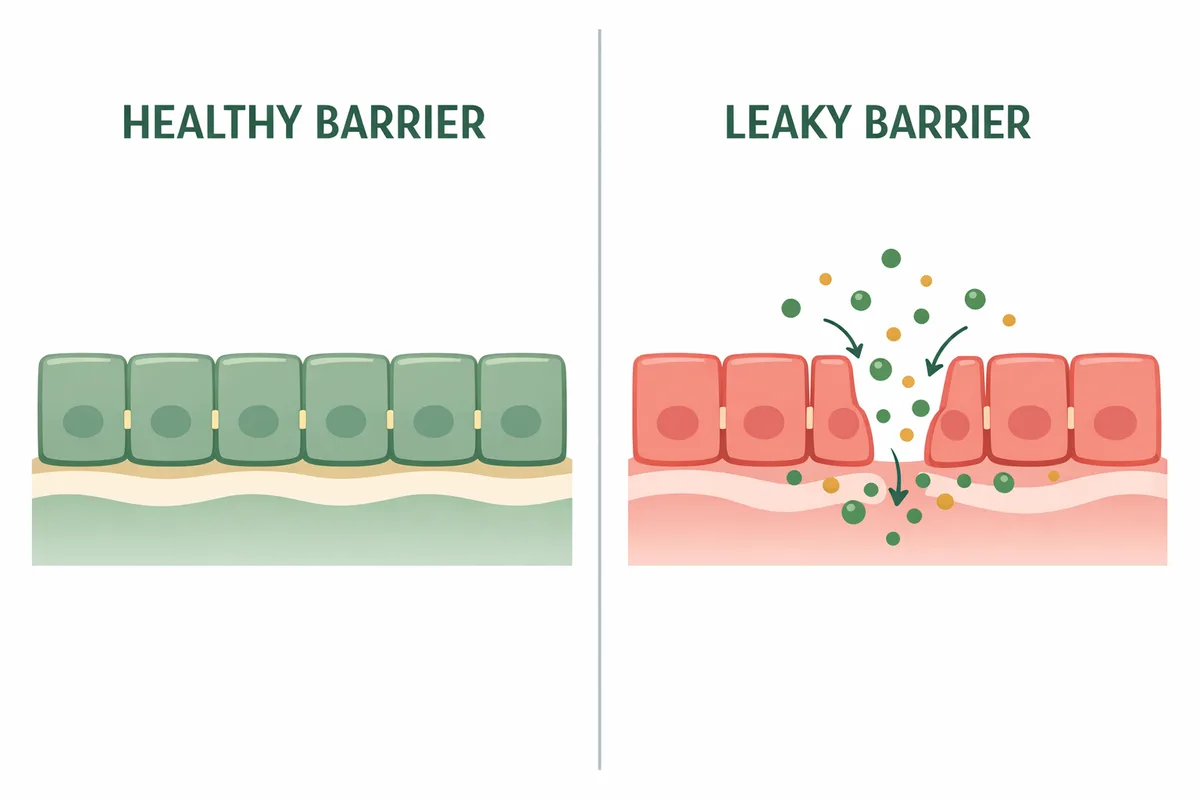
Your small intestine is lined with a single layer of epithelial cells, held together by structures called tight junctions. These junctions form a selective barrier — they allow properly digested nutrients to pass through while keeping bacteria, toxins, and undigested food particles safely inside the intestinal tube.
When tight junctions loosen beyond their normal regulatory range, the barrier becomes excessively permeable. Molecules that should stay in the gut can cross into the underlying tissue and bloodstream. This is what clinicians mean by increased intestinal permeability — and what popular health media calls “leaky gut.”
The concept itself is not controversial. Increased intestinal permeability is a measurable physiological state documented in hundreds of peer-reviewed studies. It’s observed in celiac disease, inflammatory bowel disease (Crohn’s and ulcerative colitis), type 1 diabetes, and several other conditions. Where the controversy begins is in how far-reaching its effects truly are.
The Evidence: How Gluten Causes Intestinal Permeability
The strongest evidence linking gluten to intestinal permeability comes from Dr. Alessio Fasano’s research at Massachusetts General Hospital. His team identified zonulin as the primary regulator of tight junction permeability and demonstrated that gliadin — a component of gluten — is a potent trigger for zonulin release.
The mechanism works like this: gliadin peptides bind to the CXCR3 receptor on intestinal epithelial cells. This binding triggers the release of zonulin, which acts on tight junction proteins (claudins and occludins) to disassemble the junctions. The barrier opens. In people without gluten sensitivity, this opening is brief and self-correcting. In people with celiac disease, the zonulin response is amplified and sustained.
Key research findings that support this connection:
- Celiac patients have significantly elevated zonulin levels compared to healthy controls, and these levels correlate with the degree of intestinal permeability.
- Zonulin levels normalize when celiac patients adhere to a strict gluten-free diet, parallel with improvements in intestinal barrier function.
- Gliadin increases permeability even in non-celiac intestinal tissue in laboratory studies, though the effect is less pronounced than in celiac tissue.
- Studies from the Celiac Disease Foundation confirm that intestinal permeability is a consistent finding in active celiac disease and often precedes full-blown symptoms.
The Controversy: Where Science and Hype Diverge
Here’s where honest reporting gets important. The scientific evidence clearly supports that increased intestinal permeability is real, measurable, and linked to gluten in sensitive individuals. What’s less clear — and where mainstream medicine pushes back — is the broader “leaky gut syndrome” concept.
Some functional medicine practitioners attribute a wide range of conditions to leaky gut: autoimmune diseases, chronic fatigue, fibromyalgia, autism, food allergies, obesity, and more. While there is some research showing associations between increased permeability and various conditions, association is not causation. It’s often unclear whether permeability is a cause of these conditions, a consequence, or simply a parallel finding.
The Mayo Clinic and other mainstream medical institutions acknowledge intestinal permeability as a real phenomenon in specific conditions (celiac disease, IBD, acute infections) but are skeptical about the broader syndrome claims. Their concern is that unproven “leaky gut” diagnoses can lead to unnecessary dietary restrictions, expensive supplement protocols, and delayed diagnosis of actual medical conditions.
As a nurse, I think the truth is somewhere in the middle. The science of intestinal permeability is real and important. But not every health problem is caused by leaky gut, and not every supplement claiming to fix it is evidence-based. Be cautious with anyone — practitioner or product — who attributes all your health issues to a single cause.
What Actually Helps Restore Gut Barrier Function
If gluten is the trigger causing your increased intestinal permeability, the most effective intervention is straightforward: remove the gluten. Research consistently shows that strict gluten-free diet adherence leads to measurable improvements in intestinal permeability in celiac patients, typically within weeks to months.
Beyond gluten elimination, evidence supports several additional strategies:
- Gut-healing nutrition — Bone broth (rich in collagen and L-glutamine), fermented foods, omega-3 fatty acids, and zinc-rich foods all support intestinal barrier repair.
- Stress management — Chronic stress independently increases intestinal permeability through cortisol’s effects on tight junctions. Addressing stress is not optional for gut healing.
- Adequate sleep — Sleep deprivation has been shown to increase intestinal permeability in healthy volunteers. Prioritize 7–9 hours nightly.
- Targeted supplementation — L-glutamine, zinc carnosine, and certain probiotic strains have evidence supporting their role in barrier function repair.
- Avoiding additional triggers — NSAIDs, alcohol, and ultra-processed food additives (like emulsifiers) can independently compromise tight junction integrity.
Common Mistakes About Leaky Gut
- Assuming leaky gut explains everything. Increased permeability is real, but attributing every symptom to it can delay proper diagnosis of other conditions.
- Spending big on unproven protocols. Some practitioners recommend extensive supplement stacks with limited evidence. Start with the basics — GF diet, whole foods, sleep, stress management — which have the strongest research support.
- Ignoring leaky gut entirely. The opposite mistake. Dismissing intestinal permeability because the term sounds “alternative” means missing a well-documented aspect of celiac disease and NCGS pathology.
- Skipping celiac testing. If you think you have leaky gut from gluten, get tested for celiac disease first. It changes your treatment plan, monitoring requirements, and risk profile significantly.
Frequently Asked Questions
Is leaky gut a real medical diagnosis?
Increased intestinal permeability is a measurable physiological state documented in peer-reviewed research. However, “leaky gut syndrome” as a standalone diagnosis is not recognized by most mainstream medical organizations. The phenomenon is real — the debate is about its scope and significance beyond established conditions like celiac disease.
What causes intestinal permeability?
Known triggers include gluten (via the zonulin pathway), chronic stress, NSAIDs like ibuprofen, alcohol, gut infections, and inflammatory bowel disease. Some food additives like emulsifiers may also contribute. In celiac disease, gluten is the primary and most well-documented trigger.
Can you heal leaky gut?
Yes. When the trigger is removed — particularly gluten in celiac disease and NCGS — intestinal permeability typically normalizes within weeks to months. Supporting healing with proper nutrition, stress management, and sleep accelerates the process. The gut lining replaces itself every 3–5 days, giving your body a natural advantage.
How do doctors test for intestinal permeability?
The gold standard is the lactulose-mannitol test, which measures how much of two sugar molecules cross from your gut into your urine. Zonulin blood levels can also indicate increased permeability. However, these tests are not routinely offered and may require a gastroenterologist or functional medicine practitioner.
Does everyone with celiac disease have leaky gut?
Research strongly suggests that increased intestinal permeability is present in active celiac disease and may even precede symptom onset. Studies show that celiac patients have significantly elevated zonulin levels compared to healthy controls. Permeability typically normalizes with adherence to a strict gluten-free diet.
Sealing the Leaks, Starting the Healing
Leaky gut — or increased intestinal permeability — is a real, measurable phenomenon with strong scientific evidence linking it to gluten in people with celiac disease and gluten sensitivity. The zonulin pathway discovered by Dr. Fasano provides a clear mechanism for how gluten opens tight junctions and compromises the gut barrier.
Where you need to be careful is in the claims built on top of that science. Not every health problem is caused by leaky gut, and not every supplement marketed for it has evidence behind it. Stick with what’s proven: remove gluten, eat whole foods, manage stress, sleep well, and work with a healthcare provider who takes both the science and your symptoms seriously.
Download our free 7-Day Gut Healing Meal Plan — a week of simple, delicious gluten-free meals designed to support your digestive health and gut barrier repair.
This content is for educational purposes only and does not constitute medical advice. Consult your healthcare provider for diagnosis and treatment of intestinal permeability and related conditions.