

On this page
Gluten changes your gut microbiome by altering the balance of bacterial communities in your intestine. Research shows that people with celiac disease and non-celiac gluten sensitivity have measurably different microbial profiles compared to healthy controls — with reduced diversity and lower levels of beneficial bacteria like Bifidobacterium and Lactobacillus. The good news is that a targeted gluten-free diet combined with probiotic-rich foods can help restore microbial balance over time.
Key Takeaways
- Celiac disease is linked to dysbiosis — studies consistently find reduced bacterial diversity and shifts in key species in people with active celiac disease.
- A GF diet helps but has trade-offs — removing gluten improves gut inflammation, but the diet itself can reduce fiber diversity if you rely heavily on processed GF substitutes.
- Fermented foods and prebiotics are your best tools — they feed and replenish beneficial bacteria naturally, supporting microbiome recovery alongside your GF diet.
- Probiotic supplementation can bridge the gap — targeted strains like Lactobacillus rhamnosus GG and Bifidobacterium lactis show promise in research for gluten-related gut recovery.
Your Gut Microbiome: A Quick Introduction
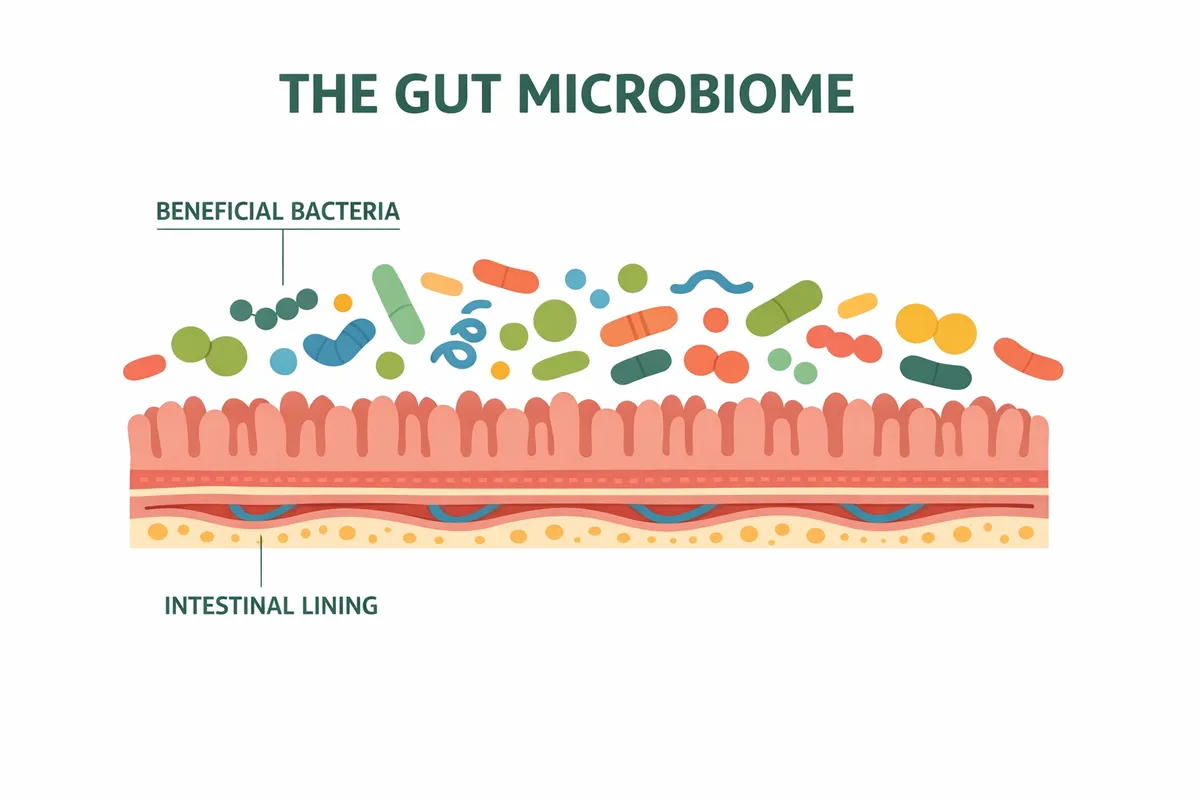
Your gut is home to roughly 38 trillion microorganisms — bacteria, fungi, viruses, and archaea — collectively known as your gut microbiome. That’s about the same number as all the human cells in your body. These organisms aren’t passive passengers. They’re active participants in your health.
Your gut bacteria perform essential functions that your body can’t do alone. They ferment dietary fibers into short-chain fatty acids (SCFAs) like butyrate, which fuel the cells of your colon. They synthesize vitamins, including vitamin K and several B vitamins. They train and regulate your immune system — roughly 70% of your immune cells reside in the gut. And they communicate with your brain via the gut-brain axis, influencing mood, cognition, and stress responses.
A healthy microbiome is characterized by diversity — a wide variety of species in balanced proportions. When this balance is disrupted — a state called dysbiosis — it’s associated with inflammation, impaired immune function, nutrient malabsorption, and a range of symptoms from digestive distress to mood changes.
How Gluten Disrupts Your Gut Bacteria
Research from multiple studies, including work published through the Celiac Disease Foundation, has identified several ways gluten and gluten-related gut damage affect the microbiome:
- Reduced diversity. People with active celiac disease consistently show lower microbial diversity compared to healthy controls. Less diversity means fewer species performing fewer functions — and a less resilient ecosystem.
- Decreased beneficial bacteria. Bifidobacterium species — particularly important for immune regulation and SCFA production — are significantly reduced in celiac patients. Lactobacillus populations also tend to be lower.
- Increased potentially harmful bacteria. Some studies show elevated levels of Bacteroides, E. coli, and Staphylococcus species in people with active celiac disease. These species can produce pro-inflammatory compounds.
- Impaired SCFA production. With fewer beneficial bacteria, the production of butyrate and other short-chain fatty acids drops. Butyrate is the primary fuel source for colonocytes (colon cells) and has anti-inflammatory properties.
- Inflammation feedback loop. Gluten-triggered inflammation damages the gut lining, which changes the environment for bacteria, which shifts the microbiome, which can worsen inflammation. It’s a cycle that feeds itself.
The Gluten-Free Diet Paradox: Good for Healing, Tricky for Your Microbiome
Here’s something that doesn’t get talked about enough: while a gluten-free diet is essential for gut healing, it can inadvertently harm your microbiome if you’re not intentional about what you eat instead.
Wheat is one of the primary sources of fructans — a type of prebiotic fiber that feeds beneficial gut bacteria — in the average Western diet. When you remove wheat (and barley and rye), you also remove a significant source of prebiotic fiber. If you replace those grains primarily with processed GF products (which tend to be lower in fiber and higher in refined starches), your beneficial bacteria lose their fuel supply.
Studies have shown that some people on a GF diet actually experience further reductions in Bifidobacterium and Lactobacillus populations — not because the diet is bad, but because they’re not replacing the lost prebiotics with other fiber sources. This is the GF microbiome paradox: the diet heals your gut lining but can starve your good bacteria if you’re not careful.
The solution isn’t to eat gluten again. The solution is to be intentional about feeding your microbiome through other fiber-rich, naturally gluten-free foods.
Best Foods to Rebuild Your Gut Microbiome on a GF Diet
Should You Take a Probiotic Supplement?
Probiotic supplements can be a valuable tool for microbiome recovery, especially during the first 3–6 months after going gluten-free. Research suggests that specific strains may be particularly beneficial for people with gluten-related gut damage:
- Lactobacillus rhamnosus GG — one of the most studied strains, shown to support gut barrier function and reduce inflammation.
- Bifidobacterium lactis — supports immune regulation and is often depleted in celiac disease.
- Saccharomyces boulardii — a beneficial yeast (not a bacterium) that may help reduce diarrhea and intestinal inflammation.
A food-first approach is ideal — fermented foods provide both probiotics and prebiotics together. But supplements can bridge the gap, especially early in your healing journey when your microbiome is most disrupted. Look for products that are certified gluten-free and third-party tested — not all probiotics are GF by default.
Common Mistakes with Microbiome Recovery
- Relying only on supplements. Probiotics add specific strains, but a diverse microbiome needs diverse food. No capsule replaces a fiber-rich diet.
- Replacing wheat with only processed GF products. GF bread and pasta are convenient, but they’re typically low in the prebiotic fibers your bacteria need. Balance them with whole foods.
- Introducing too much fiber too fast. If your gut is inflamed and your microbiome is disrupted, suddenly adding tons of fiber can cause gas, bloating, and discomfort. Increase gradually over 2–4 weeks.
- Ignoring fermented foods. They’re the most accessible, most affordable, and arguably most effective way to support your microbiome — and many people skip them entirely.
Frequently Asked Questions
Does a gluten-free diet change your gut bacteria?
Yes. Removing gluten reduces gut inflammation, which allows beneficial bacterial populations to recover. However, removing wheat also removes a major source of prebiotic fructans. Studies show that without intentional fiber replacement, some beneficial bacteria may further decline on a GF diet.
What is dysbiosis?
Dysbiosis is an imbalance in the gut microbial community — reduced diversity, decreased beneficial species, or overgrowth of potentially harmful species. It’s consistently observed in active celiac disease and is associated with increased inflammation, impaired immune function, and digestive symptoms.
Can probiotics help restore gut bacteria after gluten damage?
Research suggests that specific probiotic strains, including Lactobacillus rhamnosus GG, Bifidobacterium lactis, and Saccharomyces boulardii, can support microbiome recovery alongside a gluten-free diet. Probiotics work best as a complement to a fiber-rich, whole-foods GF diet — not as a standalone solution.
What foods feed good gut bacteria on a GF diet?
The best prebiotic-rich GF foods include garlic, onions, leeks, asparagus, bananas (especially slightly green), beans and lentils, oats (certified GF), berries, and sweet potatoes. Fermented foods like sauerkraut, kimchi, yogurt, and kefir provide both prebiotics and live probiotics.
How long does it take to rebuild gut flora?
Measurable changes in microbiome composition can occur within 2–4 weeks of dietary changes. However, establishing a stable, diverse microbial community typically takes 3–6 months of consistent dietary habits. The timeline depends on the severity of initial dysbiosis, diet quality, and individual factors.
Rebuilding Your Inner Ecosystem
Your gut microbiome is deeply affected by gluten-related damage — and restoring it is a critical part of healing that goes beyond just removing gluten from your diet. The good news is that your microbiome is highly responsive to dietary changes. By combining a strict GF diet with intentional prebiotic-rich whole foods, fermented foods, and — where appropriate — targeted probiotic supplementation, you can rebuild a diverse, resilient microbial community.
The key is being as intentional about what you add to your diet as what you remove. Your bacteria need fuel — give them whole foods, fiber, and fermented foods, and they’ll reward you with better digestion, stronger immunity, and improved well-being.
Download our free 7-Day Gut Healing Meal Plan — designed to support both gut lining repair and microbiome recovery with fiber-rich, naturally gluten-free meals.
This content is for educational purposes only and does not constitute medical advice. Consult your healthcare provider for personalized guidance on gut health and microbiome support.