

On this page
Gluten triggers chronic gut inflammation through both innate and adaptive immune pathways, and this inflammation doesn’t stay confined to your digestive system. In people with celiac disease and non-celiac gluten sensitivity, gluten-induced inflammation can become systemic — spreading through the bloodstream to affect joints, skin, brain, and mood. Research led by Dr. Alessio Fasano at Massachusetts General Hospital has shown that the inflammatory cascade begins within hours of gluten exposure and can persist for weeks if gluten consumption continues.
Key Takeaways
- Gluten triggers two types of immune response — the fast innate response (both celiac and NCGS) and the targeted autoimmune adaptive response (celiac only).
- Chronic inflammation is the “slow burn” — ongoing gluten exposure sustains low-grade inflammation that damages tissues throughout the body, not just the gut.
- Systemic effects are real — joint pain, skin conditions, brain fog, anxiety, and fatigue are all linked to gluten-driven inflammation.
- Removing gluten interrupts the cascade — most people see measurable reductions in inflammatory markers within weeks of strict GF diet adherence.
How Gluten Triggers the Inflammatory Response
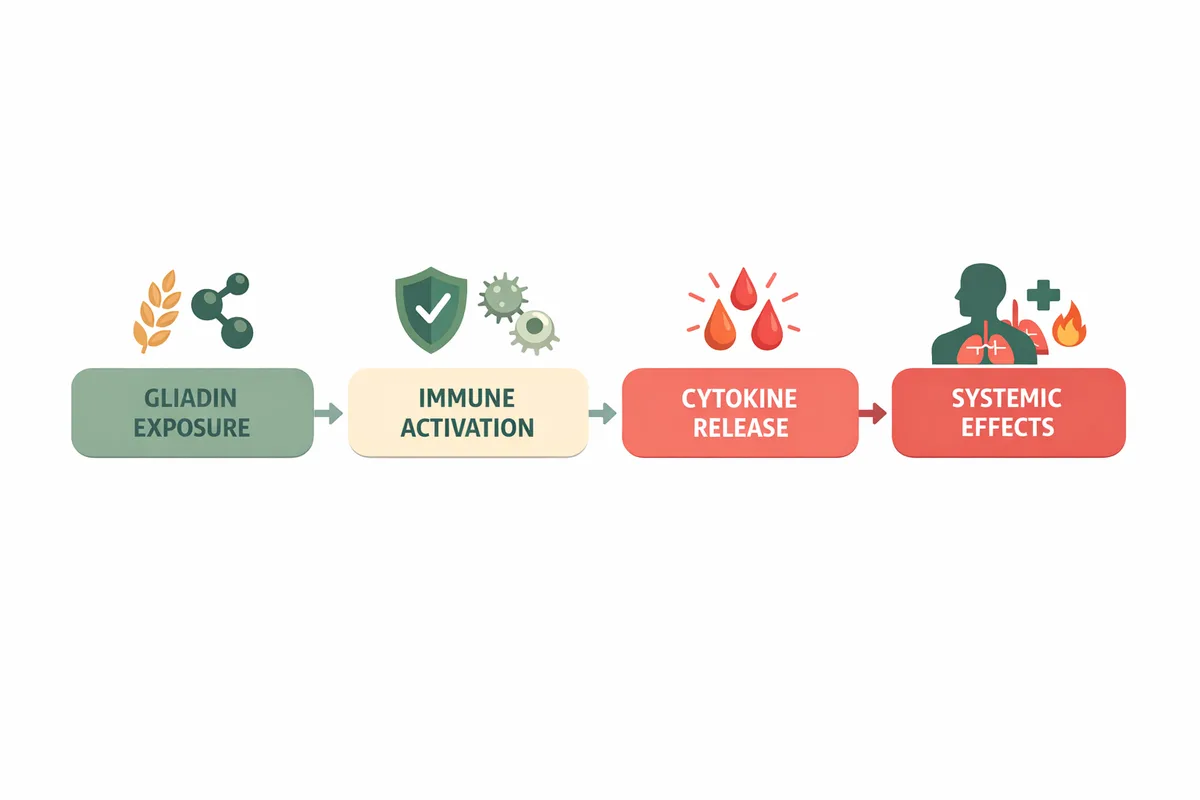
When gliadin fragments cross the intestinal barrier, your immune system responds in two waves. Understanding both helps explain why gluten-related inflammation is so pervasive.
The innate immune response is fast, nonspecific, and present in both celiac disease and NCGS. Gliadin peptides are recognized as a general threat by immune cells in the intestinal lining. These cells release pro-inflammatory cytokines — chemical messengers including interleukin-15 (IL-15) and interferon-gamma (IFN-γ) — that recruit more immune cells and amplify the inflammatory response. This happens within hours.
The adaptive immune response is specific to celiac disease. After gliadin is modified by the enzyme tissue transglutaminase, it’s presented to T cells via HLA-DQ2 or HLA-DQ8 molecules. This triggers a targeted attack that produces specific antibodies (tTG-IgA) and releases additional inflammatory cytokines, including tumor necrosis factor-alpha (TNF-α). This response directly damages the intestinal villi.
The combined effect is a sustained inflammatory state that doesn’t resolve until the trigger — gluten — is removed completely.
Chronic Low-Grade Inflammation: The “Slow Burn”
If you continue eating gluten with an undiagnosed sensitivity, the acute inflammatory response never fully resolves. Instead, it becomes chronic low-grade inflammation — a persistent, smoldering immune activation that you may not even notice as distinct “attacks” because it becomes your baseline normal.
This chronic inflammation is particularly insidious because it damages tissues slowly over time. Many people with undiagnosed celiac disease live with chronic inflammation for years — even decades — before getting a diagnosis. According to Beyond Celiac, the average time to celiac diagnosis is 6–10 years from symptom onset.
During that time, chronic inflammation is silently contributing to nutrient malabsorption, bone density loss, increased intestinal permeability, microbiome disruption, and systemic effects throughout the body.
Beyond the Gut: Systemic Effects of Gluten-Driven Inflammation
One of the most important things to understand about gluten and gut inflammation is that it doesn’t stay in the gut. Inflammatory cytokines and immune complexes travel through the bloodstream, affecting tissues throughout the body.
Signs of Chronic Inflammation from Gluten
- Joint pain or stiffness (particularly in hands, knees, and hips)
- Skin conditions — dermatitis herpetiformis, eczema flares, unexplained rashes
- Brain fog — difficulty concentrating, memory lapses, mental “fuzziness”
- Mood changes — increased anxiety, irritability, or depressive symptoms
- Chronic fatigue that sleep doesn’t resolve
- Recurring headaches or migraines
- Mouth ulcers (aphthous stomatitis)
- Peripheral neuropathy — tingling or numbness in hands and feet
Research published in gastroenterology journals has documented the systemic inflammatory effects of celiac disease across multiple organ systems. The American College of Gastroenterology clinical guidelines recognize that celiac disease is a systemic condition, not just a gastrointestinal one.
Stress and Inflammation: The Feedback Loop
Stress amplifies gluten-related gut inflammation — and gut inflammation amplifies stress. It’s a bidirectional feedback loop mediated by the gut-brain axis.
When you’re under chronic stress, your adrenal glands produce cortisol. While cortisol is anti-inflammatory in acute bursts, chronic elevation actually increases intestinal permeability (independently of gluten), suppresses immune regulation, disrupts the microbiome, and slows gut repair. This means a stressed person with gluten sensitivity may experience worse reactions than the same person in a calm state.
Simultaneously, gut inflammation sends signals to the brain via the vagus nerve and inflammatory cytokines that cross the blood-brain barrier. These signals increase anxiety, disrupt sleep, and worsen the stress response — completing the loop.
Reducing Gut Inflammation: Evidence-Based Strategies
- Strict GF diet. The single most effective anti-inflammatory intervention. Removing the trigger allows the inflammatory cascade to resolve.
- Anti-inflammatory foods. Omega-3 fatty acids (salmon, sardines, flaxseed), turmeric (curcumin), ginger, leafy greens, and berries all have documented anti-inflammatory properties.
- Stress management. Diaphragmatic breathing, regular physical activity, adequate sleep, and mindfulness practices all reduce cortisol and support gut barrier function.
- Gut microbiome support. Fermented foods and targeted probiotics help reduce intestinal inflammation by restoring beneficial bacterial populations and SCFA production.
- Avoid additional irritants. Alcohol, NSAIDs, excessive caffeine, and ultra-processed foods can independently trigger or sustain gut inflammation.
Common Mistakes About Gluten and Inflammation
- Thinking “a little gluten won’t cause inflammation.” For people with celiac disease, even trace amounts sustain the inflammatory response. There is no safe threshold.
- Ignoring non-digestive symptoms. Joint pain, skin issues, and brain fog are inflammatory symptoms, not separate problems. Treating them individually without addressing the gut source misses the root cause.
- Expecting instant resolution. While acute inflammation subsides relatively quickly after going GF, chronic inflammation takes time to fully resolve. Be patient with the healing process.
- Neglecting stress management. You can eat perfectly GF and still have elevated gut inflammation if chronic stress is undermining your barrier function.
Frequently Asked Questions
How does gluten cause inflammation?
Gluten’s gliadin fragments trigger both innate and adaptive immune responses in sensitive individuals. The innate response releases pro-inflammatory cytokines like IL-15 and IFN-gamma. In celiac disease, the adaptive response produces antibodies that attack intestinal tissue. Both pathways create sustained inflammation.
Can gluten cause inflammation throughout the body?
Yes. Inflammatory cytokines and immune complexes produced in the gut enter the bloodstream and affect distant tissues. Research documents gluten-driven inflammation in joints (arthritis), skin (dermatitis herpetiformis), brain (neuroinflammation causing brain fog and mood changes), and liver.
How long does gut inflammation last after eating gluten?
Acute inflammatory symptoms typically resolve within 24–72 hours after a single gluten exposure. However, the underlying immune activation and intestinal permeability changes may persist for 2–3 weeks. With chronic gluten exposure, inflammation becomes sustained and only resolves with strict gluten elimination.
What foods reduce gut inflammation?
The most evidence-backed anti-inflammatory foods include fatty fish rich in omega-3s (salmon, sardines), turmeric and ginger, leafy greens, berries, bone broth, and fermented vegetables. These foods provide nutrients that directly modulate inflammatory pathways and support gut barrier repair.
Can you have gluten-related inflammation without digestive symptoms?
Absolutely. Up to 60% of adults with celiac disease have no digestive symptoms at diagnosis, according to the Celiac Disease Foundation. They may present instead with joint pain, skin rashes, fatigue, anemia, or neurological symptoms — all driven by systemic inflammation from gut damage.
Cooling the Fire Starts With What You Eat
Gluten-driven inflammation is the mechanism behind virtually every symptom associated with celiac disease and gluten sensitivity — from bloating and diarrhea to joint pain, brain fog, and mood changes. Understanding that this inflammation is systemic, not just digestive, helps explain why going gluten-free often improves symptoms you might never have connected to your gut.
The most powerful anti-inflammatory strategy is the simplest: remove the trigger. A strict gluten-free diet, combined with anti-inflammatory nutrition, stress management, and time, allows your body to resolve the chronic inflammation and begin repairing the damage. Your body knows how to heal — you just need to stop giving it reasons to fight.
Download our free 7-Day Gut Healing Meal Plan — packed with anti-inflammatory, naturally gluten-free meals designed to calm gut inflammation and support recovery.
This content is for educational purposes only and does not constitute medical advice. Consult your healthcare provider for diagnosis and treatment of inflammatory conditions.