

On this page
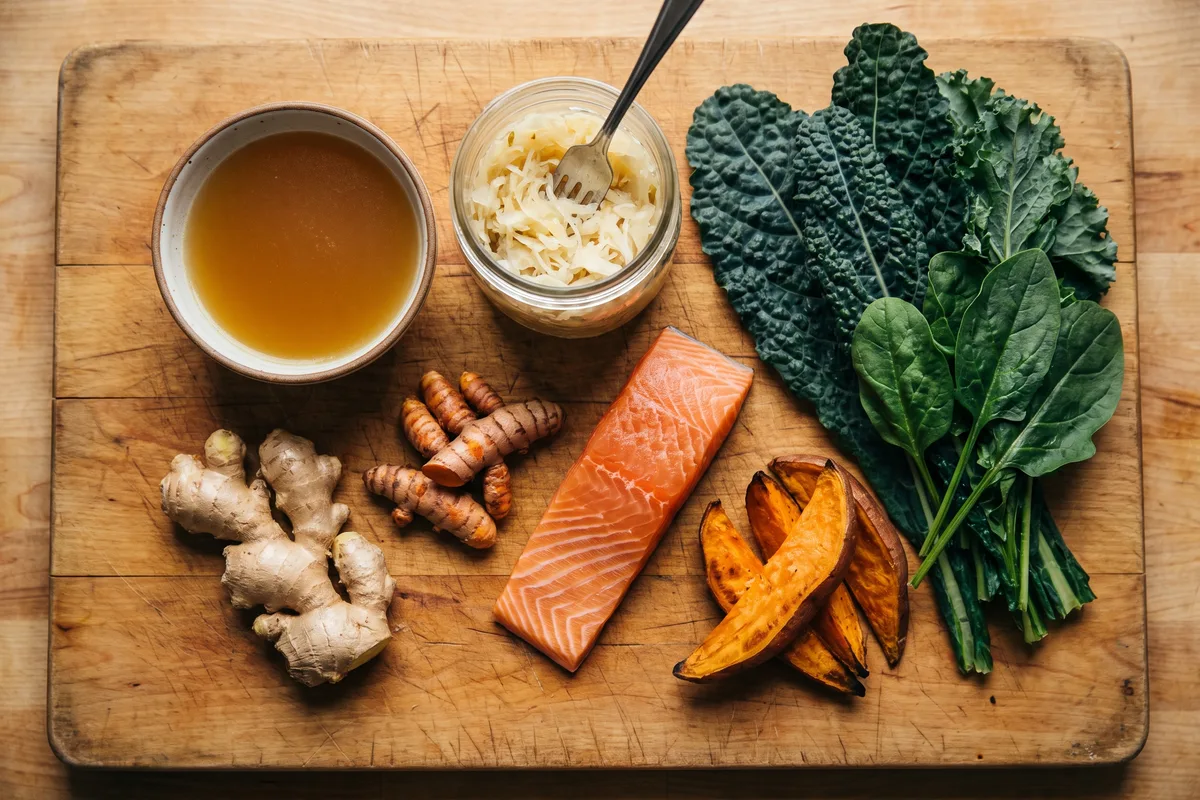
The best foods for gut healing on a gluten-free diet provide the specific nutrients your intestinal lining needs to repair — collagen, L-glutamine, omega-3 fatty acids, probiotics, and anti-inflammatory compounds. Bone broth, fermented vegetables, wild-caught salmon, ginger, turmeric, and leafy greens consistently top the list in both clinical research — including guidance from the Celiac Disease Foundation — and practical experience. These aren’t exotic superfoods — they’re accessible, affordable whole foods that you can start incorporating today.
Key Takeaways
- Gut healing foods work by providing building blocks — collagen amino acids, anti-inflammatory compounds, prebiotic fiber, and live probiotics that directly support intestinal repair.
- Bone broth is the MVP — rich in collagen, gelatin, glycine, and L-glutamine, it provides more gut-healing nutrients per serving than any other single food.
- Fermented foods do double duty — they deliver live probiotics and prebiotic fiber simultaneously, supporting microbiome restoration.
- You don’t need specialty products — the most effective gut-healing foods are available at any grocery store. Start with what’s accessible.
The Top 15 Foods for Gut Healing
7. Leafy Greens
Spinach, kale, Swiss chard, and collard greens provide folate, iron, magnesium, and vitamin K — nutrients commonly depleted by gluten-related gut damage. They also contain polyphenols that support beneficial bacterial growth. Lightly cooking them makes them easier to digest during active healing.
8. Bananas (Especially Slightly Green)
Slightly underripe bananas are rich in resistant starch — a prebiotic fiber that passes through the small intestine undigested and feeds beneficial bacteria in the colon. This fermentation produces butyrate, a short-chain fatty acid that fuels colon cells and reduces inflammation. Ripe bananas are gentler on sensitive stomachs and provide potassium.
9. Coconut Oil
Contains lauric acid and caprylic acid, which have antimicrobial properties that may help balance gut bacteria. Coconut oil is also easy to digest and provides a quick energy source that doesn’t require bile salts — helpful when fat digestion is compromised.
10. Kimchi
Like sauerkraut, kimchi provides live probiotic cultures, but with the added benefits of garlic, ginger, and chili — all of which have anti-inflammatory and antimicrobial properties. It’s a microbiome powerhouse. Start small if you’re not used to spicy foods.
11. Avocado
Rich in monounsaturated fats, fiber, and potassium. The healthy fats support cell membrane repair throughout the gut lining, and the soluble fiber feeds beneficial bacteria. Avocado is also extremely easy on a sensitive digestive system.
12. Aloe Vera Juice
Contains compounds that may soothe intestinal inflammation and support mucosal healing. Studies suggest aloe vera has anti-inflammatory effects in the GI tract. Use pure, inner-fillet aloe vera juice (not the whole leaf, which contains latex compounds that can be irritating). Start with 1–2 ounces daily.
13. Pineapple
Contains bromelain, an enzyme with anti-inflammatory and protein-digesting properties. Research suggests bromelain may reduce intestinal inflammation and support digestive function. The core contains the highest concentration — blend it into smoothies.
14. Fermented Coconut Yogurt
A dairy-free probiotic source that provides live cultures without the potential irritation of dairy during early healing phases. Look for brands with minimal added sugar and multiple live strains listed. Pair with berries and a drizzle of honey for a gut-healing dessert.
15. Collagen Peptides
Supplemental collagen provides the amino acids glycine, proline, and hydroxyproline in a concentrated, easy-to-absorb form. Emerging research suggests collagen peptides may support gut barrier integrity. Add to coffee, smoothies, or soups — they dissolve easily and are virtually tasteless.
Foods to Limit During Active Gut Healing
While healing, certain foods can slow your progress — not because they’re “bad,” but because a compromised gut handles them poorly:
- Gluten — absolute elimination, always
- Alcohol — directly damages the gut lining and increases permeability
- Refined sugar — feeds inflammatory bacteria and suppresses immune function
- Ultra-processed GF products — fine occasionally, but low in the nutrients your gut needs right now
- Dairy — temporarily, if not tolerated (damaged villi produce less lactase)
- Artificial sweeteners — research shows they disrupt the microbiome
Frequently Asked Questions
What is the single best food for gut healing?
Bone broth is the most nutrient-dense single food for gut healing. It provides collagen, gelatin, glycine, proline, and L-glutamine — the primary fuel source for intestinal epithelial cells. One to two cups daily during active healing provides a concentrated dose of the amino acids your gut lining needs for repair.
Can you heal your gut with food alone?
For many people, yes — a strict gluten-free diet rich in gut-healing whole foods is sufficient for recovery. However, severe celiac disease, significant nutrient depletion, or concurrent conditions may require supplementation alongside dietary changes. Work with your healthcare provider to determine your specific needs.
How much bone broth should I drink for gut health?
During active gut healing, aim for 1–2 cups of bone broth daily. You can drink it warm as a beverage, use it as a base for soups, or cook rice and grains in it. After the initial healing phase, 3–4 servings per week is a good maintenance level.
Are fermented foods safe for celiac disease?
Most naturally fermented foods are safe for celiac disease — sauerkraut, kimchi, plain yogurt, kefir, and kombucha are naturally gluten-free. However, always check labels for added ingredients. Avoid fermented foods made with barley malt, wheat, or rye-based ingredients. Some soy sauces are fermented with wheat — use certified GF tamari instead.
Do I need to eat organic for gut healing?
Organic is not required for effective gut healing. The most important factor is eating whole, unprocessed foods — whether organic or conventional. If budget allows, prioritize organic for the “Dirty Dozen” produce items that tend to have higher pesticide residues. But conventional vegetables are far better than no vegetables.
Feed Your Gut What It Needs to Recover
The best foods for gut healing aren’t expensive supplements or exotic superfoods — they’re whole, nutrient-dense foods that provide the specific building blocks your intestinal lining needs for repair. Bone broth, fermented vegetables, fatty fish, ginger, turmeric, and leafy greens are your gut-healing toolkit. Use them consistently, and your body will do the rest.
Start with 3–4 of these foods that appeal to you, and build from there. Consistency matters more than variety in the early weeks. As your gut heals and your tolerance expands, you can incorporate the full range. Your grocery cart is your pharmacy.
Download our free 7-Day Gut Healing Meal Plan — every meal features these gut-healing foods in simple, delicious recipes with a complete grocery list.
This content is for educational purposes only and does not constitute medical or nutritional advice. Consult a healthcare provider or registered dietitian for personalized guidance.