

On this page
Prebiotics and probiotics both support gut health — but they work in fundamentally different ways, and understanding the distinction matters for effective gut healing. Probiotics are live beneficial bacteria you add to your gut. Prebiotics are the food those bacteria need to thrive. Getting the balance right accelerates microbiome recovery after gluten-related damage, a process outlined by resources from Beyond Celiac. Getting it wrong means wasting money on supplements that can’t work without each other.
Key Takeaways
- Probiotics are the bacteria, prebiotics are their food — you need both for a healthy, diverse microbiome. One without the other is less effective.
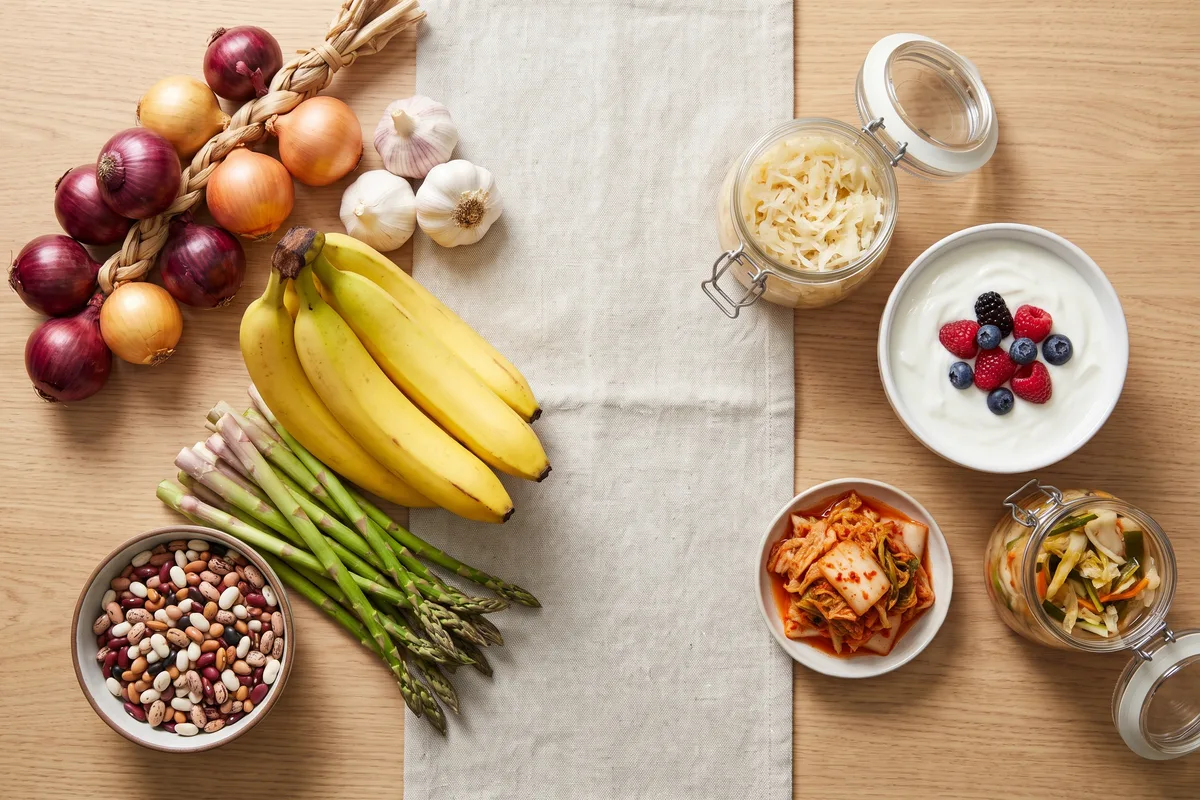
- Prebiotics come from fiber in whole foods — onions, garlic, bananas, asparagus, and Jerusalem artichokes are among the best natural sources.
- Not all fiber is prebiotic — specific types like inulin, fructooligosaccharides (FOS), and galactooligosaccharides (GOS) selectively feed beneficial bacteria.
- Start slowly with both — a damaged gut can react strongly to sudden increases in prebiotic fiber or probiotic supplementation. Gradual introduction minimizes bloating and gas.
Probiotics: Adding Beneficial Bacteria
Probiotics are live microorganisms that, when consumed in adequate amounts, provide health benefits to the host. For gut healing after gluten damage, probiotics help by restoring depleted beneficial bacterial populations, strengthening the intestinal barrier, reducing inflammation, and competing with harmful bacteria for resources and space.
Sources of Probiotics
The most effective approach combines both: fermented foods daily for broad microbial diversity, plus a targeted supplement during the active healing phase for specific strain benefits.
Prebiotics: Feeding Beneficial Bacteria
Prebiotics are non-digestible fibers that selectively feed beneficial bacteria in your colon. When beneficial bacteria ferment prebiotic fiber, they produce short-chain fatty acids (SCFAs) — particularly butyrate, propionate, and acetate. These SCFAs are critically important for gut health:
- Butyrate — the primary fuel source for colonocytes (colon lining cells). Reduces inflammation, supports barrier function, and may have anti-cancer properties.
- Propionate — supports liver function and helps regulate cholesterol metabolism.
- Acetate — used by other beneficial bacteria and supports overall gut pH regulation.
Without adequate prebiotic fiber, even the best probiotic bacteria can’t thrive and colonize your gut effectively. This is why taking probiotic supplements without eating prebiotic-rich foods often produces disappointing results.
Best Prebiotic Food Sources
Other excellent prebiotic sources include Jerusalem artichokes (sunchokes), leeks, chicory root, dandelion greens, flaxseeds, and oats (certified GF oats for celiac disease).
Prebiotics vs. Probiotics: Side-by-Side Comparison
| Factor | Probiotics | Prebiotics |
|---|---|---|
| What they are | Live beneficial bacteria | Non-digestible fiber that feeds bacteria |
| How they work | Add new bacteria to your gut | Feed bacteria already in your gut |
| Food sources | Fermented foods (sauerkraut, kimchi, yogurt) | High-fiber foods (onions, garlic, bananas, beans) |
| Supplement form | Capsules with live cultures | Inulin, FOS, GOS powders |
| Survival concern | Must survive stomach acid | Not affected by digestion (reach colon intact) |
| Storage | Some need refrigeration | Shelf-stable |
| Side effects | Possible initial bloating | Gas and bloating if introduced too fast |
Using Prebiotics and Probiotics Together for Gut Healing
The most effective gut-healing strategy uses prebiotics and probiotics together — a combination sometimes called synbiotics. Here’s a practical framework for the healing timeline:
Phase 1 — Early Healing (Weeks 1–4): Start with a targeted probiotic supplement (like LGG or S. boulardii) and gentle prebiotic foods (ripe bananas, cooked onions, small amounts of cooked garlic). Your gut may be sensitive, so go slowly with fiber.
Phase 2 — Active Repair (Months 1–3): Increase prebiotic food variety and quantity. Add fermented foods (start with 1–2 tablespoons of sauerkraut daily). Continue your probiotic supplement. Your gut tolerance should be expanding during this phase.
Phase 3 — Maintenance (Months 3+): Diverse prebiotic-rich whole foods become the backbone of your microbiome support. Fermented foods daily. You may be able to reduce or stop probiotic supplements if your microbiome has stabilized and your diet is consistently prebiotic-rich.
Common Mistakes with Prebiotics and Probiotics
- Taking probiotics without eating prebiotic foods. You’re adding bacteria but not feeding them. Without prebiotic fiber, probiotic bacteria struggle to colonize and thrive — you’re essentially flushing expensive bacteria through your system.
- Introducing too much prebiotic fiber too fast. A damaged gut lacks the bacterial diversity to process large amounts of prebiotic fiber efficiently. The result: gas, bloating, and discomfort. Start small, increase gradually over weeks.
- Assuming all yogurt is probiotic. Many commercial yogurts are heat-treated after fermentation, killing the live cultures. Look for “live and active cultures” on the label and check for specific strain listings.
- Choosing probiotics by CFU count alone. Strain specificity matters more than sheer numbers. A well-researched 10 billion CFU product outperforms a random 100 billion CFU product for gut healing.
- Neglecting food sources in favor of supplements. Fermented foods and prebiotic-rich whole foods provide broader microbial diversity and additional nutrients that supplements can’t match. Supplements are a targeted boost, not a replacement for food-based approaches.
Frequently Asked Questions
What is the difference between prebiotics and probiotics?
Probiotics are live beneficial bacteria that you add to your gut through fermented foods or supplements. Prebiotics are non-digestible fibers from foods like onions, garlic, and bananas that feed the beneficial bacteria already in your gut. You need both for a healthy microbiome — probiotics provide the bacteria, prebiotics provide their food.
Should I take prebiotics and probiotics together?
Yes. Taking them together (called synbiotics) is more effective than either alone. Prebiotics feed the probiotic bacteria, helping them survive and colonize your gut. Without prebiotic fiber, probiotic bacteria often pass through without establishing themselves. Combine a targeted probiotic supplement with prebiotic-rich whole foods for best results.
What are the best prebiotic foods for gut health?
The best prebiotic food sources include onions, garlic, slightly green bananas, asparagus, Jerusalem artichokes, leeks, chicory root, legumes (lentils, chickpeas), flaxseeds, and certified GF oats. These foods contain inulin, FOS, resistant starch, and other fibers that selectively feed beneficial gut bacteria.
Can prebiotics cause bloating?
Yes, especially when introduced too quickly to a healing gut. Prebiotic fibers are fermented by gut bacteria, producing gas as a byproduct. Start with small amounts and increase gradually over 2-4 weeks. Cooking prebiotic foods (like onions and garlic) can make them easier to tolerate initially. The bloating typically decreases as your microbiome adapts.
Do I need prebiotic supplements or are foods enough?
For most people, prebiotic-rich whole foods provide sufficient prebiotic fiber for gut health. Supplements (inulin powder, FOS) can be useful if your diet is limited or if you need higher doses during active microbiome restoration. However, food sources offer additional nutrients and broader fiber types that supplements don’t replicate.
Better Together Than Apart
Prebiotics and probiotics are partners, not competitors. Probiotics add beneficial bacteria to your gut; prebiotics feed them so they can thrive and colonize. For effective gut healing after gluten damage, you need both — ideally from a combination of fermented foods, prebiotic-rich whole foods, and targeted supplements during the acute healing phase.
Start slowly with both. A healing gut needs time to adjust to increased bacterial activity and fiber fermentation. Gradually increase prebiotic foods over weeks, add fermented foods in small amounts, and use a well-researched probiotic supplement to jumpstart the process. As your microbiome rebuilds, you’ll find that your gut tolerates — and even craves — the fiber-rich whole foods that keep it healthy long-term.
This content is for educational purposes only and does not constitute medical or nutritional advice. Consult a healthcare provider for personalized guidance.