

On this page
Bloating is the single most common symptom reported by people with celiac disease and gluten sensitivity — according to the Celiac Disease Foundation, it’s often the symptom that drives people to finally seek answers. That uncomfortable abdominal distension after eating gluten isn’t random or “in your head.” It’s the result of specific biological mechanisms: intestinal inflammation, impaired digestion, bacterial fermentation of malabsorbed nutrients, and fluid retention triggered by immune activation. Understanding why it happens helps you manage it during healing and recognize it as a signal worth investigating.
Key Takeaways
- Gluten bloating has multiple causes — intestinal inflammation, malabsorption-driven fermentation, fluid shifts, and altered gut motility all contribute simultaneously.
- It’s not just about gas — bloating involves fluid retention, tissue swelling, and impaired muscular coordination of the intestinal wall, not only gas production.
- Bloating is often the first symptom to improve on a GF diet — many people notice reduced bloating within the first 1–2 weeks of strict gluten elimination.
- Persistent bloating after going GF has specific causes — cross-contamination, SIBO, lactose intolerance, or other food sensitivities may be sustaining it.
Why Gluten Causes Bloating: The Mechanisms
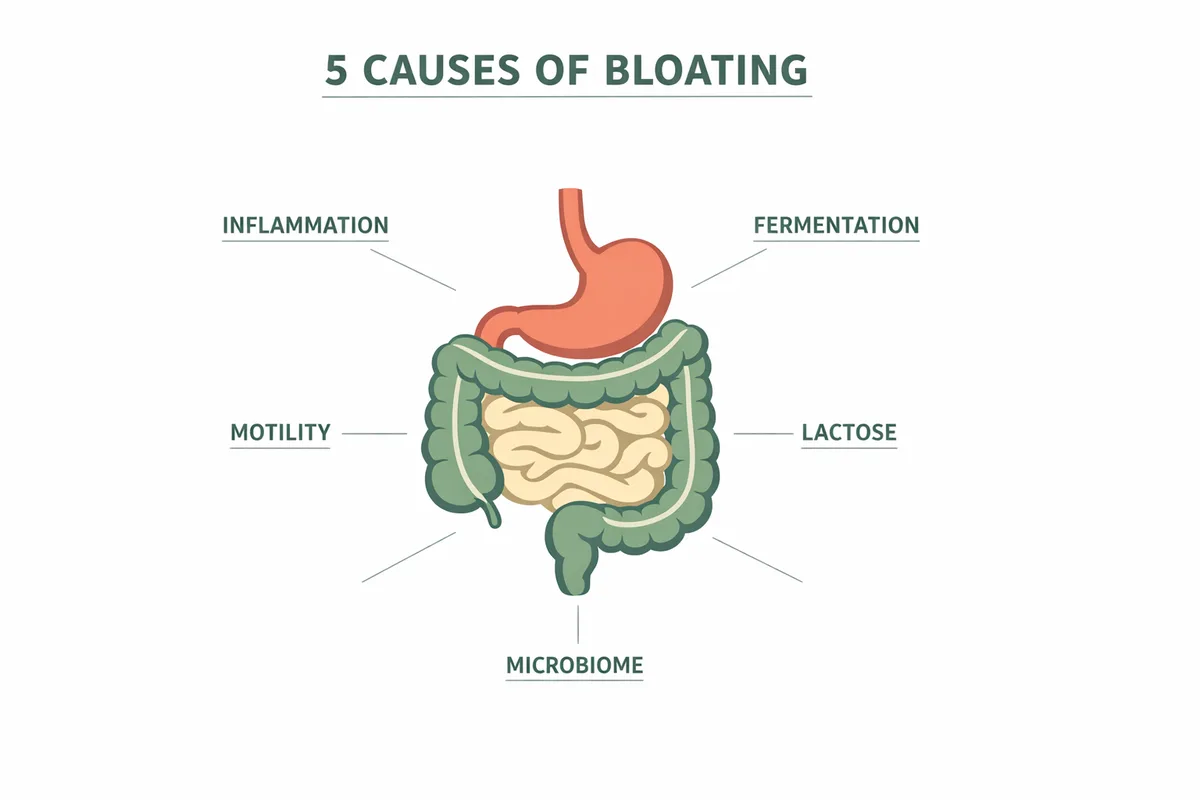
1. Intestinal Inflammation and Fluid Shifts
When gliadin triggers an immune response in your gut, the resulting inflammation causes the intestinal tissue to swell. Inflammatory mediators increase vascular permeability — allowing fluid to leak from blood vessels into the surrounding tissue and intestinal lumen. This is the same mechanism that causes swelling around any inflammation in the body, but when it happens throughout your small intestine, the result is significant abdominal distension.
2. Malabsorption and Bacterial Fermentation
Damaged intestinal villi can’t absorb nutrients efficiently. When carbohydrates, fats, and proteins aren’t fully absorbed in the small intestine, they pass into the colon where bacteria ferment them — producing hydrogen, methane, and carbon dioxide gas. This fermentation is the primary source of the gas component of bloating. The more severe the villous damage, the more nutrients reach the colon undigested, and the more gas is produced.
3. Impaired Gut Motility
Intestinal inflammation disrupts the coordinated muscular contractions (peristalsis) that move food through your digestive tract. When motility slows, food sits longer in the gut, ferments more, and produces more gas. Additionally, impaired motility means gas that is produced doesn’t move through and exit the digestive tract efficiently — it accumulates, causing distension.
4. Secondary Lactose Intolerance
Damaged villi produce less lactase — the enzyme that digests lactose in dairy products. Undigested lactose in the colon is rapidly fermented by bacteria, producing large amounts of gas. Many people with gluten-related gut damage experience significant bloating from dairy that resolves once their villi regenerate and lactase production recovers.
5. Microbiome Disruption
Chronic gluten-driven inflammation shifts the gut microbiome toward more gas-producing bacterial species. Research shows increased populations of Proteobacteria and decreased Bifidobacterium in celiac patients — a pattern associated with increased fermentation and gas production. This dysbiosis can persist even after starting a GF diet until the microbiome is actively restored.
Gluten Bloating vs. Other Causes of Bloating
Not all bloating is gluten-related. Here’s how to distinguish gluten-specific bloating from other common causes:
| Feature | Gluten Bloating | General Bloating |
|---|---|---|
| Timing | Hours after gluten-containing meals | Variable — any meal or time |
| Pattern | Reproducible with gluten exposure | Less predictable |
| Associated symptoms | Fatigue, brain fog, diarrhea, joint pain | Usually isolated |
| Duration | Hours to days (single exposure) | Usually resolves faster |
| Response to GF diet | ✓ Improves significantly | No consistent change |
| Severity | Often severe, visible distension | Varies |
Why Bloating Persists After Going Gluten-Free
If you’ve gone strictly GF but still experience significant bloating, several factors could be responsible:
- Cross-contamination. Even small, repeated gluten exposures sustain intestinal inflammation and bloating. Review your kitchen practices, dining habits, and product labels.
- SIBO (Small Intestinal Bacterial Overgrowth). Common in celiac disease due to altered motility. Bacteria in the small intestine ferment food prematurely, causing excessive gas. Requires specific testing and treatment.
- Temporary lactose intolerance. Damaged villi produce less lactase. Try eliminating dairy for 2–4 weeks. If bloating improves, reintroduce gradually after gut healing progresses.
- FODMAPs sensitivity. Some people with damaged guts are temporarily sensitive to fermentable carbohydrates (FODMAPs) in foods like onions, garlic, beans, and apples. This often resolves as the gut heals.
- Processed GF products. Many contain emulsifiers, gums, and refined starches that can cause bloating — especially xanthan gum and inulin additives.
- Microbiome imbalance. Even after removing gluten, the dysbiotic microbiome may take months to rebalance. Probiotics and prebiotic-rich foods support this process.
How to Reduce Bloating During Gut Healing
- Strict GF compliance. The most effective anti-bloating strategy is eliminating the trigger. Most people see significant improvement within 1–2 weeks.
- Eat smaller, more frequent meals. A healing gut handles smaller volumes better. Five smaller meals is often easier than three large ones during early recovery.
- Chew thoroughly. Mechanical digestion in your mouth reduces the workload on your compromised gut. Aim for 20–30 chews per bite.
- Limit raw vegetables initially. Cooked vegetables are easier to digest during active healing. Gradually reintroduce raw veggies as tolerance improves.
- Stay hydrated between meals. Adequate water supports motility and digestion. Drinking large volumes during meals dilutes digestive enzymes — sip instead.
- Consider digestive enzymes. Supplemental enzymes can support digestion during the healing phase when your gut’s natural enzyme production is compromised.
- Gentle movement after meals. A short walk after eating stimulates gut motility and helps move gas through the system.
Common Mistakes About Gluten and Bloating
- Dismissing bloating as “normal.” Occasional mild bloating from a large meal is normal. Regular, significant abdominal distension after eating is not — it’s a signal worth investigating.
- Assuming GF products can’t cause bloating. Processed GF products with gums, emulsifiers, and refined starches can cause bloating independently of gluten. Whole foods generally cause less bloating.
- Not tracking food-symptom connections. A simple food diary linking meals to bloating episodes can reveal patterns — lactose, FODMAPs, specific GF products, or hidden cross-contamination.
- Over-restricting in response to bloating. Eliminating entire food groups beyond gluten without guidance can create nutrient gaps. Work with a dietitian if you suspect multiple food sensitivities.
- Ignoring the stress component. Stress directly slows gut motility and increases bloating. Breathing exercises before meals can meaningfully reduce stress-related bloating.
Frequently Asked Questions
Why does gluten make me so bloated?
Gluten causes bloating through multiple mechanisms: intestinal inflammation causes tissue swelling and fluid retention, damaged villi lead to malabsorption which causes bacterial fermentation and gas production, gut motility slows down (trapping gas), and microbiome disruption increases gas-producing bacterial species. All of these happen simultaneously.
How long does gluten bloating last?
After a single gluten exposure, bloating typically peaks within 6-24 hours and resolves within 1-3 days. With chronic gluten consumption in an undiagnosed person, bloating is persistent because the inflammation never resolves. After starting a GF diet, most people see significant bloating reduction within 1-2 weeks.
Why am I still bloated after going gluten-free?
Common causes of persistent bloating on a GF diet include cross-contamination, SIBO (small intestinal bacterial overgrowth), temporary lactose intolerance, FODMAPs sensitivity, processed GF products with emulsifiers, and ongoing microbiome imbalance. If bloating persists after 3 months of strict GF eating, consult your gastroenterologist.
Can gluten bloating be a sign of celiac disease?
Yes. Bloating is the most commonly reported symptom in celiac disease. If you experience reproducible bloating after gluten-containing meals, especially with other symptoms like fatigue, diarrhea, or brain fog, talk to your doctor about celiac testing before starting a GF diet.
How can I reduce bloating when healing my gut?
Eat smaller, more frequent meals. Chew thoroughly. Cook vegetables rather than eating them raw. Stay hydrated between meals. Consider digestive enzyme supplements. Take a short walk after eating. Manage stress with breathing exercises before meals. And most importantly, maintain strict GF compliance to resolve the underlying inflammation.
Bloating Is a Signal — Not a Life Sentence
Gluten-related bloating is a measurable biological response — not a sensitivity myth or psychosomatic complaint. It results from intestinal inflammation, malabsorption-driven fermentation, impaired motility, and microbiome disruption, all triggered by your immune system’s reaction to gluten. The good news: it’s one of the first symptoms to improve on a strict GF diet, often within the first two weeks.
If bloating was your wake-up call, listen to it. Get tested before going GF, then commit to strict elimination. If bloating persists despite compliance, investigate the common secondary causes — cross-contamination, SIBO, lactose intolerance, and FODMAPs. Your gut is communicating. The key is learning to understand what it’s saying.
This content is for educational purposes only and does not constitute medical advice. Consult your healthcare provider for diagnosis and treatment.