
If you’ve never stopped to think about what happens to your body when you consume gluten, lucky you! You don’t have to think about it, because you tolerate it. But some of us aren’t so lucky.
Gluten is not just a word that shows up on menus, packaging, and in grocery store aisle signs. We see it all the time, but it’s not always clear what gluten actually is or why it matters so much. For most of the population, gluten is just a normal part of everyday life. But for others? It’s the sole source of everything from stomach issues to fatigue to skin problems. And then there’s a lesser-known group that lands somewhere around the middle, and these are the people who feel kinda off after eating it, but don’t know that the reason they feel that way is because of gluten.
Gluten is a naturally occurring protein that’s found in grains like wheat, barley, and rye. It’s what gives the bread you love so much its fluffy, stretchy texture and helps hold baked goods together so they don’t crumble into crumbs. But once gluten enters your body? Well, things can play out really differently depending on the health of your gut, your immune system, and your genetic makeup.
Wanna know how gluten affects the body? We have the 411 on how gluten is digested, what happens to people with celiac disease or gluten sensitivity, and how it can affect parts of the body that you’d never expect—like your brain, skin, joints, or hormones. If you’re living gluten-free, thinking about trying it out, or just want to know what gluten is, our guide will make sense of it all!
What Is Gluten?
Let’s start off with the basics, because we need to know what we are dealing with. Gluten isn’t some mysterious additive or synthetic ingredient that was introduced into our food in the last 10 years. It’s a natural protein that’s been part of the human diet for thousands of years.
Gluten is actually a mix of two proteins: gliadin and glutenin, and they’re found in wheat, barley, and rye. When it’s mixed with water, it forms an elastic-like network that gives dough its flexibility. It’s why bread rises and can maintain a shape, and why pasta has that familiar texture.
Gluten is found in the usual suspects of foods, including the following:
- Bread, bagels, and buns
- Pasta and pizza dough
- Cookies, cakes, and pastries
- Crackers, cereals, and pretzels
- Beer (yes, beer! It’s the barley)
But gluten is also hiding in a lot of unexpected food stuffs, too! Things like soy sauce, salad dressings, processed meats, imitation seafood, and spice blends.
How the Body Digests Gluten
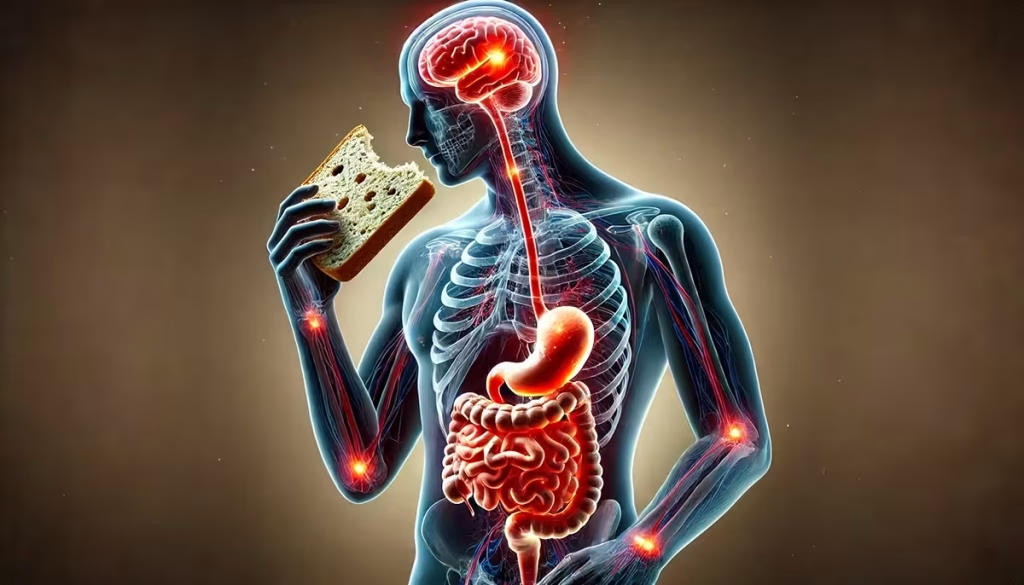
Now, for what happens once gluten ends up in your digestive system!
In a normal, healthy gut, the process is pretty simple. Gluten is broken down by stomach acid and then further digested in the small intestine, with enzymes like peptidases that assist in breaking the proteins into smaller peptides. From there, the peptides are either used or excreted without causing any kind of problems.
But not everyone is able to break down gluten in this way.
Little fragments of gluten sneak past the gut lining and enter the bloodstream for some people. And when that happens, the immune system tags gluten as an intruder, which sets off a chain reaction that causes inflammation or other symptoms. The body basically treats gluten like it’s a threat, and that’s where the issues start.
The reaction will look different, as it all depends on the person. For someone with celiac disease, it’s a full-blown autoimmune attack. For someone with gluten sensitivity, it’s much less severe but still disruptive, nevertheless.
Gluten and Celiac Disease
Celiac disease is one of the most serious conditions that is connected to gluten, and it’s commonly misunderstood by a lot of people.
Celiac is an autoimmune condition—it’s not a food allergy. When someone who has celiac disease eats gluten, their immune system attacks the lining of their small intestine, specifically targeting the villi (the tiny, finger-like projections that help absorb nutrients). As time goes by, the damage that has been done makes it harder or impossible for the body to absorb the vitamins and minerals that are essential.
Symptoms can vary, which is a big part of the challenge in diagnosing it. You could be suffering from digestive issues like bloating, diarrhea, or weight loss, or you could have zero stomach issues. Some only experience skin rashes, fatigue, brain fog, anxiety, or joint pain.
Long-term, untreated celiac disease is not something to mess around with and can cause the scary conditions listed below:
- Malnutrition
- Anemia
- Osteoporosis
- Infertility
- Neurological disorders
- Increased risk of certain cancers
Another common misconception is that it can be cured or reversed. Once you have it, there is no cure, and the only treatment is a strict, lifelong gluten-free diet.
Celiac disease affects about 1 in 100 people globally, but a lot of people will go undiagnosed for years because their symptoms don’t look “typical.”
Gluten Sensitivity vs. Celiac Disease
Not all gluten-related issues stem from celiac disease. No, there’s another culprit, and it’s called non-celiac gluten sensitivity (NCGS).
With NCGS, the body reacts to gluten, but the immune system doesn’t attack the intestines like it does in people with celiac. There’s no visible damage on lab tests or biopsies, and blood tests for celiac or a wheat allergy usually tend to come back negative.
This does not mean that it’s all in your head! People with NCGS can experience the following:
- Bloating
- Headaches
- Brain fog
- Fatigue
- Mood swings
- Joint or muscle aches
Diagnosis usually takes place through a process known as exclusion. If you’ve ruled out celiac and wheat allergy, and you feel better when you are off gluten, NCGS is the likeliest culprit. It’s super frustrating that there’s no official test, but the symptoms are real and valid.
Gluten and the Gut
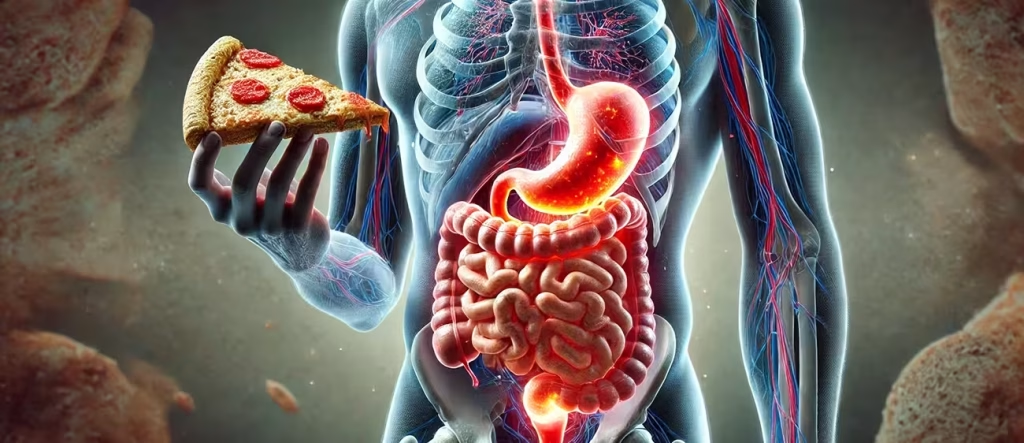
The gut is usually the first place where gluten causes trouble, especially in people who have sensitivities.
When gluten triggers inflammation, it irritates the gut lining and this can increase intestinal permeability (which is also called by the gross name “leaky gut.”) In this state, the gut lining isn’t functioning as it should be, and small particles (like undigested food, toxins, or bacteria) can pass through into the bloodstream. That can kick off an immune response and even more inflammation.
There’s also evidence that gluten very possibly alters the gut microbiome, which is the collection of bacteria that live in your digestive tract. A disrupted microbiome has been linked to everything from IBS (irritable bowel syndrome) to anxiety to other autoimmune conditions.
Not so fun fact: A gluten sensitivity is sometimes confused with IBS, because most of the symptoms overlap.
Below are the most common digestive symptoms that are associated with gluten sensitivity:
- Bloating
- Gas
- Diarrhea or constipation
- Abdominal cramps or pain
If the above symptoms come about after you eat gluten, it’s worth looking into!
Gluten and the Brain
This was something that was news to us—gluten affects more than your stomach! We had no idea that it could also wreak havoc with your cerebral matter.
There are people who have clocked that eating gluten leaves them feeling mentally foggy, forgetful, or emotionally off. These are the symptoms that won’t show up on a blood test, but they’re real just the same. Scientists are still researching exactly why this happens, but there are some theories that exist.
One explanation is the gut-brain connection. Inflammation in the gut sends signals to the brain that set off mood changes, anxiety, or fatigue. Another possibility is that gluten itself (or the peptides that it breaks into) could affect neurotransmitters or brain chemistry.
There’s also a condition called gluten ataxia, which is a rare but serious neurological reaction to gluten that affects a person’s coordination, balance, and muscle control. It’s more common in people who have a genetic predisposition to celiac disease.
Gluten and Skin
If your skin has been acting up and no skin care routine has helped, gluten could be a main suspect, particularly for those who have celiac disease.
The most studied and common skin reaction to gluten is known as dermatitis herpetiformis (that’s a mouthful). It’s a chronic, itchy, blistering rash that usually appears on the elbows, knees, or your posterior (yes, your butt cheeks). It’s linked directly to gluten exposure, and it’s considered a skin manifestation of celiac disease.
But even those who don’t suffer from celiac have noticed that they get flare-ups in eczema or acne after eating gluten. The theory is that the inflammation that’s caused by gluten (especially in people with sensitivities) can manifest and show up on the skin, just like it can in the gut or joints.
Is gluten always the cause of skin issues? Nope! But if you’ve tried every cream and cleanser at Ulta and Sephora and don’t get any relief, it’s definitely smart to track what you’re eating to see if there’s a connection.
Other Systemic Effects
One of the dodgiest things about gluten reactions is that they don’t always present as a problem with the stomach!
Here is what some people have noticed:
- Joint pain or stiffness
- Ongoing fatigue
- Hormonal shifts (like irregular menstrual cycles or worse than usual PMS)
- Flare-ups of autoimmune conditions
There’s ongoing research that suggests that gluten can trigger or worsen inflammation in other parts of the body, especially in people who have autoimmune tendencies. Gluten certainly isn’t the cause of every issue, but it can act like fuel for the fire if the immune system is already on high alert.
Again, this doesn’t mean that gluten is harmful for everyone! But for some, it’s not a “a food issue.” It’s a whole-body reaction.
Why Some People Tolerate Gluten Just Fine
Who are these magical people who have no problems whatsoever with gluten? Most of the people in the world!
They are able to digest it without any issues at all. If you have a healthy gut barrier, a balanced microbiome, and no genetic predisposition for immune reactions, gluten just gets broken down and keeps it moving.
So, for the people who land in this category, cutting out gluten probably won’t offer any noticeable health benefits, and in some cases, it could make it harder to get certain nutrients (like fiber or B vitamins) if you’re not replacing them as you should.
If you’ve never had an issue with gluten, and you feel just fine after eating it, there’s probably no reason to cut it out just because it’s become super trendy to do it. If it ain’t broke, don’t fix it!
Should You Go Gluten-Free?

Gluten-free diets definitely aren’t a one-size-fits-all kinda deal. For those who have celiac or an obvious sensitivity, going gluten-free radically improves their health, and it’s a necessity, not any kind of a choice. But for anyone who has the option to choose, you have to approach it with intention!
If you’re thinking about it, here are some practical tips to get you started:
- Don’t completely eliminate gluten before you get tested for celiac. Why? Because the test only works if gluten is still in your system.
- Start a symptom journal so that you can notice any patterns. It will also help you have more informative convos with your doc when you’re discussing your health issues.
- If you do embark on an elimination diet, you should be working with a registered dietitian or a medical professional so that you make sure that you’re still getting all of the nutrients you need!
FYI: Just because it says “gluten-free” doesn’t give it the healthy green light. There are a ton of gluten-free products that are loaded with sugar, starches, and additives. You want to remove gluten but also eat in a way that best supports your energy, digestion, and overall well-being!
Summary & Takeaways
How can a little protein be so powerful? We don’t know, and doctors and science don’t seem to have any answers, either! We don’t know why, but we do know that it affects different people in different ways, which is why the little bugger is such a complicated topic. For a majority of the world, it’s totally harmless. But for the remainder, it’s the sole source of a laundry list of painful and serious symptoms.
Look below for a quick recap of all things gluten:
- Gluten is a natural protein that’s found in wheat, barley, and rye.
- It gives structure and chewiness to baked goods and processed foods.
- For people who have celiac disease, gluten triggers an autoimmune reaction that damages the small intestine.
- Non-celiac gluten sensitivity causes symptoms like fatigue, brain fog, and bloating, but without the accompanying intestinal damage like with celiac disease.
- Gluten can affect not only the gut, but also the brain, skin, joints, and hormone balance.
- The majority of people tolerate gluten with no issues, especially if their gut and immune system are in good shape.
- If you think gluten is affecting you in a negative way, you should talk to your healthcare provider before you decide to make any changes or overhaul your entire diet!
Gluten sounds like such a harmless thing—and it usually is—but you should pay attention to how your body responds to it. And if something feels like it’s off, don’t be afraid of asking questions and doing research! Talk to your doctor and take control of your health if you think that gluten is affecting you in a negative way. It never hurts to ask!