

On this page
The first trip we took after going gluten-free was a disaster. We drove six hours to visit family, and I packed exactly one granola bar because I figured we’d just find something along the way. By hour three, I was starving and staring at a gas station snack wall with no idea what was safe. I ended up eating a banana and some plain potato chips from a brand I Googled in the parking lot. That was lunch.
I learned a lot from that trip — mostly that traveling gluten-free requires actual planning, not just good intentions. But here’s the thing: once you have a system, it’s not hard. It just takes a little prep. And the payoff is huge — you get to actually enjoy your trip instead of spending the whole time anxious about food.
Whether you’re road-tripping, flying, traveling internationally, or just heading to a hotel for the weekend, this guide covers everything you need to eat safely and well while you’re away from your own kitchen.
Before You Leave: The Prep That Makes Everything Easier
The difference between a stressful trip and a smooth one almost always comes down to what you do before you leave the house. I spend about 30 minutes prepping food for any trip, and it saves me hours of stress on the road.
Pack Your Own Food
This is non-negotiable for our family, no matter how short the trip. You don’t need to pack full meals (though you can). At minimum, pack enough safe snacks to get you through any stretch where food options might be limited.
- Non-perishable snacks: GF granola bars (we love KIND bars — most varieties are gluten-free), individual nut butter packets, trail mix, rice cakes, GF crackers, and dried fruit. These live in a dedicated travel bag that I keep stocked year-round.
- Perishable snacks (for shorter trips): Cheese sticks, hard-boiled eggs, cut veggies with hummus, GF deli meat roll-ups, and fresh fruit. Pack these in a small cooler or insulated bag.
- Full meals (for road trips): GF sandwiches on your favorite bread, mason jar salads, rice bowls with protein, or wraps using GF tortillas. Having at least one real meal packed means you’re not dependent on finding a safe restaurant at a specific time.
Research Your Destination
Before you leave, spend 15 minutes researching food options at your destination. This small investment of time pays off enormously:
- Use the Find Me Gluten Free app to search for restaurants at your destination and along your route. Read the reviews from other celiac and GF diners — they’ll flag cross-contamination issues that regular reviews won’t mention.
- Search for grocery stores near your hotel. Even if you’re not cooking, having access to a grocery store means you can stock up on safe snacks, fresh fruit, yogurt, and GF bread once you arrive.
- Check your hotel situation. A room with a mini-fridge is a huge advantage. A suite with a kitchenette is even better. When booking, I always look for rooms with at least a fridge and microwave — it dramatically expands your food options.
- Look up the restaurant situation at your destination. Our Restaurant Finder can help you locate GF-friendly spots wherever you’re headed.
Road Trips: Eating Safely on the Highway
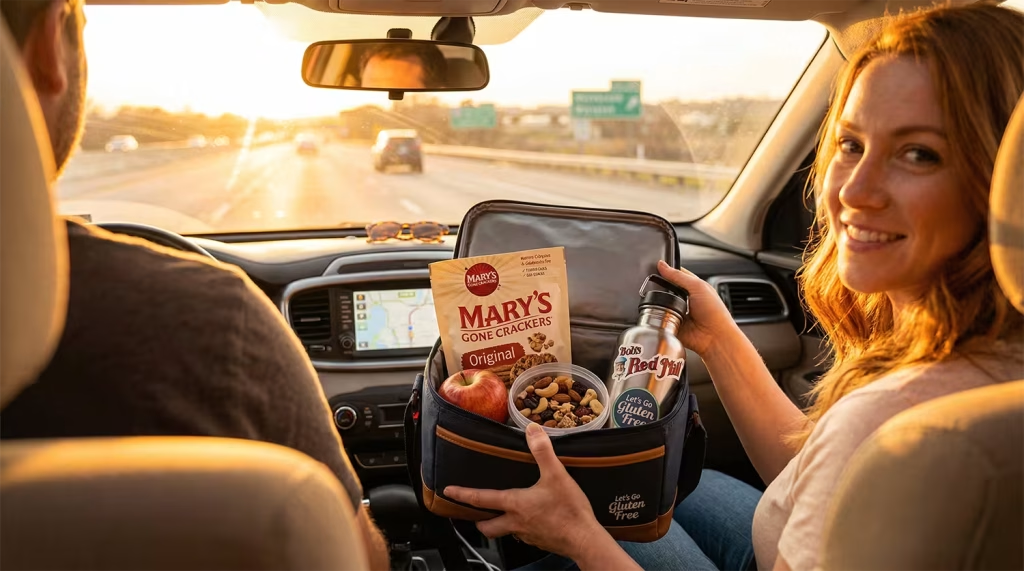
Road trips are honestly one of the easier travel scenarios once you’re prepared. You control the car, the schedule, and the cooler. Here’s how to handle the food side:
- Pack a cooler with real food. Don’t rely on highway rest stops. Most gas stations and rest areas have almost nothing that’s reliably gluten-free beyond packaged nuts, fruit, and maybe some chips. A cooler with sandwiches, fruit, cheese, and drinks means you can eat whenever you want without detour stress.
- Know your safe highway chain options. Chipotle, Chick-fil-A, and In-N-Out (in the western US) are our go-to highway stops. We plan our route to pass near one of these when possible.
- Use rest stops for breaks, not meals. Stop to stretch and use the restroom, but eat from your cooler in the car or at a picnic table. It’s faster, cheaper, and safer.
- Keep emergency snacks in the glove box. GF bars, nuts, or crackers that can survive heat and don’t need refrigeration. These are your backup for unexpected delays.
Flying: How to Eat Safely in Airports and on Planes
Air travel adds some specific challenges — you can’t bring a cooler through security, airline food is almost never safe, and airport restaurants are hit-or-miss. Here’s how to handle it:
Before Security
Eat a full, safe meal before you leave for the airport. This is the simplest way to reduce your dependence on airport food. If your flight is early morning, eat at home. If it’s later in the day, eat lunch before you head out.
Through Security
TSA allows solid food through security. Pack a full bag of snacks and even a sandwich. The only restriction is liquids — so hummus, yogurt, and soups over 3.4 oz need to go in your checked bag or stay home. Solid foods like bars, fruit, sandwiches, crackers, nuts, and GF cookies all fly through security without issue.
In the Airport
If you need to buy food in the terminal, here are your best bets:
- Look for grab-and-go options: Pre-packaged salads, fruit cups, cheese and nut boxes, and hummus with veggies. Check labels carefully — even pre-packaged items can contain hidden gluten.
- Chain restaurants in the terminal: Many airports have Chipotle, Chick-fil-A, or other GF-friendly chains. The food is the same as their street locations.
- Avoid anything from a shared bakery case or deli counter where cross-contamination is virtually guaranteed.
On the Plane
Do not rely on airline food. Most airline meals contain gluten, and even “special dietary” meals are unreliable. Some airlines offer GF meal requests, but the quality and safety vary enormously. Eat from your own packed food, and treat anything the airline offers as a bonus if it happens to be safe.
International Travel: The Extra Layer of Complexity
Traveling internationally with celiac disease or gluten sensitivity adds a language barrier and unfamiliar food systems to the mix. But it’s absolutely doable — we’ve done it, and so have many readers who’ve shared their tips with us.
- Get a gluten-free dining card in the local language. These are small cards (printable or digital) that explain your dietary needs in the language of your destination. They specify celiac disease, the grains to avoid, and cross-contamination concerns. The Celiac Travel app and several websites offer these for free or cheap in dozens of languages.
- Research which cuisines are naturally GF-friendly. Mexican, Thai, Indian, and many Mediterranean cuisines are naturally rich in gluten-free options. Italian and Chinese cuisines abroad are just as risky as they are at home — sometimes more so.
- Book accommodations with a kitchen. An Airbnb or a hotel with a kitchenette lets you cook at least some of your own meals, which dramatically reduces your stress and risk. Even being able to make breakfast and pack lunch means you only need to navigate one restaurant meal per day.
- Visit local grocery stores. Grocery shopping abroad is one of the best parts of international travel, honestly. Many countries — especially in Europe — have excellent gluten-free sections in their supermarkets. Italy, despite being pasta central, has some of the best GF product selections in the world because celiac awareness is extremely high there.
- Learn a few key phrases. “I have celiac disease,” “Does this contain wheat?”, and “No flour, please” in the local language go a long way. Even a stumbling attempt shows you’re serious and helps the restaurant understand your needs.
Hotels and Vacation Rentals: Setting Up for Success
Where you stay matters almost as much as where you eat. Here’s how to set yourself up:
- Request a fridge. Most hotels will provide a mini-fridge if you mention a medical dietary need. Call ahead and ask.
- Hit the grocery store first. Before you even unpack, stop at a nearby grocery store and stock up on breakfast items, snacks, and drinks. Having a stash of safe food in your room means you’re never starting the day hungry or scrambling.
- Bring your own basics. A small zip bag with GF oats, a travel mug, and your favorite GF bread means you can make breakfast in the room every morning. It saves money and starts your day stress-free.
- If you have a kitchenette, use it. Even cooking dinner in your room two or three nights out of a week-long trip makes a huge difference in both safety and budget.
The Travel Packing Checklist
Your Gluten-Free Travel Kit
- GF snack bars (enough for 2 per day of travel)
- Individual nut butter packets
- GF crackers or rice cakes
- Trail mix or nuts
- Small bottle of GF tamari or soy sauce
- Gluten-free dining cards in the local language (if traveling internationally)
- Find Me Gluten Free app downloaded with offline data for your destination
- Any medications or supplements in your carry-on
- A reusable water bottle and utensils
Don’t Let Gluten-Free Hold You Back
I’ll be honest — there was a stretch after our diagnosis where I didn’t want to travel at all. The idea of being away from my own kitchen, away from the grocery stores I knew, and at the mercy of unfamiliar restaurants felt overwhelming. But we pushed through it, and I’m so glad we did.
Traveling gluten-free has a learning curve, just like everything else in this lifestyle. But once you’ve done it a few times, you develop your system. You know what to pack, where to eat, and how to ask for what you need. And then it just becomes part of how you travel — not something that stops you from traveling.
The world is absolutely still open to you. Go explore it.
For more on building a practical gluten-free lifestyle that doesn’t hold you back, visit our Gluten-Free 101 hub or download our free guide to get started. And when you’re home and ready to get back to your own kitchen, our meal planner and recipe collection are here for you.