
There’s a moment that almost everyone in the gluten-free community knows — the one where someone you love says, “Can’t you just have a little bit?” or “I think you’re overthinking this.” It’s not said with malice. Usually it comes from someone who genuinely cares about you but just doesn’t understand what gluten actually does to your body. And yet, it still stings.
When our oldest was diagnosed, the hardest part wasn’t learning to cook differently or finding safe products. It was getting the people around us to take it seriously. My own mother — who loves us fiercely — spent the first six months thinking this was something he’d “grow out of.” My husband’s coworkers made jokes about our “trendy diet.” And every family dinner became an exercise in explaining, defending, and smiling through comments that made me want to scream.
If you’re in that phase right now, I see you. It gets better. But it gets better faster when you approach these conversations with the right strategy. This guide covers how to explain your needs, set boundaries, and bring your people along without burning relationships in the process.
Why People Resist (It’s Usually Not About You)
Before we talk about what to say, it helps to understand why the people closest to us sometimes react poorly to a gluten-free diagnosis. In my experience — both as a nurse and as someone who’s had these conversations dozens of times — the resistance usually comes from one of a few places:
- They don’t understand the medical reality. Many people still think “gluten-free” is purely a diet trend. They don’t know the difference between celiac disease, gluten sensitivity, and someone who saw a documentary and decided to try it. If they think you’re in the third category, their skepticism makes sense — even if it’s wrong.
- Food is emotional for them. When your mother-in-law’s famous pasta dish is suddenly off the table, she may hear that as a rejection of her cooking, her tradition, or even her love. It’s not rational, but food and emotion are deeply intertwined.
- Change is uncomfortable. Your dietary needs may require them to change how they cook, where they eat, or how they plan gatherings. People resist change, especially when it feels imposed on them.
- They’re worried about you. Some people express concern through skepticism. “Are you sure you need to do this?” can actually mean “I’m scared this is going to make your life harder.”
Understanding the root of the resistance helps you respond to what’s actually going on, not just the words on the surface. For more on the emotional side of this lifestyle, our Gluten-Free 101 section covers the psychological adjustment alongside the practical basics.
The Conversation Framework That Works
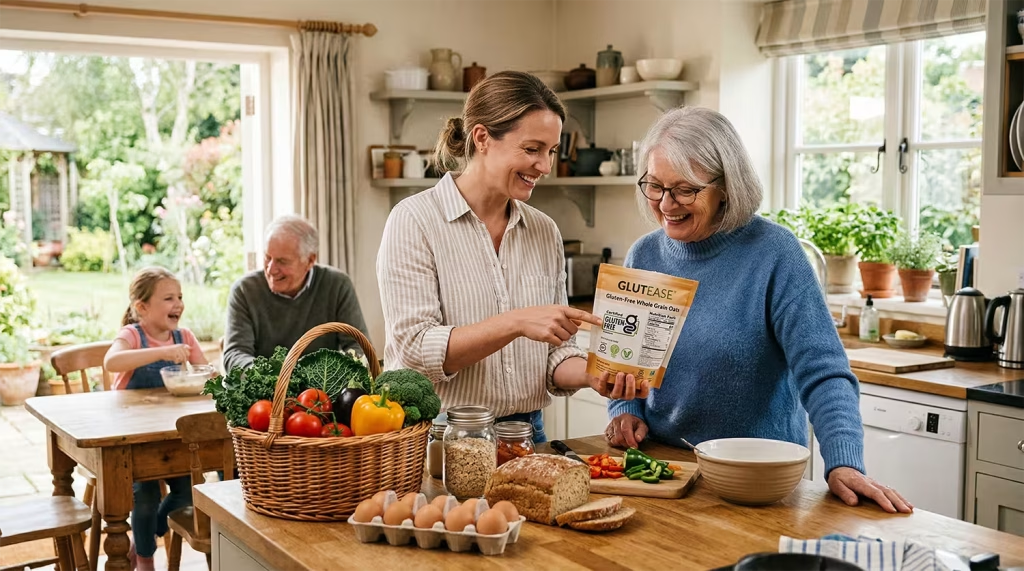
I’ve found that the most effective conversations about gluten-free needs follow a simple structure: educate, empathize, and empower. Here’s what that looks like in practice:
Educate: Keep It Simple and Medical
You don’t need to deliver a lecture on autoimmune biology. A few clear sentences are more effective than a TED talk:
“When I eat gluten — even a tiny amount — my immune system attacks my small intestine. It’s an autoimmune condition called celiac disease, and the only treatment is a completely gluten-free diet. It’s not a preference or a trend — it’s a medical necessity, like a peanut allergy.”
The peanut allergy comparison is powerful because most people already take nut allergies seriously. It immediately reframes your needs from “picky eater” to “genuine medical condition.”
For people with non-celiac gluten sensitivity, you might say: “I have a diagnosed medical sensitivity to gluten. When I eat it, I get seriously sick — severe stomach pain, brain fog, joint pain. My doctor confirmed it, and the only treatment is avoiding gluten completely.”
Empathize: Acknowledge Their Feelings
This is the step most of us skip, and it’s the one that makes the biggest difference. Before you ask someone to change anything, acknowledge what this means for them:
“I know this changes things. I know your rolls are a family tradition, and I wish I could still eat them. This isn’t about your cooking — your cooking is wonderful. It’s about what my body can handle.”
When people feel heard, they become allies. When they feel judged or lectured, they dig in.
Empower: Give Them Something They Can Do
Most people want to help — they just don’t know how. Give them specific, doable actions:
- “You don’t need to change your whole menu. Just let me know what you’re making, and I’ll figure out what I can eat and bring a dish to fill in the gaps.”
- “If you want to make something I can eat, the easiest thing is [specific simple dish]. I can send you the recipe.”
- “When we eat out together, restaurants with grilled options work best for me. Here are a few places I know are safe.”
Handling Specific Difficult Comments
Let’s get practical. Here are the comments you’re most likely to hear and how to respond without losing your cool:
- “Can’t you just have a little bit?” — “Unfortunately, no. With celiac disease, there’s no safe amount. Even a crumb can make me sick for days. I wish it worked that way, but it doesn’t.”
- “You were fine before — what changed?” — “I was actually getting sick before and didn’t know why. Once I was diagnosed, everything made sense. The damage was happening whether I could see it or not.”
- “I think it’s all in your head.” — “I understand why it might seem that way, but celiac disease is a diagnosed autoimmune condition. It shows up on blood tests and biopsies. It’s as real as diabetes or thyroid disease.”
- “This gluten-free thing is just a fad.” — “The fad part is real — a lot of people try it as a diet trend. But for people with celiac disease, it’s a lifelong medical treatment. I wish it were optional for me, but it’s not.”
- “You’re making this harder than it needs to be.” — “I’m doing my best to keep it as simple as possible. The planning I do isn’t about being difficult — it’s about staying healthy so I can be present and enjoy time with you.”
Setting Boundaries Without Starting a War
There’s a difference between educating someone and arguing with them. At some point, if someone continues to dismiss your needs after you’ve explained them clearly and kindly, you need to set boundaries. Here’s how to do that without blowing up the relationship:
- Be direct but calm. “I’ve explained my medical needs, and I need you to respect them even if you don’t fully understand them. This isn’t something I’m willing to debate.”
- Remove the negotiation. You don’t need anyone’s permission to manage your health. If someone won’t accommodate you, bring your own food. If they cook something unsafe and insist you eat it, politely decline. You don’t owe an explanation every time.
- Protect your kids fiercely. If your child has celiac disease and a family member won’t take it seriously, that’s a safety issue, not a politeness issue. Be clear: “I need you to follow these rules with our child’s food. If that doesn’t happen, we’ll need to handle meals differently.” Our guide on checking whether foods are safe can be a helpful resource to share.
When People Come Around (And They Usually Do)
Here’s the encouraging part: most people do come around. My mother — the one who thought our son would “grow out of it” — is now the most vigilant label reader in the family. She keeps a dedicated GF shelf in her pantry for when we visit. She texts me photos of ingredient lists before she buys anything. It took time, but she got there.
The turning point is usually when someone sees the real consequences — either they witness a glutening reaction, or they spend enough time with you to understand that this isn’t something you’d choose voluntarily. Patience, consistency, and grace go a long way.
You’re Not Alone in This
The social side of going gluten-free is genuinely one of the hardest parts — harder than the cooking, harder than the grocery shopping, harder than the label reading. But it does get easier. You’ll find your words. You’ll find your boundaries. And you’ll find that the people who truly love you will meet you where you are.
For more practical support on building a sustainable gluten-free life, explore our free guide, dive into our Living Gluten-Free section, or connect with our community of people who genuinely get it. You’ve got this — and you’re not doing it alone.