Getting a celiac disease or gluten sensitivity diagnosis turns your pantry into a minefield overnight. Every can, jar, and box suddenly feels suspect — and the instinct to throw everything out and start over is completely understandable. But that approach can cost you hundreds of dollars you don’t need to spend.
The truth is, most of your pantry is probably fine. Knowing exactly what to toss, what to keep, and what to replace — and in what order — can save you real money during an already stressful time. Your gluten-free pantry staples should be built strategically, not impulsively.
I went through this exact panic when I first went gluten-free. I remember standing in my kitchen at 10pm, reading every label with a flashlight and Google, genuinely unsure if my cumin was going to hurt me. It was exhausting. That’s exactly why I wrote this guide — to give you the clear, practical roadmap I wish I’d had.
Below, I’ll walk you through the toss-vs-keep decision framework, the essential replacements to prioritize by budget, and the mistakes that trip up almost every newly diagnosed family.
Key Takeaways
- Most naturally gluten-free foods in your pantry (canned tomatoes, oils, pure spices) don’t need to be replaced — only items with gluten-containing ingredients or high cross-contamination risk do.
- Porous kitchen tools like wooden spoons, cutting boards, and scratched non-stick pans need to go — they harbor gluten even after washing.
- Build your replacement pantry in tiers: start with naturally GF whole foods, add certified GF staples, then specialty products last.
- Over-buying expensive specialty GF items before you know your preferences is one of the costliest mistakes newly diagnosed families make.
- Certification labels matter — look for the Gluten-Free Certification Organization (GFCO) seal when buying processed foods.
What to Toss Immediately (No Debate)
Some things need to go right away — no label-reading required. These are items that either contain gluten directly or are so porous that they’ve permanently absorbed gluten from past use.
Foods to Discard
- All-purpose flour, bread flour, cake flour, semolina, and wheat germ — these are pure gluten sources
- Regular pasta, couscous, and bulgur
- Regular bread, crackers, and baked goods
- Breadcrumbs and panko
- Conventional soy sauce — most brands contain wheat (swap for tamari or coconut aminos)
- Malt vinegar and most beer
- Barley-based cereals and oats that are not certified gluten-free
- Shared condiment jars (peanut butter, jam, mayo, butter) that have had a regular bread knife double-dipped into them — these are contaminated
Kitchen Tools to Replace
- Wooden spoons, spatulas, and cutting boards — wood is porous and cannot be fully cleaned of gluten
- Scratched non-stick pans and plastic colanders — scratches trap gluten proteins
- Toaster — crumbs are impossible to remove; get a dedicated GF toaster and keep it separate
- Bread machine paddles if you plan to make GF bread
- Cast iron pans that were used with flour-coated foods regularly — these are very difficult to fully re-season safely
What to Keep (You Don’t Need to Replace This)
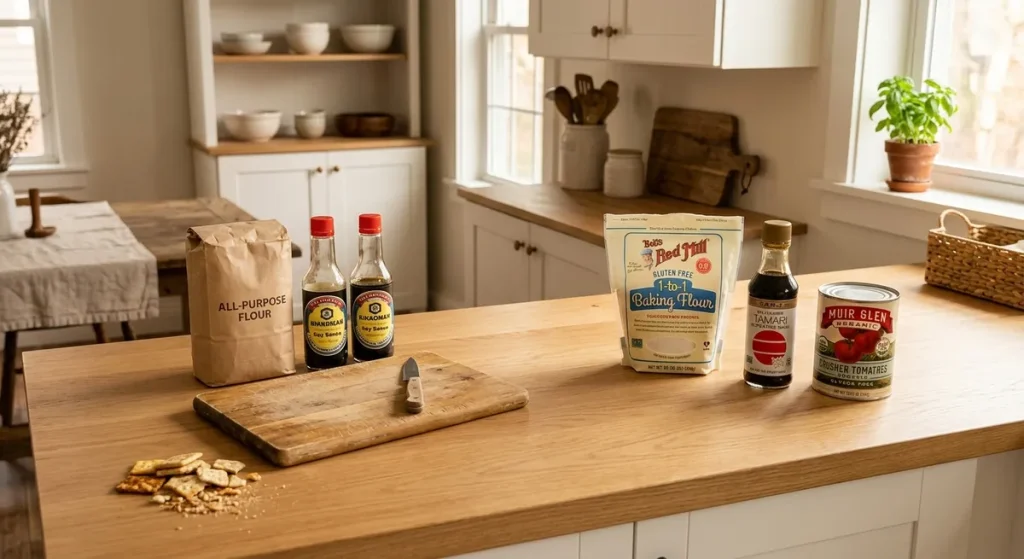
Here’s where most newly diagnosed people waste money — replacing things that were already safe. A huge portion of a standard pantry is naturally gluten-free and totally fine to keep.
Keep These — They’re Already Safe
- Pure olive oil, avocado oil, coconut oil, and vegetable oil
- Canned tomatoes, tomato paste, and crushed tomatoes (check labels — most major brands are GF)
- Canned beans, lentils, and chickpeas (plain, no seasoning packets)
- Pure single-ingredient spices (garlic powder, cumin, chili powder, paprika)
- White rice, brown rice, and wild rice
- Quinoa (naturally gluten-free — check for a GF label if celiac)
- Apple cider vinegar and white wine vinegar (safe — only malt vinegar contains gluten)
- Honey, pure maple syrup, and sugar
- Baking soda and cream of tartar
- Nuts and seeds (plain, unflavored)
- Coconut milk, beef broth, and chicken broth (verify labels — most are GF)
- Dark chocolate (70%+ cacao — check for wheat in the ingredients)
If you have celiac disease, you should also read labels carefully on spice blends and seasoning packets — these sometimes contain wheat flour as a filler or anti-caking agent. Hidden sources of gluten in spice blends catch a lot of people off guard.
How to Rebuild Your Gluten-Free Pantry Staples by Budget Tier
Not everyone can replace everything at once — and you shouldn’t try to. Here’s a practical three-tier approach that prioritizes your spending where it matters most.
If budget is a real concern — and for most families it is — stores like Costco and Aldi have dramatically improved their GF selections in recent years. You can read our full breakdown in Costco vs. Aldi: The 2026 Showdown for the Best GF Pantry Deals to see where each store wins.
Our Top Gluten-Free Pantry Staples to Buy First
These are the items I recommend adding in your first two weeks — the backbone of a functional GF kitchen. I’ve tested all of these with my family (two picky boys included), and they’ve all earned a permanent spot in my pantry.
This is the single most versatile GF flour blend on the market. It’s certified gluten-free by GFCO, works as a true 1-to-1 substitute in most recipes, and is widely available at mainstream grocers. It’s the first flour blend I reach for when adapting a family recipe.
Made from a corn and rice blend, Barilla GF pasta holds up well and doesn’t get mushy — a common complaint with other GF pastas. It’s widely available and one of the most affordable options at mainstream grocery stores. Great for weeknight pasta dishes.
San-J Tamari is certified gluten-free and made from 100% soy with no wheat. It’s the closest flavor match to regular soy sauce and works in any recipe that calls for it. My boys don’t notice a difference in stir-fries or fried rice.
These are grown and processed in dedicated GF facilities and carry GFCO certification. They’re pricier than conventional oats but essential for celiac-safe baking and breakfast. Use them in our GF oatmeal cookies or morning oatmeal.
If you’re going to try one GF bread, make it this one. Canyon Bakehouse is a dedicated gluten-free brand with GFCO certification, and their Mountain White Bread is the closest to conventional sandwich bread in texture. It’s also one of the few GF breads Austin and Alex will eat without complaining.
One to Approach Cautiously
Generic store-brand “gluten-free” flour blends vary wildly in quality and may not be certified. Some contain xanthan gum in proportions that don’t work for all baking applications. Until you understand GF baking chemistry, stick with established brands like Bob’s Red Mill or King Arthur Measure for Measure Gluten-Free Flour.
Common Pantry Restocking Mistakes to Avoid
I’ve made most of these myself. Learn from my expensive trial and error so you don’t have to.
- Replacing everything at once. Your budget doesn’t need that kind of shock. Use the tier system above and replace as you run out of things.
- Buying 3 bags of every new GF flour. GF flours behave very differently from each other. Buy one bag, try it in a recipe, then decide if it belongs in your pantry. Our GF Baking Ratios Cheat Sheet can help you understand which flours work for which purposes.
- Assuming “wheat-free” means gluten-free. Wheat-free products can still contain barley or rye — both contain gluten. Always look for an explicit “gluten-free” label or GF certification.
- Forgetting about oats. Conventional oats are heavily cross-contaminated with wheat during growing and processing. Only use oats labeled certified gluten-free if you have celiac disease.
- Keeping shared condiments. That half-empty jar of peanut butter that’s had a regular bread knife in it is contaminated. Fresh jars, fresh start.
- Ignoring the spice blend problem. Pure single spices are usually safe, but spice blends — taco seasoning, ranch packets, seasoning mixes — often contain maltodextrin or flour. Always read the full ingredient list.
Frequently Asked Questions
Most pots and pans are fine to keep — stainless steel and enameled cast iron can be thoroughly cleaned and are safe to reuse. The exceptions are scratched non-stick pans, unglazed ceramic, and seasoned cast iron that’s been used heavily with flour-coated foods. When in doubt, replacing a $15 pan is cheaper than a glutening.
Many GF families run a mixed kitchen successfully with strict protocols — dedicated cookware, separate toasters, and labeled shelves. However, for newly diagnosed families still learning the ropes, a fully GF household makes the transition much safer and simpler. Our guide on avoiding cross-contamination at home has practical tips for managing a mixed kitchen.
Look for third-party certification from the Gluten-Free Certification Organization (GFCO), which requires products to test at 10 parts per million or less — stricter than the FDA’s 20 ppm standard. You can also check the GFCO product database to verify certification status. Labels that just say “gluten-free” without a certification seal are self-reported by the manufacturer.
Naturally gluten-free whole foods are your biggest budget win — plain rice, potatoes, corn tortillas, eggs, fresh vegetables, beans, and plain meats cost the same as conventional food and require no specialty shopping. Build your pantry around these first before adding certified GF specialty products. For more ideas, see our guide to gluten-free meals under $5 per serving.
For pure single-ingredient spices (like cumin, turmeric, or paprika) from reputable brands, the spice itself is almost certainly gluten-free. The risk is if someone dipped a contaminated spoon into the jar. If your household was using flour heavily in the kitchen, replacing shared spice jars is a reasonable precaution for celiac disease, but not strictly necessary for most people with gluten sensitivity.
Restocking Smart Beats Restocking Fast
Restocking a gluten-free pantry doesn’t have to happen all at once, and it definitely doesn’t have to cost a fortune. Start by removing the clear gluten sources and contaminated porous tools, then keep what’s already naturally safe, and rebuild in tiers — whole foods first, certified staples second, specialty items last. That order will save you money and a lot of unnecessary stress.
The early weeks of going gluten-free are genuinely hard. You’re grieving familiar foods, learning a new label language, and trying to keep your family fed through all of it. Give yourself grace — this gets easier, and you don’t have to get it perfect on day one. If you want a head start on what to cook with your new pantry, our complete 4-week gluten-free meal plan gives you exactly that, with a grocery list included.
Want a shortcut? Download our free GF Brand Trust List — it’s a tested-and-approved reference of the brands we actually buy, organized by pantry category, so you don’t have to research every label from scratch.