

In this guide
Dining Out Gluten-Free
Yes, you can absolutely eat out safely on a gluten-free diet — the secret is a few minutes of homework before you ever walk through the door. A quick menu scan, a recent review check, and a confident phone call let you arrive already knowing the kitchen can handle a celiac order, instead of finding out the hard way at the table.
I’m Katie, a registered nurse and gluten-free mom, and I’ve learned that eating out is less about luck and more about choosing the right kitchen at the right time. This hub walks you through the prep routine I share with every newly diagnosed friend, so you can enjoy a meal out with real peace of mind.
Can You Eat Out Safely with Celiac Disease?
Yes. Plenty of us with celiac disease eat out and stay healthy — I do it with my own family every week. But I want to be honest with you, friend to friend: dining out takes more planning than it used to, and the real risk usually is not the obvious basket of bread. It is the gluten you cannot see.
Here is the part that surprised me most when I was newly diagnosed. In a crowd-sourced study summarized by the Celiac Disease Foundation, about a third of restaurant foods labeled “gluten-free” still tested positive for gluten — with pizza and pasta the most likely to be contaminated. That is not a reason to give up. It is a reason to prepare.
The gap exists partly because of how the rules work. The FDA’s “gluten-free” standard of under 20 parts per million applies to packaged foods, not to meals served in restaurants, which fall to state and local oversight instead, per the FDA. So a “gluten-free” item on a menu is a kitchen’s good-faith claim, not a regulated guarantee. That single fact reframes everything: your safety comes from how the food is handled, not from the label.
Cross-contact is the thing to watch. It happens when a safe food touches gluten somewhere along the way:
- Shared fryers — fries cooked in the same oil as breaded items are a common culprit.
- Shared surfaces and utensils — the same cutting board, pasta water, grill, or pizza oven.
- Garnishes and finishing touches — croutons brushed off a salad, a regular bun swapped late, flour dusted nearby.
I also want to name the part nobody puts on a menu: eating out with celiac can feel isolating. Asking detailed questions, sending a plate back, or skipping the group appetizer is awkward, and it is okay to grieve the spontaneity you lost. You did not do anything wrong, and wanting to share a meal with people you love is human.
The encouraging truth is that preparation and clear communication make this genuinely manageable. The strategies in the sections below — choosing the right restaurants, talking to staff, and spotting red flags — are exactly how thousands of us eat out with confidence again. You’ve got this.
Do Your Homework Before You Go
A few minutes of prep before you leave the house is one of the most effective things you can do to eat out safely. A little homework lets you walk in already knowing the kitchen can handle a celiac order, instead of finding out the hard way at the table.
Here’s the routine I run through with newly diagnosed friends:
- Scout the menu online first — look for a dedicated gluten-free menu or an allergen guide, not just one or two items marked “GF.” A restaurant that has thought through allergens usually thinks through cross-contact, too.
- Read recent reviews from the GF community — focus on comments from the last several months, since menus, owners, and kitchen practices change often.
- Call ahead during off-peak hours — mid-afternoon, not the Friday dinner rush. Ask how they handle celiac orders: do they use a dedicated fryer, separate prep space, and clean utensils? A kitchen that answers confidently is a good sign; vague answers are useful information, too.
- Aim to dine at a slower time — an early or late seating means the kitchen is less slammed and your order gets the attention it needs.
This step matters more than it might seem. When researchers analyzed thousands of point-of-sale gluten tests on restaurant food labeled “gluten-free,” about a third of dishes still showed detectable gluten — and pizza and pasta were the worst offenders. A “GF” label alone isn’t a guarantee, so the goal of your homework is to find kitchens that genuinely understand cross-contamination, which is exactly what advocacy groups like Beyond Celiac recommend confirming before you go.
To make the scouting part easier, our restaurant finder is a great place to start narrowing down spots that other gluten-free diners trust. If you have celiac disease or another medical condition, talk with your own care team about how strict your needs are — but a confident phone call and a slower dinner hour will carry you a long way.
How to Talk to Your Server and the Kitchen
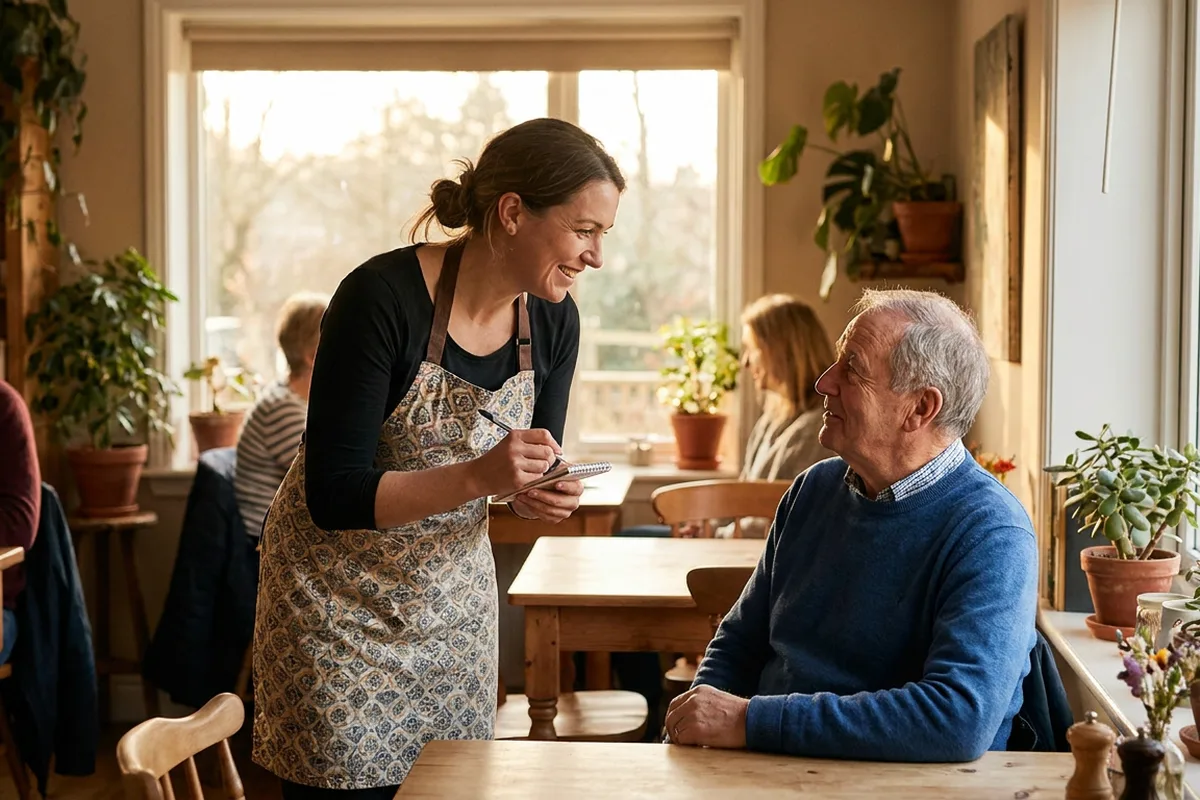
The single most important thing you can do at a restaurant is to lead with the word “celiac” (or “a medical gluten allergy”) rather than “I prefer gluten-free.” Staff hear “preference” all day and treat it like a diet choice; “medical” tells the kitchen this is a health issue that needs real care. Here’s the part that surprises a lot of newly diagnosed friends: a “gluten-free” menu label at a restaurant doesn’t carry the same legal weight as one on a packaged box. The FDA’s gluten-free rule (under 20 ppm) applies to packaged foods, and restaurant menu claims are not required to comply with that standard. So the menu is a starting point, not a guarantee. Your questions are what make it safe.
When the server comes over, I keep it warm but specific. Try something like: “I have celiac disease, so this is a medical thing, not a preference. Can you help me figure out what’s safe?” Then ask the questions that actually catch cross-contact:
- Dedicated fryer? — “Are your fries cooked in a fryer that’s only for gluten-free items?” Shared fryer oil is one of the most common hidden sources.
- Shared grill or prep surface? — “Is there a clean, separate space to prepare it, away from where buns and breaded items are made?”
- How is it cooked? — Ask about the marinade, the sauce, and whether anything is dusted in flour or hits a shared griddle.
- Clean tools? — “Can you use a clean pan, fresh utensils, and a new pair of gloves?”
If the order is complex or the server seems unsure, it’s completely reasonable to ask to speak with a manager or the chef, exactly what the Celiac Disease Foundation recommends doing when staff don’t understand the request. A printed chef card listing what you can’t have makes this easier and takes the pressure off you in a busy moment. You’re not being difficult, you’re giving the kitchen the information they need to feed you safely. You’ve got this.
Dishes That Are Easier — and the Hidden Traps
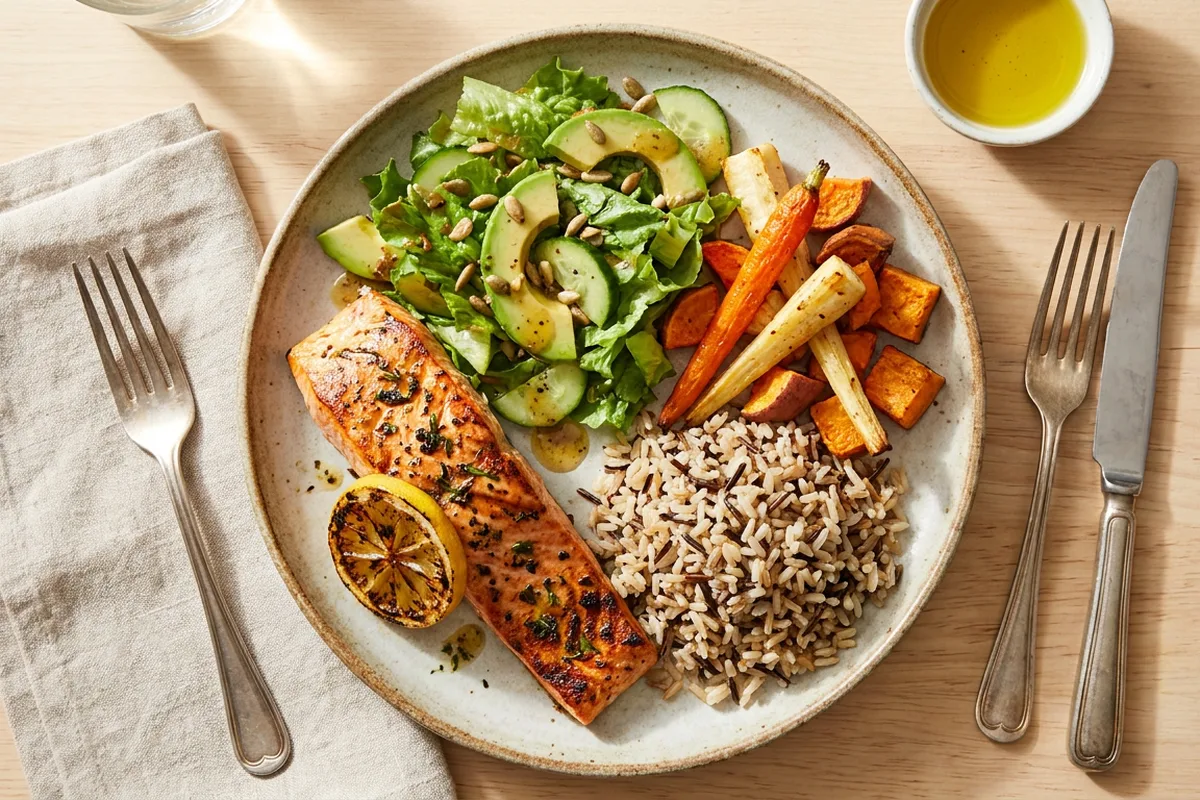
The simplest plates are usually the safest plates. When I’m helping a newly diagnosed friend pick something off a menu, I steer them toward foods that started out gluten-free and didn’t pick up flour along the way: a grilled steak, chicken, or fish; a salad ordered without croutons; corn-tortilla tacos at a Mexican spot; plain rice dishes; or a baked potato. Naturally gluten-free, minimally handled, easy to ask about.
The traps tend to hide in the parts you can’t see. Sauces, gravies, and many soups are thickened with a wheat-flour roux, and soy sauce is usually brewed with wheat — a big reason to ask before assuming any “Asian” dish is safe. A “lightly floured” protein, a marinade, or a crouton that gets scooped off but leaves crumbs behind can all carry enough gluten to make someone with celiac sick. The Celiac Disease Foundation flags soy sauce and flour-coated foods specifically and recommends choosing simple dishes without a coating or sauce and telling the kitchen you’ll be ill if there’s any gluten.
Watch the fryer especially. Even naturally gluten-free fries or corn chips become risky when they share oil with breaded items, so it’s worth asking whether there’s a dedicated fryer.
One thing that trips up a lot of newly diagnosed folks: a menu that says “gluten-free” isn’t a guarantee. The FDA’s 20-ppm gluten-free rule was written for packaged foods, not restaurant kitchens, where oversight falls to state and local agencies — so the label is a starting point for a conversation, not the end of one. Here’s how I’d think about it:
- Lean toward — grilled or roasted meats and fish, undressed salads (no croutons), corn-based Mexican, plain rice, and baked potatoes.
- Ask first about — soy sauce, marinades, gravies, and any soup, which often hide wheat as a thickener or base.
- Treat as higher-risk — anything fried in a shared fryer, “lightly floured” proteins, and dishes where a topping was simply removed.
Cross-Contact in a Restaurant Kitchen
Here’s the thing I wish someone had told me early on: a restaurant kitchen doesn’t have to put a single crumb of bread on your plate to make you sick. Gluten travels. It hitches a ride on shared equipment, lingering oil, and clouds of flour, and because gluten is a protein, heat doesn’t destroy it the way cooking kills most germs. The good news is that once you know where it transfers, you know exactly what to ask about.
The single biggest offender is the shared fryer. When naturally gluten-free fries or wings go into the same oil that just cooked breaded items, they pick up real gluten. In one pilot study, 25% of fries cooked in shared fryers tested above the gluten-free threshold — and you can’t tell by looking. This is why a dedicated fryer matters so much.
The other common transfer points in a busy kitchen:
- Shared grills and prep surfaces — wheat residue from buns, marinades, or floured cutlets lingers on the cooktop and the board.
- Pasta water and colanders — one pot of regular pasta water leaves gluten on every noodle that follows, and a shared colander does the same.
- Utensils and pans — the same tongs, spatula, or sauté pan moving between dishes carries gluten right along with it.
- Airborne flour — at pizzerias and bakeries, flour drifts and settles on everything, so even a salad can be exposed.
“Dedicated” is the word to listen for: a dedicated fryer, a clean or separate prep space, and fresh utensils mean the kitchen has a real system, not just good intentions. The Celiac Disease Foundation suggests asking directly — Is there a dedicated fryer? Do you clean the grill and use separate cookware? You’re not being difficult by asking; you’re giving the kitchen the information it needs to feed you safely. If the answers are vague or overly confident with no specifics, it’s okay to choose somewhere else. You’ve got this.
Can You Trust a "Gluten-Free" Menu?
Short answer: a “gluten-free” menu item is a helpful starting point, but it is not a guarantee the way a sealed package is. Here is the piece that surprised me as a newly diagnosed mom, and the thing I most want you to understand before you eat out.
The FDA’s “gluten-free” rule, which requires foods to contain less than 20 parts per million of gluten, applies to packaged foods made by manufacturers. It does not directly regulate restaurants. The agency leaves restaurant oversight to state and local authorities, so when a kitchen prints “gluten-free” on the menu, no federal lab is verifying that dish the way it would a boxed cracker (FDA).
That is why I always separate a gluten-free menu from a gluten-free kitchen. A menu tells you a dish has no gluten ingredients on paper. A kitchen with real protocols, like separate prep areas, dedicated fryers, and trained staff, is what actually protects you from cross-contact. The menu is the recipe; the kitchen is whether it reaches your plate safely.
So how do you vet trustworthiness? A few things I look for:
- Third-party training or certification — programs like Beyond Celiac’s GREAT Kitchens train and accredit restaurants on safe gluten-free prep, and they publish a list of accredited locations you can check (Beyond Celiac).
- Specific protocol language — confident answers about dedicated fryers, separate prep surfaces, and changed gloves signal a kitchen that gets it.
- Willingness to talk — call during off-peak hours and ask how they handle cross-contact. Hesitation or “everything’s probably fine” is your cue to be cautious.
If a restaurant can clearly describe how it prevents cross-contact, you can usually eat there with more confidence. When in doubt, it is always okay to ask more questions or choose a simpler dish. You’ve got this.
Keep Exploring
Frequently Asked Questions
Dining out gluten-free brings up the same handful of worries for almost everyone I talk to — from how to read a menu to what to say to your server. Here are the questions I hear most often, with answer-first guidance you can use the next time you make a reservation. As always, if you have celiac disease or another medical condition, check with your own care team about how strict your needs should be.
Is it actually safe to eat out with celiac disease?
Yes, many people with celiac disease eat out safely — but it takes a little planning rather than walking in cold. The biggest risk is cross-contamination, not the menu itself, so the goal is to find kitchens that genuinely understand how to keep gluten off your plate. When researchers tested restaurant food labeled gluten-free, about a third of dishes still showed detectable gluten, which is exactly why doing your homework matters so much. If your needs are especially strict, talk with your care team about what’s right for you.
How do I research a restaurant before I go?
Start by scouting the menu online, then back it up with recent community reviews and a quick phone call. Look for a dedicated gluten-free menu or a full allergen guide rather than one or two items simply marked GF, since a restaurant that has thought through allergens has usually thought through cross-contact too. Read reviews from the last several months, because menus, owners, and kitchen habits change often. Our restaurant finder is a great starting point for narrowing down spots that other gluten-free diners already trust.
What should I ask when I call ahead?
Ask how the kitchen handles celiac orders specifically — that one question tells you almost everything. I like to confirm whether they use a dedicated fryer, a separate prep space, and clean utensils for gluten-free dishes. A kitchen that answers confidently is a great sign, and vague or hesitant answers are useful information too. Call during off-peak hours like mid-afternoon, not the Friday dinner rush, so the person you reach actually has time to talk.
When is the best time to dine out gluten-free?
Aim for a slower time, like an early or late seating, when the kitchen isn’t slammed. When the line is out the door, even a well-meaning cook is moving fast and cutting corners on the careful steps your order needs. A quieter dining hour gives your meal the attention it deserves, and the staff more room to double-check how it’s prepared. It’s one of the easiest changes you can make, and it costs you nothing but a slightly different reservation.
Does a "gluten-free" label on the menu guarantee my food is safe?
Not on its own — a GF label tells you the recipe is gluten-free, but it doesn’t promise the kitchen prevents cross-contamination. The same dish can be safe in a kitchen with dedicated prep and risky in one where it shares a fryer or cutting board with wheat. That’s why I treat a menu label as a starting point, then confirm preparation with the staff before I order. Think of the label as an invitation to ask more questions, not a final answer.
What are the riskiest foods to order when eating out?
Fried foods, pizza, and pasta tend to carry the most cross-contamination risk. Shared fryers are a common culprit, so even naturally gluten-free fries can pick up gluten from battered items cooked in the same oil. Point-of-sale testing has found that pizza and pasta were the worst offenders for hidden gluten in restaurant meals. When in doubt, I lean toward simpler dishes — grilled proteins, salads, and naturally gluten-free options — and always ask how they’re prepared.
How do I talk to my server without feeling awkward?
Be warm, clear, and specific — most servers genuinely want to help once they understand it’s a medical need, not a preference. I usually say something like, “I need to avoid cross-contamination for medical reasons, not just gluten ingredients,” and then ask how a dish is prepared. Framing it as a health requirement helps the kitchen take the right precautions. There’s nothing rude about advocating for your health, and the right restaurant will treat your questions as completely normal.
What if the kitchen can't accommodate me safely?
If the answers feel vague or the kitchen can’t separate your order, it’s perfectly okay to choose somewhere else. A hesitant response isn’t a failure on your part — it’s helpful information that saves you from a risky meal and a rough recovery. I’d rather move on to a restaurant that understands celiac safety than gamble on one that doesn’t. Trust your gut: you know your needs best, and there’s always another option that will get it right.
Medically reviewed and last updated 2026-06-02.