

On this page
Gluten-Free Paris
Good news up front: Paris is one of the easiest big cities in the world to eat gluten-free. It has a wave of dedicated 100% gluten-free bakeries and restaurants, an EU law that makes restaurants tell you what’s in your food, and enough celiac awareness that “sans gluten” is a phrase people understand.
That said, France runs on bread, pastry, and flour-thickened sauces, so you’ll still want a plan for ordinary bistros. I’m Katie, a registered nurse and a gluten-free mom, and this is how to eat safely — and indulge a little — across Paris.
Is Paris Good for Gluten-Free Travelers?
Here’s the happy headline: Paris is one of the easiest big cities in the world to eat gluten-free. Three things work in your favor.
- A booming dedicated scene — Paris has an unusual number of 100% gluten-free bakeries and restaurants, where there’s no wheat in the kitchen and cross-contact risk is low.
- High awareness — France has a national celiac association (AFDIAG), “sans gluten” is widely understood, and the EU regulates the “sans gluten” label so the label actually means something.
- The law is on your side — EU law requires restaurants to disclose which dishes contain gluten, so staff are used to the question and required to answer it.
The one catch: mainstream French cooking runs on bread, pastry, and flour-thickened sauces. A random corner bistro still needs vetting — but with a plan and a few dedicated spots, you can eat safely and indulge a little.
The Hidden Gluten in French Food
The obvious baguette isn’t the only trap. Flour hides in a lot of classic French cooking.
- Bread, everywhere — baguettes, tartines, and croutons turn up on and beside almost everything.
- Viennoiserie and pastry — croissants, pain au chocolat, éclairs, tarts, and quiche crust are all wheat.
- Flour-thickened sauces — béchamel and many bistro sauces start with a wheat-flour roux, and French onion soup is often thickened with flour.
- Wheat crêpes (froment) — the sweet street crêpes are wheat, unlike the savory buckwheat galette.
- Pâté and charcuterie — some pâtés and sausages are bound with wheat or rusk, and remember rye (seigle) and barley (orge) contain gluten too (think rye bread and barley).
What's Naturally Safe (and Delicious)
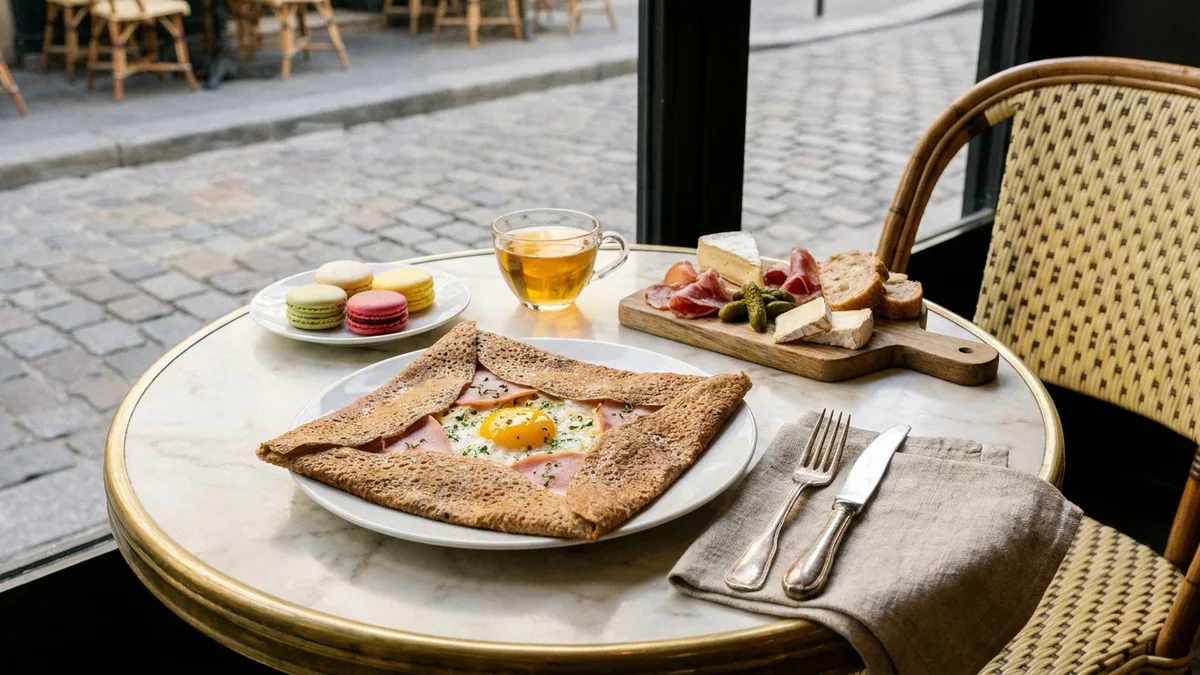
The good news is that some of the best things about eating in France are naturally gluten-free — once you confirm the seasoning and the prep.
Order these with confidence
- Buckwheat galettes (galette de sarrasin) — if they’re pur sarrasin and prepared safely, paired with naturally gluten-free cider.
- Macarons — made with almond flour, naturally gluten-free (watch for shared patisserie surfaces).
- Cheese and charcuterie boards — with the bread served on the side, and pâté confirmed flour-free.
- Steak and other grilled meats — confirm the frites aren’t flour-dusted or sharing a fryer.
- Classic custard desserts — crème brûlée, mousse au chocolat, and île flottante.
- Market food — cheeses, cured meats, and fresh produce from a covered market or fromagerie.
Even naturally gluten-free dishes deserve a quick check: ask whether a sauce was thickened with flour, and whether fried items share oil with breaded food.
Lean Into Paris's Dedicated Gluten-Free Scene
This is Paris’s superpower for celiacs. The city has a genuine collection of dedicated 100% gluten-free bakeries and restaurants — entire kitchens with no wheat — so you can finally have the thing France does best and usually keeps off-limits: real bread and pastry.
- Dedicated gluten-free bakeries — for GF baguettes, croissants, and tarts made where there’s no wheat to cross-contaminate them. Worth planning your day around.
- Dedicated gluten-free restaurants and crêperies — eat without the constant cross-contact worry; reserve the popular ones ahead.
- Organic shops (magasins bio) and supermarkets — carry “sans gluten” ranges, often marked with the AFDIAG crossed-grain symbol, for snacks and self-catering.
Map dedicated spots before you go and read recent reviews, since openings change. For the broader playbook on vetting any restaurant, pair this with our dining-out guide.
How to Order Safely: Cards, the Law & Key Words
Communicating your needs in Paris is easier than in most places — the awareness is there, and so is the law. A few habits seal it.
- Use the law — ask which dishes contain gluten; restaurants are required to know and tell you.
- Carry a French restaurant card — and learn the phrase “Je suis cœliaque” (I have celiac disease), which staff understand.
- Read the label — a “sans gluten” claim legally means no more than 20 parts per million of gluten, the celiac-safe threshold; the AFDIAG crossed-grain symbol signals the same.
- Learn a few words — they help you double-check a menu:
- sans gluten — gluten-free
- blé / froment — wheat (froment appears on crêpe menus)
- farine — flour
- seigle / orge / avoine — rye / barley / oats
- sarrasin (blé noir) — buckwheat (naturally gluten-free)
Frequently Asked Questions
The questions I hear most from gluten-free travelers headed to Paris. As always, weigh your own sensitivity and confirm preparation at each restaurant — even in a celiac-friendly city.
Is Paris a good place to travel if you have celiac disease?
Yes — it’s one of the best big cities for celiacs. France has high celiac awareness, an EU law requiring restaurants to disclose which dishes contain gluten, and a remarkable number of dedicated 100% gluten-free bakeries and restaurants. The one catch is that mainstream French cooking leans heavily on bread and flour-thickened sauces, so you’ll still vet ordinary bistros and lean on dedicated spots.
Can you get gluten-free bread and pastries in Paris?
Yes, and this is where Paris shines. Several dedicated 100% gluten-free bakeries make gluten-free baguettes, croissants, and pastries with no wheat in the kitchen, so cross-contact risk is low. It’s one of the few cities where a celiac can enjoy a genuinely good gluten-free croissant.
Are crêpes gluten-free in France?
It depends. Sweet crêpes are made with wheat flour (froment) and aren’t safe. Savory buckwheat galettes (galette de sarrasin) are traditionally gluten-free, but many crêperies blend in wheat flour and share griddles — order pur sarrasin and confirm a clean preparation, ideally at a dedicated gluten-free crêperie.
Does "sans gluten" mean it's safe for celiacs?
Generally, yes. “Sans gluten” is the EU-regulated gluten-free claim, meaning the food contains no more than 20 parts per million of gluten — the internationally accepted celiac-safe threshold. On packaged foods you may also see the AFDIAG crossed-grain symbol, the French celiac association’s certification.
How do I tell a French restaurant I have celiac disease?
Say “Je suis cœliaque” (I have celiac disease) or “sans gluten, s’il vous plaît,” and hand over a French gluten-free restaurant card for the details. Helpfully, EU law requires restaurants to know and disclose which dishes contain gluten, so staff are used to the question.
What French foods are naturally gluten-free?
Plenty: cheese and charcuterie boards (with bread served separately), macarons made with almond flour, steak, custard desserts like crème brûlée, and buckwheat galettes with cider when properly prepared. Always confirm sauces aren’t thickened with flour and watch for cross-contamination.
Medically reviewed and last updated 2026-06-03.