

On this page
Gluten-Free London
Good news up front: London is one of the easiest places in the world to eat gluten-free. Awareness is high, the law requires restaurants to tell you what’s in your food, “Free From” ranges fill every supermarket, and yes — you can have proper fish and chips.
The catch is that classic British cooking runs on batter, pastry, bread, and flour-thickened gravy, and shared fryers are a genuine cross-contamination risk. I’m Katie, a registered nurse and a gluten-free mom, and here’s how to eat safely and still enjoy the British greats across London.
Is London Good for Gluten-Free Travelers?
Genuinely good news: London is one of the easiest places in the world to eat gluten-free. Three things stack the deck in your favor.
- High awareness — thanks largely to the charity Coeliac UK, “gluten free” is well understood, widely catered to, and taken seriously as a medical need.
- The law is on your side — UK law requires food businesses to tell you which dishes contain gluten, and a “gluten free” label legally means the food contains no more than 20 parts per million of gluten.
- Free From is everywhere — every major supermarket (Tesco, Sainsbury’s, M&S, Waitrose) carries a large “Free From” range, and dedicated gluten-free bakeries and restaurants are easy to find.
The catch is that classic British cooking leans on batter, pastry, bread, and flour-thickened gravy, and shared fryers are a real cross-contamination risk. Know the traps and the right questions, and you can eat very well — fish and chips included.
The Hidden Gluten in British Food
Some of these are obvious; the condiments and bangers catch people out.
- Battered and fried — traditional fish and chips, scampi, and onion rings are coated in wheat batter and fried in shared oil.
- Pastry and pies — meat pies, sausage rolls, pasties, Yorkshire puddings, scones, and cakes are all wheat.
- Sausages (bangers) — most British sausages contain rusk (wheat), so the full English breakfast hides gluten in the sausages as well as the toast and black pudding.
- Gravy and sauces — usually thickened with flour.
- Malt vinegar and ale — the classic chip-shop malt vinegar is brewed from barley, and so is most beer and ale, and barley contains gluten. Reach for cider, wine, gin, or a certified gluten-free beer instead.
The British Classics You Can Still Have
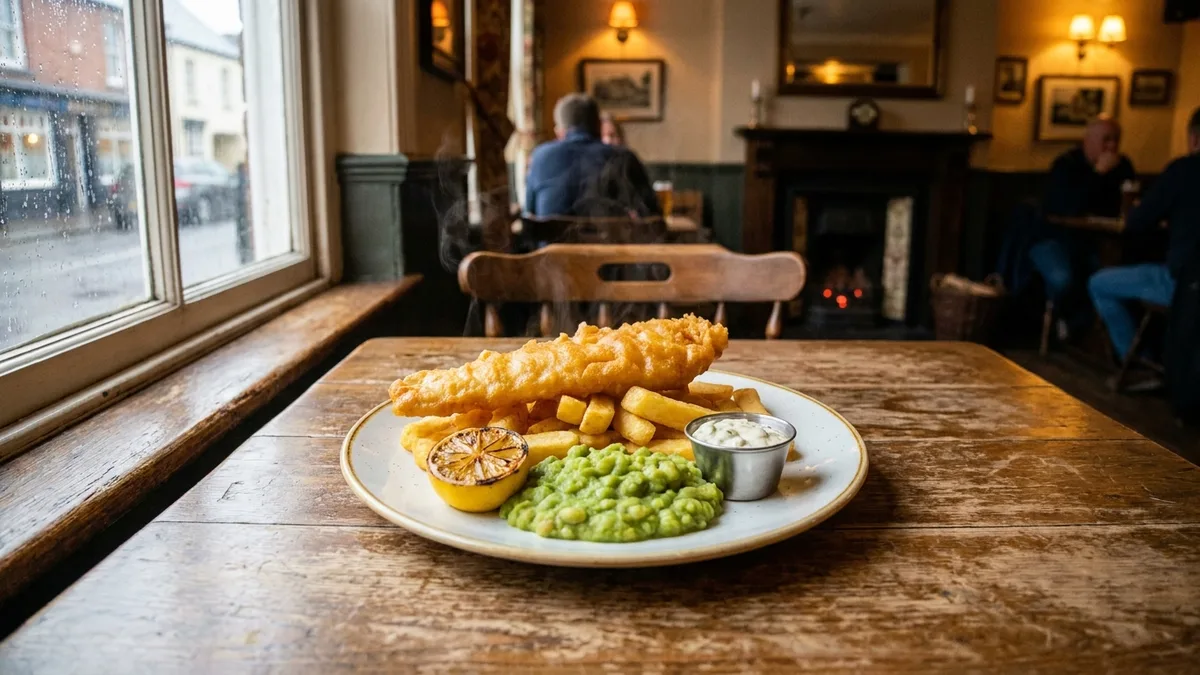
Here’s the part celiac travelers love: you don’t have to give up the British greats. With the right spot, they’re back on the menu.
Order these with confidence
- Proper fish and chips — at any chippy or pub with a dedicated gluten-free fryer, often with their own gluten-free vinegar.
- Sunday roast — with gluten-free gravy, no Yorkshire pudding, and rusk-free sausages.
- A full English breakfast — minus the toast and black pudding, with gluten-free sausages and baked beans (confirm the brand).
- Jacket (baked) potatoes with naturally gluten-free fillings.
- Gluten-free afternoon tea — many hotels and tearooms offer it with a day’s notice.
- Cider, wine, gin and other spirits, and certified gluten-free beer.
The difference between a safe classic and a risky one is almost always the fryer, the gravy, and the sausages — so those are the three things worth asking about every time.
How to Eat Out Safely: Accreditation & the Right Questions
London’s real superpower for celiacs is accreditation. Coeliac UK has accredited over 3,000 gluten-free venues — venues whose staff complete training and whose kitchens are inspected for dedicated fryers and proper separation. Their venue finder lets you pre-identify safe places before you even leave the hotel.
When you’re ordering, lean on the law and ask three specific questions:
- “Do you have a dedicated gluten-free fryer?” — the make-or-break question for anything fried.
- “Is the gravy or sauce thickened with flour?” — the usual hidden wheat in a roast.
- “Do the sausages contain rusk?” — most do, unless they’re labeled gluten-free.
Supermarkets, Pubs & Self-Catering
Between meals out, the UK makes self-catering and snacking easy.
- “Free From” aisles — Tesco, Sainsbury’s, M&S, and Waitrose all stock gluten-free bread, pasta, biscuits, and ready meals, with allergens clearly labeled.
- Grab-and-go with confidence — packaged sandwiches and snacks must carry full ingredient and allergen labels, so a quick look tells you what’s safe.
- At the pub — skip the ale and order cider, wine, gin, or a certified gluten-free beer; many pubs also keep a gluten-free menu behind the bar.
Since London is English-speaking, you won’t need a translation card here — but if your trip continues to Europe, our free gluten-free restaurant cards cover six languages, and our dining-out guide works anywhere.
Frequently Asked Questions
The questions I hear most from gluten-free travelers headed to London. As always, weigh your own sensitivity and confirm preparation at each restaurant.
Is London a good place to travel with celiac disease?
Yes — it’s one of the best. Awareness is high thanks to the charity Coeliac UK, the law requires restaurants to tell you which dishes contain gluten, and “Free From” ranges are in every supermarket. The main risks are battered and fried foods, pastry, flour-thickened gravy, and rusk in sausages, plus cross-contamination from shared fryers.
Can you get gluten-free fish and chips in London?
Yes, and it’s a real highlight. A growing number of chip shops and pubs have a dedicated gluten-free fryer, so the fish is battered and fried without cross-contamination — some even make their own gluten-free vinegar. Look for a Coeliac UK accredited venue or call ahead to confirm the dedicated fryer.
What British foods are gluten-free?
More than you’d think, with the right preparation: fish and chips from a dedicated fryer, a Sunday roast with gluten-free gravy (skip the Yorkshire pudding), a full English without the toast and black pudding, jacket potatoes, and gluten-free afternoon tea. Cider, wine, gin, and certified gluten-free beer are safe drinks.
Is malt vinegar gluten-free?
No. Traditional malt vinegar is made from barley, which contains gluten, so the classic vinegar on chip-shop chips isn’t safe for celiacs. Some dedicated gluten-free chip shops make their own gluten-free vinegar; otherwise, ask for an alternative or go without.
Can I drink gluten-free in a British pub?
Yes. Beer and ale are brewed from barley and aren’t safe, but cider, wine, gin, and other distilled spirits are gluten-free, and many pubs now stock a certified gluten-free beer. When in doubt, a cider or a gin and tonic is a reliable choice.
How do I find gluten-free restaurants in London?
Start with Coeliac UK’s accredited-venue finder, which lists places that have been trained and inspected to gluten-free standards. From there, the law is on your side: any restaurant must be able to tell you which dishes contain gluten, so don’t hesitate to ask about dedicated fryers, flour in the gravy, and rusk in the sausages.
Medically reviewed and last updated 2026-06-08.