If you went to a grocery store five years ago, you’d have to ask someone for help looking for the gluten-free products. But now? They have their very own aisle. Or aisles, depending on where you do your food shopping.
Whole Foods has three aisles. Wegman’s has two. And ShopRite has two as well. You can get almost anything sans gluten— cookies, crackers, chips, frozen pizzas, and candy. It is marketed as being the healthier option in stores, and, in some cases, that’s true. But just because it’s gluten-free doesn’t mean that it’s better for you. The label can be deceptive and fool people into thinking that it’s cleaner or lighter, but sometimes it’s basically the same processed stuff, only with different flour.
If you’ve grabbed a box of gluten-free crackers instead of the other option because you think it’s the healthier choice, you could be correct! To clear up any confusion, we’re gonna open up some boxes, look inside, and find out how you can tell if the label is lying to you if you’re trying to make better picks!
What Does ‘Gluten-Free’ Really Mean?
Gluten-free means that you don’t consume gluten. Some cannot for health reasons, like Celiac disease or gluten sensitivity. And some just feel better when they abstain. For some, it’s a choice, and for others, it’s a medical necessity.
Your Gluten-Free Shopping Checklist
- Always read the full ingredient list, not just the gluten-free label.
- Choose products with whole food ingredients and minimal additives.
- Watch out for high sugar, fat, and sodium content in gluten-free snacks.
- Incorporate naturally gluten-free whole foods into your meals daily.
- Use trusted resources to verify if a product is truly gluten-free and safe.
In order to legally slap a “gluten-free” label on a product, it has to contain less than 20 parts per million (ppm) of gluten, according to the FDA. The number isn’t zero, but it’s considered safe for people who have a gluten intolerance. It also means that companies have to be super careful with sourcing and processing, even if the product isn’t made with traditional gluten ingredients.
Gluten-free on a product only means it meets that 20 ppm threshold. What it doesn’t mean is that it’s nutritious, organic, low-carb, or clean; it just means it’s low in gluten.
The Rise of the Gluten-Free Trend
As we mentioned earlier, in the last decade, gluten-free food was only found in health food stores or you had to order it via specialty catalogs. Not anymore! Not only do restaurants have GF menus, but there are entire food joints that build their establishments around no gluten.
Part of the boom came from celeb endorsements and popular diet books that made gluten out to be the bad guy. Between 2015 and 2019, U.S. sales of gluten-free foods tripled, and not just for people who were diagnosed with gluten issues. Wellness culture began equating “gluten-free” with “clean eating,” and brands ran with it.
It’s now a $6 billion industry, and that label carries a lot of weight. The problem? That weight can be misleading. A brownie is still a brownie, gluten-free or not.
Common Misconceptions About Gluten-Free Foods
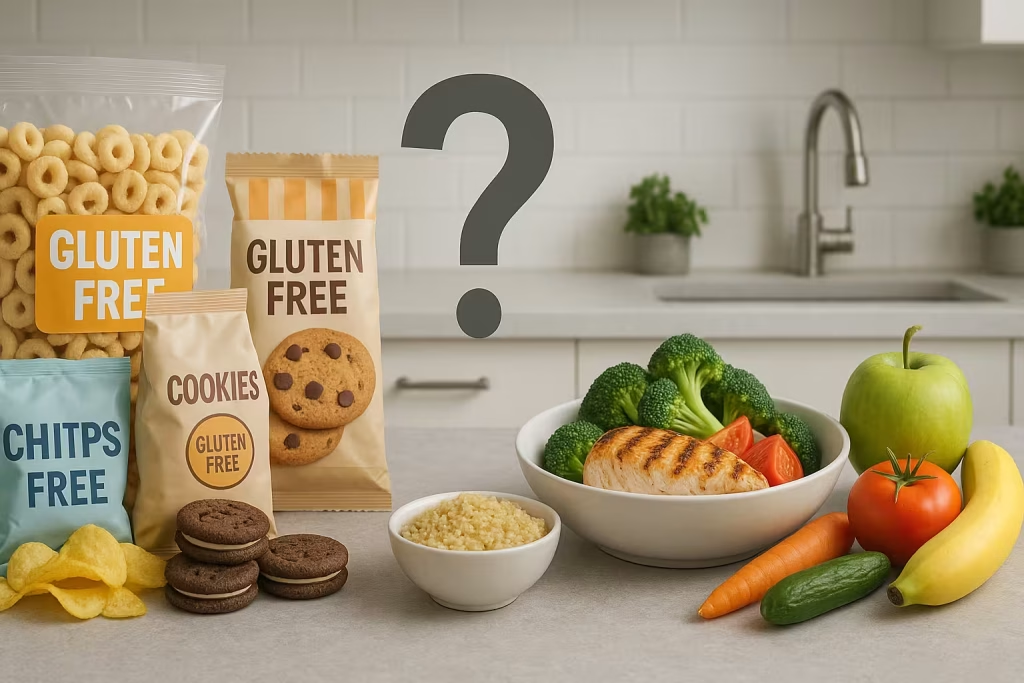
Going gluten-free doesn’t mean that you’ve instantly improved your overall nutrition. But a lot of people fall into that trap due to slick packaging and half-truths that go viral on TikTok.
Some of those misconceptions can be harmful, so let’s debunk some of the most common ones:
Myth 1: Gluten-free equals low-carb or low-calorie
Absolutely not! Gluten-free bread and cookies can have just as many (if not more) carbs, sugar, and calories as the regular versions. There are brands that bump up the sugar or fat to make up for the missing texture that gluten gives it.
Myth 2: Gluten-free foods are always more natural
A lot of gluten-free products are still highly processed. They are loaded with preservatives, gums, and starches that aren’t exactly “whole” anything.
Myth 3: If it’s gluten-free, I can eat as much as I want
Gluten-free cupcakes are still cupcakes. Portion size and control always matter, especially if your goal is to eat more nutritiously, not just to stay away from gluten!
The Hidden Problems in Gluten-Free Packaged Foods
To make up for the lack of gluten, a lot of gluten-free packaged foods use ingredients like white rice flour, potato starch, and tapioca flour. And they don’t offer much in the way of fiber or nutrients; they just give the food more structure.
On top of that, manufacturers will load up on sugar and fat to make things taste “normal.” That gluten-free muffin? It might be soft and delicious, but it could also have twice the sugar of a regular one. Sodium and preservatives usually run higher in gluten-free versions.
Basically, the gluten’s been removed, but a bunch of other junk has replaced it.
Comparing Labels: Gluten-Free vs. Whole Food
Ok, here’s a real-life comparison. Look at a box of gluten-free cookies. Turn it over and read the label, and you’ll probably see things like tapioca starch, cane sugar, palm oil, xanthan gum, and possibly five different flours.
Now, compare that to an apple. Or a homemade energy ball made with oats, almond butter, and a spoonful of honey. There are less ingredients, zero fillers, and you are getting an intake of fiber and healthy fats.
Don’t buy it just because it has the gluten-free label. Look at the full ingredient list. Some brands do use it to market junk food in a fancier box, and it works because people don’t always question it. The lesson here is that clean packaging doesn’t always equate to clean food.
Who Actually Needs to Eat Gluten-Free (And Who Might Not)?
Deciding to cut gluten out of your diet is not small potatoes, and in certain cases, 86’ing it can do more harm than good! The people who have to eat gluten-free are as follows:
- Those who have Celiac disease
- People with a medically diagnosed gluten intolerance or with wheat allergies
- Individuals who have autoimmune conditions or IBS (irritable bowel syndrome) who’ve found symptom relief from cutting out gluten
If you’re removing gluten because it feels like it’s the healthier choice, it’s worth investigating what you’re replacing it with. Swapping out wheat for ultra-processed gluten-free snacks can mean that you are not getting fiber, iron, and B vitamins. You need those! Plus, gluten-free alternatives are always more expensive, so if you don’t need to eat that way? You’re paying more for less nutrition.
Tips for Choosing Healthy Gluten-Free Foods
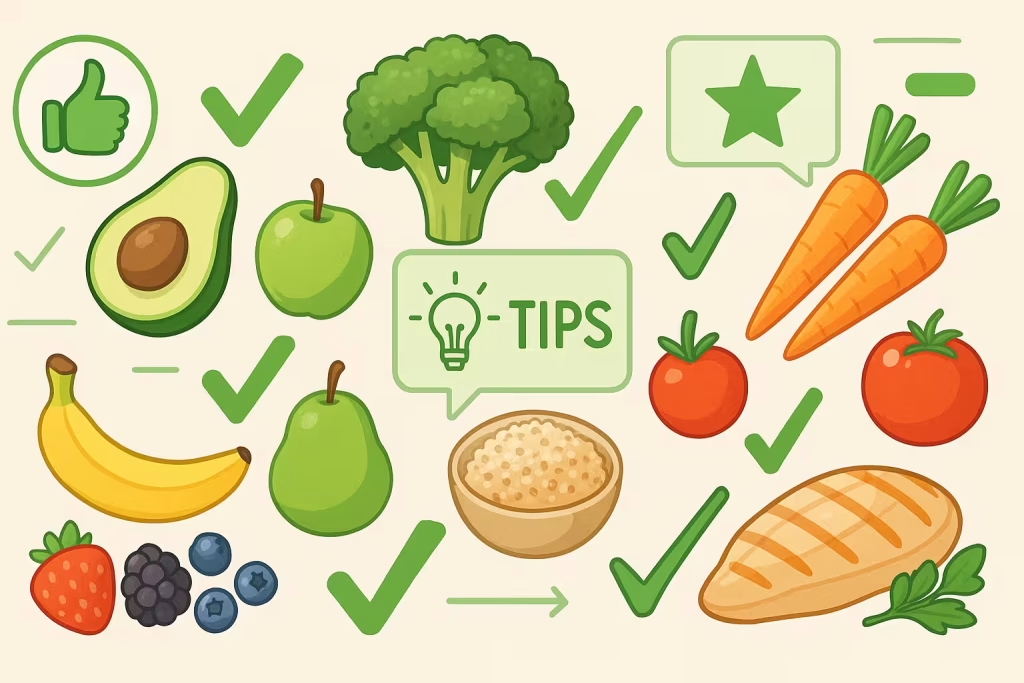
If you do eat gluten-free, whether it’s by choice or necessity, you don’t have to exist only on boxed crackers and premade freezer meals. Look below for how you can eat, and eat well, without gluten:
- Start with real food. Fruits, vegetables, eggs, legumes, fish, chicken, and nuts! All of them are naturally gluten-free.
- Choose naturally gluten-free grains, like quinoa, brown rice, millet, amaranth, and buckwheat (which sounds gluten-y but it isn’t). Soba noodles? Hard to cook, but once you get the hang of it? Delicious.
- Don’t go overboard on processed swaps. Just because it’s labeled as gluten-free doesn’t mean that it gets a spot in your everyday rotation.
- Always check the ingredient list. Don’t get fooled by the front of the box because it says “Gluten-free.” The back (or the side, wherever the ingredients are) will tell the entire story.
Smart Pantry Swaps (Bonus List)
If you are itching to clean up your pantry but don’t want to cut corners on flavor or nutrition, we have some fantastic swap ideas that skip the heavily processed stuff and lean into whole, satisfying foods. (PS: We break this down in detail in our Top 10 Pantry Swaps for a Gluten-Free Kitchen).
Instead of: Gluten-free white bread
Try: Gluten-free sprouted grain bread or crisp lettuce wraps for sandwiches
Instead of: Packaged gluten-free cookies
Try: Oat energy balls with almond butter, dark chocolate, and a pinch of sea salt
Instead of: Gluten-free frozen meals
Try: Batch-cooked brown rice, roasted veggies, and beans, or grilled chicken
They don’t take much more time to prepare, and they’ll leave you feeling a whole lot better after the fact.
Conclusion: Think Beyond the Label
Just because something skips the gluten doesn’t automatically mean it’s doing your body any favors. Gluten-free can be a literal lifesaver for some people, but for a majority of them, it’s not a shortcut to being healthier.
If you’re eating gluten-free, eat the things that fuel you and taste good: real food, simple ingredients, and pantry swaps that don’t depend on processed fillers. When you stop chasing labels and start choosing based on what’s really in the food, things will fall into place.
Need some ideas to start with? Download our free Gluten-Free Pantry Checklist to make your next grocery trip a lot less confusing!