

On this page
What if gluten-free in 2026 didn’t just work—it wowed you? Think lighter-than-air loaves, restaurant menus that feel adventurous (and safe), and ingredient labels that answer your questions before you even ask. The gluten-free world is stepping into its next era, and it’s smarter, tastier, and a lot more personalized than anything we’ve seen before.
Below is a deep dive into what’s coming, what’s getting better, and how to make the most of it.
First, A Quick Reality Check: what “gluten-free” legally means
In the U.S., “gluten-free” is not a marketing vibe—it’s a regulated claim. If a food uses the term, the FDA says any unavoidable gluten must be below 20 parts per million (ppm). That’s been the standard since 2013/2014 and it continues to guide labels today (with specific rules for fermented and hydrolyzed foods like yogurts, sauces, and certain beers/wines). In practice, that means you can expect uniformity across compliant products—and more confidence while shopping.
How to Stay Ahead in Gluten-Free Living
- Keep an eye on ingredient labels—know what to look for and what to avoid. Learn more
- Explore new gluten-free products and brands as they hit the market.
- Use trusted resources like the Gluten-Free Food Checker before trying new foods.
- Set up your kitchen and pantry for success—reduce cross-contamination risks. Start here
Internationally, most regions align with the same <20 ppm threshold, following Codex Alimentarius guidance—useful to know if you’re traveling.
The demand curve keeps climbing. Analysts estimate the global gluten-free products market at roughly $7.7–$7.8B in 2024, with projections to around $13.7B by 2030 (about 10% CAGR in many forecasts). In the U.S., the category is also expanding close to double digits as quality improves. Translation: expect more options, faster innovation cycles, and better availability in mainstream retailers.
Trend #1: Functional gluten-free foods go from niche to normal
Gluten-free 1.0 was all about removing gluten. Gluten-free 2.0 adds benefits back in. Look for products boosted with protein and fiber, and snacks or breads that include prebiotic ingredients or targeted probiotic strains. Consumer data shows protein now tops what Americans use to define a “healthy food,” and interest in gut health continues to trend. Expect labels that explain how (and which) added fibers or cultures support texture, satiety, and digestion.
What this looks like on shelves
- Sandwich bread with chicory root fiber or green-banana flour for prebiotics
- Gluten-free yogurts or beverages calling out specific probiotic strains
- Baking mixes that deliver higher protein (think pea, chickpea, or sorghum blends)
Trend #2: Smarter ingredients—thanks to fermentation, enzymes & biotech
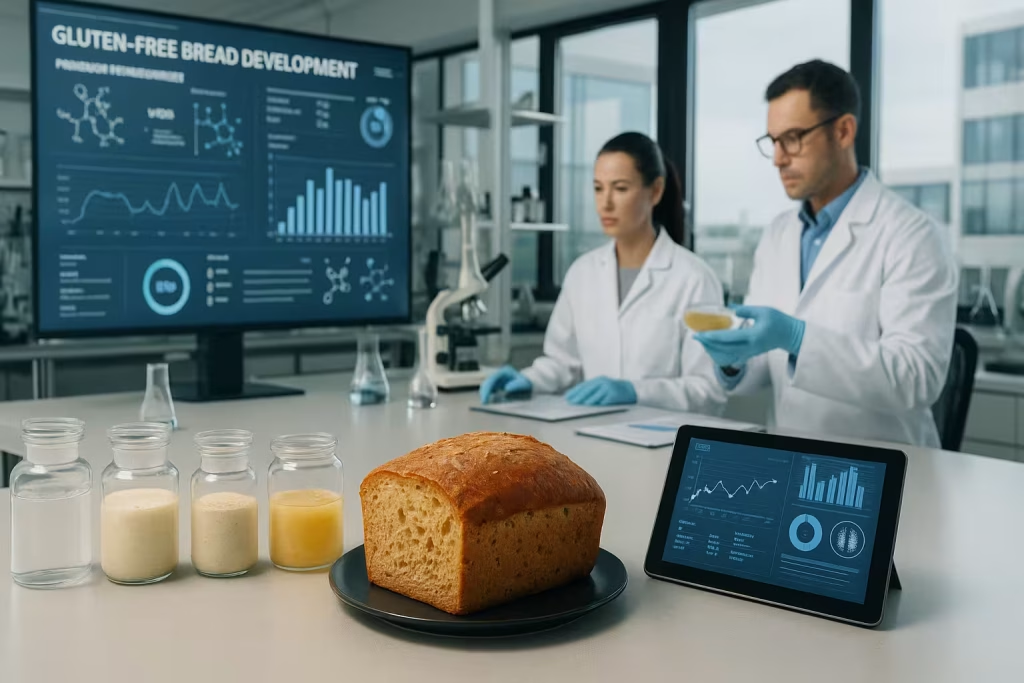
When you miss the “stretch” of wheat dough or that springy pasta bite, the fix isn’t magic—it’s chemistry. Several technologies are closing the texture gap:
- Precision fermentation: Microbes are programmed to produce functional proteins and enzymes that behave in food systems the way we need them to—binding, gelling, or boosting structure in gluten-free doughs. This field is scaling fast, with investment and technical roadmaps accelerating out of the alt-protein world into broader ingredients.
- Enzyme wizardry: Enzymes like transglutaminase and xylanase can knit proteins or adjust dough structure to make gluten-free breads softer, springier, and less crumbly. Multiple studies show meaningful improvements in crumb structure, elasticity, and even shelf-life when these are used thoughtfully. (No, it’s not cheating—this is modern baking science doing its job.)
Bottom line: Expect more gluten-free loaves and pastas that pass the “serve it to gluten-eaters without telling them” test—because the texture is finally there.
Trend #3: AI is quietly redesigning your food (and it’s a good thing)
You’ve probably heard about plant-based brands using “recipe-finding” algorithms that scan massive ingredient databases to replicate the taste and feel of animal products. That exact toolbox is spilling into the gluten-free space: AI systems can analyze sensory targets (chew, crumb, aroma), cost constraints, and nutrition goals to suggest novel flour blends, hydrocolloids, and flavor systems—dramatically speeding up R&D.
A well-documented example is NotCo’s Giuseppe platform, used to simulate and formulate plant-based products by mapping molecular properties of ingredients. Academic and industry literature now describes how AI-assisted discovery is shortening development cycles and improving hit-rates for new formulations—precisely the things gluten-free needs to keep leapfrogging.
What this means for you
- Fewer “one-and-done” disappointments: recipes iterate faster against real-world feedback
- Better balancing acts: taste, texture, nutrition, and cost can be optimized together
- More adventurous categories: think flaky laminated pastry sheets or al dente shelf-stable noodles that actually deliver
Trend #4: Sustainability moves from side note to center stage
As climate pressure rises, expect more gluten-free ancient grains and climate-tolerant crops to shine—sorghum, millet, teff, buckwheat—with brands highlighting water use and soil benefits. Sorghum in particular is naturally gluten-free, highly adaptable, and notably water-efficient; researchers in Nevada are even developing varieties aimed at better nutrition profiles for human foods.
Packaging matters, too: lighter formats, recycled content, and digital transparency are becoming part of the purchase decision. And speaking of transparency…
Trend #5: Smarter labels & safety tech you can use
You’ll see more products with QR codes that unlock deep-dive pages—ingredients, allergens, certifications, even sourcing and sustainability details. The industry’s SmartLabel initiative already powers this for thousands of items; scan once and you can check everything that didn’t fit on the package. This won’t replace the FDA’s gluten-free rule, but it does make shopping faster and safer—especially for families juggling multiple dietary needs.
For extra assurance, third-party programs like GFCO audit plants for cross-contact controls and compliance. While certification isn’t required under U.S. law (the FDA standard applies either way), many shoppers appreciate the process rigor those seals imply.
Trend #6: Flavor is having a moment (finally)
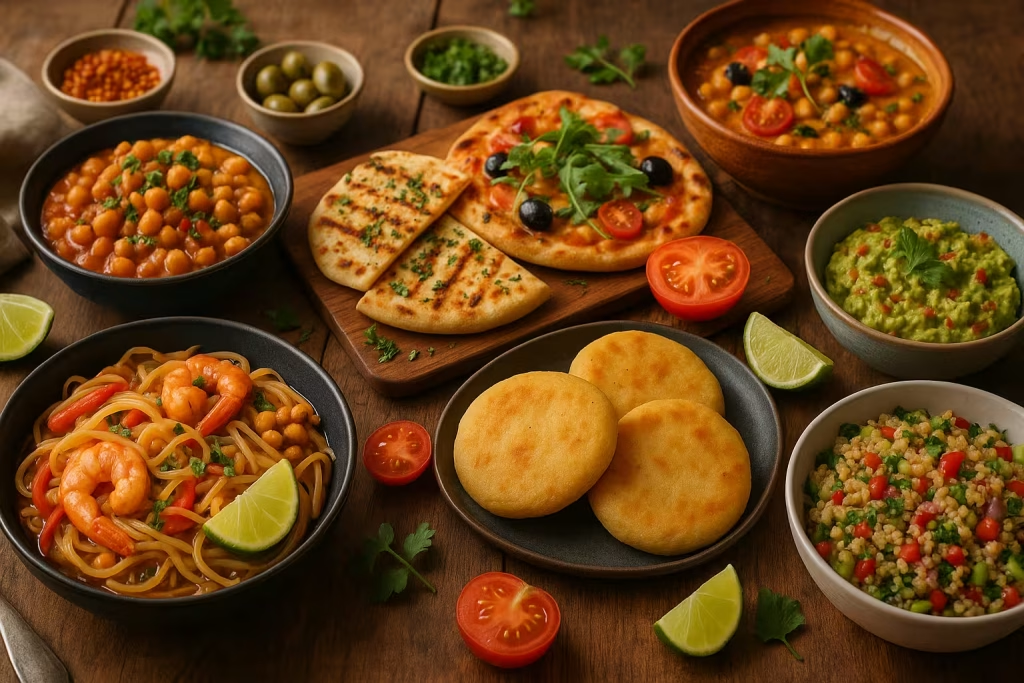
If your mental picture of gluten-free is still “bland bread and brownie mixes,” it’s overdue for an update. The next few years will push global flavor into the spotlight: Southeast Asian noodle bowls made with rice, millet, or cassava; Mediterranean flatbreads leveraging chickpea or sorghum; Latin-American-inspired baked goods built on corn, plantains, or quinoa.
Even beer has leveled up. The World Beer Cup now routinely awards medals in the Gluten-Free Beer category, with recent golds to dedicated GF breweries—proof that quality is competitive on the biggest stage. You’ll find more craft options using millet, buckwheat, rice, and yes, even quinoa.
Trend #7: Personalized nutrition & AI-assisted meal planning
The old “one-diet-fits-all” model is fading. Personalized nutrition—using your responses to foods, health history, and sometimes microbiome data—is gaining evidence. Recent trials show app-based, personalized programs can improve markers versus generic advice, and researchers are exploring AI-guided diet scoring to tailor recommendations. For gluten-free families, that means you can optimize beyond “safe” toward “what helps you feel your best”—protein targets, fiber diversity, and smarter snack timing.
A note of caution: microbiome testing is still evolving, and not every at-home kit is clinically actionable. Use these tools as guides, not diagnoses, and loop in your clinician or dietitian—especially for kids.
Trend #8: Restaurants & retail become easier to navigate
The direction of travel is clear: more training, better cross-contact protocols, and simpler ways to verify what’s in your dish. Expect more QR-linked menus and ingredient databases you can check from your phone; look for restaurants that document their processes (separate fryers, color-coded utensils, prep zones). On packaged foods, the FDA’s 20-ppm rule remains your baseline standard; certification seals and SmartLabel-style pages can add context. Together, these cut down on guesswork—even if they don’t eliminate risk entirely.
Pro tip: When in doubt, prioritize places that can explain their protocol (not just “we have gluten-free pasta”). The best operators are proud to walk you through it.
Trend #9: The wellness & beauty crossover—what actually matters
“Gluten-free” claims now pop up on supplements, skincare, and cosmetics. Here’s the key: the FDA’s gluten-free labeling rule applies to foods and dietary supplements—not cosmetics. Most people with celiac don’t need to avoid gluten in products that only touch the skin (the protein is too large to penetrate), but lip products are a gray zone since they can be ingested. If this matters to you, look for brands that disclose clearly or pursue certifications—just know that cosmetic “GF” claims aren’t regulated the same way as food.
The Stubborn Hurdles (and How the Industry is Trying to Fix Them)
Cost: Gluten-free versions are still pricier—often significantly. Recent analyses found GF staples can range anywhere from ~46% to well over 100% more than conventional counterparts, depending on product and market. This is starting to improve as scale grows, but it’s still a real burden for families.
Nutrition gaps: Historically, some GF packaged foods were lower in protein/fiber and higher in refined starch. The functional-food trend above is tackling this with better flour blends and fortification—but it’s worth reading labels with your goals in mind.
Label confusion: Between “gluten-reduced,” “made without,” and various seals, it’s easy to get overwhelmed. The anchor remains the FDA’s <20 ppm gluten-free definition; everything else is a layer on top. SmartLabel pages and brand FAQs can help you verify details (oats source, shared lines, etc.).
Your Playbook for 2026 (and Right Now)
1) Shop like a pro
- Treat “gluten-free” on foods and supplements as your legal baseline (that <20 ppm standard). Use QR/SmartLabel when available for allergen and process details.
- For value, focus your splurge on the products that matter most to your family (for us, that’s bread and pasta) and fill the cart with naturally GF staples: rice, potatoes, corn tortillas, beans, veggies, eggs, dairy, meats. Research shows this is consistently cheaper and more nutritious.
2) Bake smarter, not harder
- Try mixes or recipes that leverage enzymes (or hydrocolloids like psyllium and HPMC) for better structure. You’ll notice softer crumb and better day-two performance.
- Explore ancient grains like sorghum, millet, teff, and buckwheat for flavor, fiber, and sustainability wins.
3) Personalize gently
- If you experiment with personalized nutrition apps, use them to steer choices (protein minimums, fiber diversity, snack timing) rather than chase perfection. The science is promising but still developing—especially around microbiomes.
4) Eating out
- Ask about procedures, not just menu items: separate fryers, dedicated prep areas, and how staff avoid cross-contact during rushes.
- Bonus points for restaurants that publish protocols or link ingredients via QR.
5) Keep perspective on cosmetics
- Food rules ≠ cosmetics rules. Prioritize lip products if you care about GF claims there; otherwise, choose what makes sense for your skin and budget.
A Peek at What’s Next
- Precision-fermented binders designed specifically for gluten-free doughs, tuned for elasticity without gums.
- AI-assisted recipe engines that learn from your pantry and your preferences, suggesting GF meal plans that hit your macros and your taste buds.
- Sorghum- and millet-forward products that aren’t just “substitutes,” but stars in their own right.
- More medal-worthy GF beers (and ciders) as craft brewers embrace dedicated grain bills and equipment.
The Big Picture
Gluten-free living in 2026 and beyond is less about restriction and more about reinvention. Regulations give us a safer floor. AI, enzymes, and fermentation are building a higher ceiling. And consumers—families like ours—are pushing the market to deliver foods that are nourishing, sustainable, and actually delightful to eat.
So yes, I’m excited. Excited to pack school lunches that don’t feel like compromises. Excited that “pizza night” no longer needs a pre-pep talk. And excited that the next generation of gluten-free kids will grow up thinking great bread is just…bread.
Here’s to a future full of flavor and freedom—gluten-free, and better than ever.
Sources & Further Reading
- U.S. FDA gluten-free labeling (<20 ppm) and fermented/hydrolyzed foods rules. U.S. Food and Drug Administration+2U.S. Food and Drug Administration
- Market growth estimates for gluten-free products. Grand View Research+2FoodNavigator.com
- IFIC consumer insights on protein & gut health interest. IFIC
- Fermentation & precision-fermentation ingredient landscape. The Good Food Institute
- Enzyme improvements in gluten-free bread (transglutaminase/xylanase). ScienceDirect
- Sorghum’s sustainability and new varieties research. sorghumcheckoff.com
- SmartLabel QR transparency for allergens/ingredients. SmartLabel
- World Beer Cup—Gluten-Free Beer category winners (2024–2025). cdn.brewersassociation.org
- Personalized nutrition evidence & considerations. Nature
- Cost premium data for gluten-free products. PMC
- Cosmetics are not covered by FDA gluten-free rule; practical guidance. GIG® Gluten Intolerance Group®