
If you’re reading this, you’ve probably just been told you need to go gluten-free. Maybe it was a doctor, maybe it was your own research, but now you’re standing on the edge of a whole new world, wondering, “Where do I even start?” I’ve been there. When our oldest son was diagnosed with a severe food intolerance as a baby, our family’s world turned upside down overnight. As a nurse and a mom, I was determined to figure it out, but the learning curve was steep.
That’s why I wrote this guide — the conversation I wish I could have had with a knowledgeable friend back then. We’ll cover what gluten actually is, what you can and can’t eat, how to shop without losing your mind, and how to set up your kitchen for success. You can do this.
First, What Exactly Is Gluten?
Before we can avoid it, we need to know what it is. Simply put, gluten is a family of proteins found in grains like wheat, barley, and rye. Think of it as the “glue” that gives bread its stretchy, chewy texture. It’s what makes pizza dough elastic and helps cakes hold their shape. According to the Celiac Disease Foundation, gluten is found in many everyday foods, often in places you wouldn’t expect.
For most people, gluten is harmless. But for individuals with certain medical conditions, it can trigger a serious immune response. The main reasons people follow a gluten-free diet are:
- Celiac Disease: An autoimmune disorder where consuming gluten causes the body to attack the small intestine. This isn’t an allergy or intolerance; it’s a serious condition that requires a strict, lifelong gluten-free diet. You can learn more in our deep-dive on gluten intolerance vs. celiac disease.
- Non-Celiac Gluten Sensitivity (NCGS): People with NCGS experience symptoms like bloating, headaches, and fatigue after eating gluten, but they don’t have the intestinal damage seen in celiac disease. It’s a real, recognized condition, though it’s diagnosed by ruling out celiac disease and wheat allergy first.
- Wheat Allergy: A classic allergic reaction to wheat proteins, which can cause hives, swelling, or even anaphylaxis. People with a wheat allergy must avoid wheat, but not necessarily barley or rye.
The Core of the Gluten-Free Diet: What to Eat & Avoid
This is the big question, isn’t it? At first, it feels like gluten is in everything. But you’ll quickly learn that a huge variety of delicious, healthy foods are naturally gluten-free.
| Foods to Eat Freely | Foods to Always Avoid (Unless Labeled GF) |
|---|---|
| Fruits and vegetables | Wheat (all varieties: spelt, farro, durum), barley, rye, malt |
| Meat, poultry, fish, and seafood | Most breads, pastas, cereals, and baked goods |
| Beans, legumes, nuts, and seeds | Many beers and gravies |
| Dairy products: milk, cheese, and yogurt | Soy sauce, many salad dressings, and soups |
| Naturally GF grains: rice, corn, quinoa, certified GF oats, buckwheat | Breaded meats and seafood |
A quick-reference chart for your fridge.
Katie’s Tip: When you’re starting out, focus on what you can eat. Building meals around naturally gluten-free foods like chicken, rice, and broccoli is much less overwhelming than trying to find a 1:1 replacement for every gluten-containing product you used to love.
Your First Gluten-Free Grocery Trip: A Survival Guide
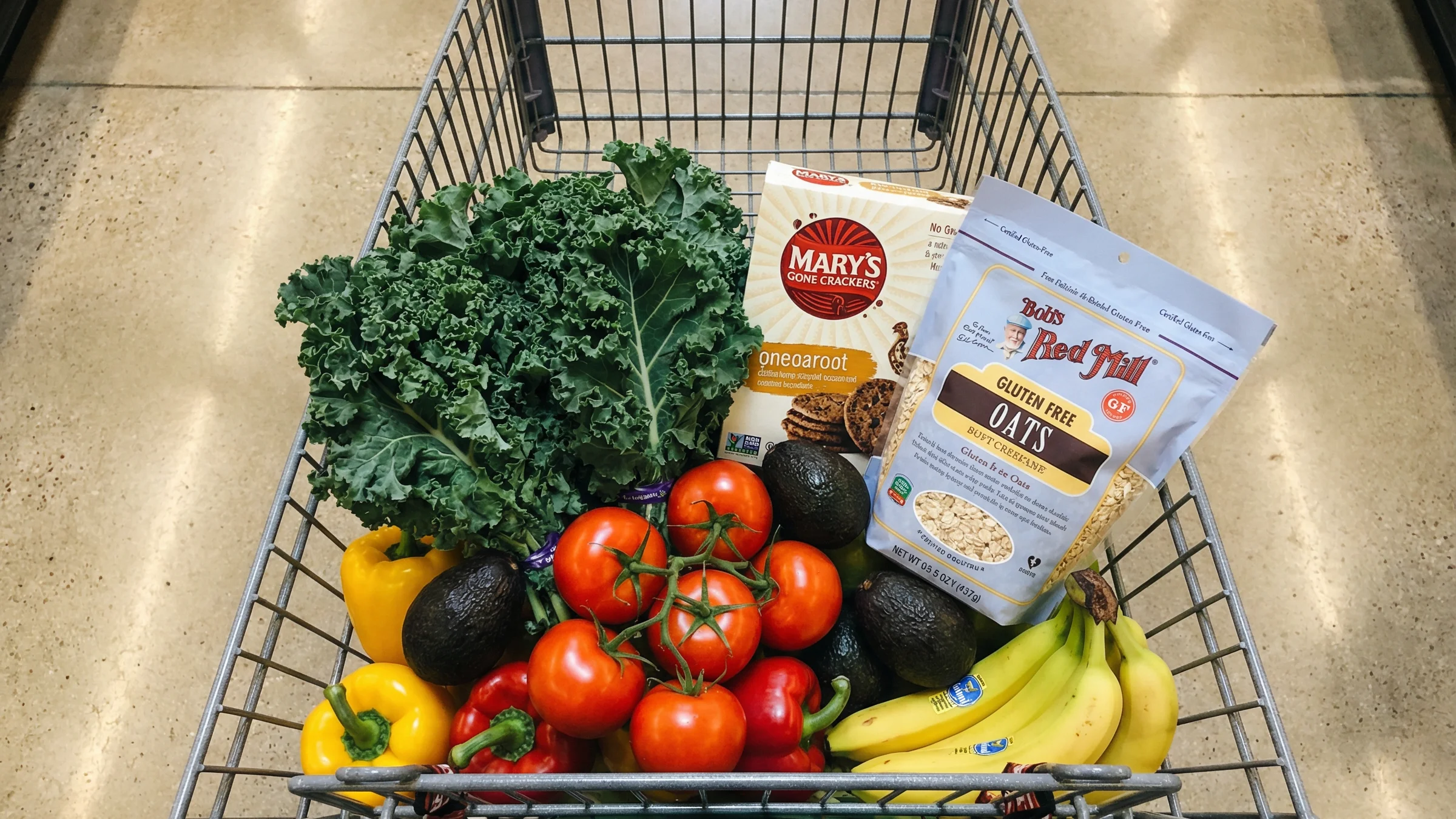
Your first trip to the grocery store can be intimidating. Suddenly, every label looks like a mystery. But you can make it simple by following a system. Here’s how I recommend tackling it:
- Stick to the Perimeter: The outer ring of most grocery stores is where the naturally gluten-free foods live: fresh produce, meat, seafood, and dairy. Fill most of your cart here.
- Look for the “Certified Gluten-Free” Label: When you venture into the center aisles for packaged goods, this label is your best friend. It means the product has been tested to contain less than 20 parts per million (ppm) of gluten — the standard set by the U.S. Food & Drug Administration.
- Read the Ingredient List Carefully: If there’s no GF certification, you have to become a detective. Look for “wheat,” “barley,” “rye,” “malt,” and “brewer’s yeast.” Also check the “Contains” allergen statement. Our guide on how to read a food label is a huge help here.
- Start with Simple Swaps: Don’t try to replace everything at once. Pick a few key items to start — a good gluten-free bread, a rice-based pasta, and some certified gluten-free oats.
Setting Up a Safe Kitchen: Avoiding Cross-Contamination
If you live in a household where not everyone is gluten-free, preventing cross-contamination is critical — especially for those with celiac disease. This happens when gluten-free food comes into contact with gluten particles. It sounds scary, but it’s manageable with a few key practices.
- Separate Appliances: Use a dedicated gluten-free toaster. You can’t share one, as crumbs will always be an issue.
- Separate Condiments: Use squeeze bottles for mustard and mayo, or have separate jars to prevent double-dipping with a contaminated knife.
- Color-Coded Cutting Boards: We use green cutting boards and utensils just for our gluten-free prep. It’s a simple visual cue for the whole family.
- Clean Surfaces Thoroughly: Always wash countertops, utensils, and pans with soap and water before preparing gluten-free food.
For a complete walkthrough, check out our detailed guide on how to set up a gluten-free kitchen. And if you want to understand exactly what gluten does inside your body, our article on how gluten affects your body is worth a read.
Frequently Asked Questions About the Gluten-Free Diet
Still have questions? Here are the ones I hear most often from people who are just starting out.
Do I need to buy all new pots and pans?
For most items like stainless steel and glass, a thorough washing is enough. However, replace heavily scratched non-stick pans and porous items like wooden cutting boards, as gluten particles can get trapped in the scratches and pores.
Is eating out possible on a gluten-free diet?
Absolutely. It just requires a little more planning. Call restaurants ahead of time, ask about their cross-contamination protocols, and look for dedicated gluten-free menus. Our gluten-free restaurant finder can help you locate safe spots in your area.
Will I lose weight on a gluten-free diet?
Not necessarily. A gluten-free diet is a medical necessity for some, not a weight-loss plan. Many gluten-free processed foods are actually higher in sugar and fat to compensate for texture, so focusing on whole, naturally gluten-free foods is always the healthiest approach.
What about oats? Are they gluten-free?
Pure oats are naturally gluten-free, but most commercial oats are grown and processed alongside wheat, so cross-contamination is a real risk. If you have celiac disease or high sensitivity, only buy oats labeled certified gluten-free.
How long does it take to feel better after going gluten-free?
It varies. Some people notice improvements within days, while others — especially those with celiac disease and significant intestinal damage — may take months to fully heal. According to Mayo Clinic, intestinal healing in adults with celiac disease can take two to three years. Be patient with the process.
You’ve Got This
Starting a gluten-free diet feels overwhelming at first — I won’t pretend otherwise. But I promise it gets easier. Our family eats more diverse and delicious meals now than we ever did before. Be patient with yourself, celebrate the small wins, and remember why you’re doing this. It’s worth every bit of the effort.
If you’re looking for some easy meal ideas to get you started, check out our 50+ gluten-free recipes — all tested and approved by my family!
Medical Disclaimer: I am a registered nurse, but I am not your healthcare provider. The information on this website is for educational purposes only and should not be taken as medical advice. Always consult with your doctor or a registered dietitian before making significant dietary changes, especially if you have been diagnosed with celiac disease or another medical condition.
