
You’ve probably heard at least one of these: gluten-free diets are healthier, a tiny bit of gluten won’t matter, or your kid might outgrow celiac disease. When you’re newly diagnosed — or caring for someone who is — it’s hard to know which advice to trust and which to throw out.
The problem is that gluten-free misinformation doesn’t just cause confusion. It can lead to real health consequences. Eating “just a little” gluten because a well-meaning friend said it’s fine? That can trigger silent intestinal damage that takes months to heal. Assuming all GF packaged food is automatically healthy? That can lead to nutritional gaps you don’t see coming.
We’ve spent years covering the science behind gluten-free living, pulling from medical research and organizations like the Celiac Disease Foundation and NIDDK. This article puts six of the most persistent myths under the microscope — and replaces them with what the evidence actually says.
Key Takeaways
- A gluten-free diet isn’t automatically healthier — many GF packaged foods are lower in fiber and key nutrients than their wheat-based equivalents.
- Even tiny amounts of gluten cause intestinal damage in celiac disease — “a little won’t hurt” is medically wrong.
- “Wheat-free” and “gluten-free” are not the same thing — barley, rye, and malt contain gluten too, and the FDA defines them differently.
- Celiac disease is lifelong — symptoms may improve on a GF diet, but the autoimmune condition never goes away.
- The GF food market has dramatically improved — taste and variety are better than ever if you know where to look.
Myth 1 — “Gluten-Free Means Healthy”
This is probably the most widespread myth, and it’s the one that catches newly diagnosed people off guard the most.
Going gluten-free doesn’t automatically make your diet healthier. A gluten-free cookie is still a cookie. Many GF packaged products compensate for the missing wheat protein by adding extra sugar, fat, or refined starches like tapioca and potato starch. The result? Foods that can be lower in fiber, iron, and B vitamins than their conventional counterparts.
Research from the National Institute of Diabetes and Digestive and Kidney Diseases (NIDDK) notes that people on gluten-free diets are at higher risk for deficiencies in fiber, iron, calcium, and folate — especially if they rely heavily on processed GF substitutes instead of naturally gluten-free whole foods.
The real key is balance. A gluten-free diet can absolutely be nutritious — it just takes intention, the same way any good diet does. If you’re concerned about gaps, check out our guide on getting enough fiber on a gluten-free diet.
Myth 2 — “A Little Gluten Won’t Hurt”
This one is dangerous, and it usually comes from someone who means well but doesn’t understand celiac disease.
For people with celiac disease, there is no safe amount of gluten. The Celiac Disease Foundation confirms that even trace amounts — as little as 50 milligrams per day, roughly 1/100th of a slice of bread — can trigger an autoimmune response that damages the lining of the small intestine.
Here’s what makes this myth especially harmful: the damage can happen without symptoms. You might feel perfectly fine after eating something with trace gluten, but your intestinal villi could still be taking hits. Over time, this silent damage leads to nutrient malabsorption, increased osteoporosis risk, and other long-term complications.
This is also why cross-contamination prevention at home matters so much — it’s not about being overly cautious, it’s about protecting your gut from invisible damage.
Myth 3 — “Everyone Should Go Gluten-Free”
The GF trend that peaked in the mid-2010s left a lasting impression: that cutting gluten is a universal health upgrade. The science doesn’t support that.
According to the Mayo Clinic, a gluten-free diet is medically necessary for people with celiac disease (roughly 1 in 100 people worldwide) and beneficial for those with diagnosed non-celiac gluten sensitivity. For everyone else, there’s no evidence that removing gluten improves health outcomes.
In fact, unnecessarily restricting gluten can backfire. Whole wheat, barley, and rye are significant sources of dietary fiber, B vitamins, and minerals. Removing them without medical reason — and without careful substitution — can actually make your diet less nutritious.
If you’re newly diagnosed and trying to understand the difference between celiac disease and gluten sensitivity, our page on gluten intolerance vs. celiac disease breaks it down clearly.
Myth 4 — “Gluten-Free Food Tastes Terrible”
This one might have been true in 2010. It’s not true in 2026.
The gluten-free market has grown into a multi-billion-dollar industry, and the quality of products has improved enormously. Brands like Canyon Bakehouse, Schär, Jovial, and Banza have figured out how to make GF bread, pasta, and baked goods that genuinely taste good — not just “good for gluten-free.”
The secret most newcomers don’t know: not everything needs a GF substitute. Many of the world’s best cuisines are naturally built around gluten-free staples. Mexican food relies on corn tortillas. Japanese cuisine uses rice and rice noodles. Indian cooking features lentils, rice, and chickpea flour. You’re not stuck eating sad rice cakes — you’ve got entire culinary traditions on your side.
And if you’re cooking at home, gluten-free meals can be the ones your whole family requests on repeat — not the ones they tolerate.
Myth 5 — “If the Label Doesn’t Say ‘Wheat,’ It’s Safe”
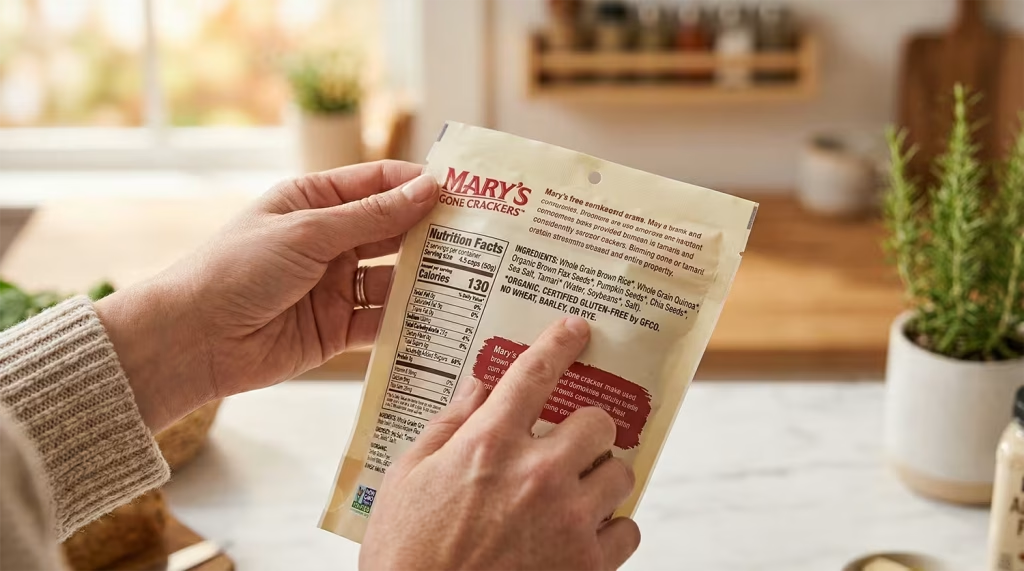
This myth causes more accidental gluten exposure than almost anything else. Wheat is the most well-known source of gluten, but it’s far from the only one.
Gluten is a protein found in wheat, barley, rye, and their derivatives. That means ingredients like malt (from barley), malt vinegar, brewer’s yeast, and triticale (a wheat-rye hybrid) all contain gluten — even though the word “wheat” doesn’t appear on the label.
The FDA’s gluten-free labeling rule requires products labeled “gluten-free” to contain less than 20 parts per million (ppm) of gluten. But here’s the catch: not all products carry a GF label, and “wheat-free” is not the same as “gluten-free” under FDA definitions.
Gluten-Containing Grains and Ingredients to Watch For
- Wheat (including spelt, kamut, farro, durum, semolina, einkorn)
- Barley (often appears as malt, malt extract, malt flavoring)
- Rye (common in certain breads and crackers)
- Triticale (a wheat-rye hybrid grain)
- Brewer’s yeast (derived from barley)
- Oats — unless certified gluten-free (high cross-contamination risk)
For a deeper dive, read our full guide on hidden sources of gluten in everyday food. It covers the sneaky places gluten hides — soy sauce, salad dressings, seasonings, and more.
Myth 6 — “You Can Outgrow Celiac Disease”
This myth is especially common among parents of children diagnosed with celiac disease, and it’s understandable — you want to believe your child won’t have to deal with this forever. Unfortunately, the science is clear.
Celiac disease is a lifelong autoimmune condition. According to Beyond Celiac and the NIDDK, there is no cure and you cannot outgrow it. The genetic predisposition (HLA-DQ2 and HLA-DQ8 genes) doesn’t change over time.
What does happen is that a strict gluten-free diet allows the intestinal lining to heal. Symptoms improve, blood antibody levels normalize, and you feel better — sometimes dramatically better. This healing can feel like the disease is gone. It isn’t. If gluten is reintroduced, the autoimmune response reactivates and intestinal damage begins again.
Trusted Resources for Getting the Facts

When you’re sorting myth from reality, the source matters. Here are the resources we trust and reference regularly — bookmark them.
Common Mistakes When Sorting GF Fact From Fiction
- Trusting social media over medical sources. A viral TikTok or Instagram post is not a peer-reviewed study. Get your celiac and GF information from established medical organizations, not influencers.
- Assuming “natural” or “organic” means gluten-free. Organic barley is still barley. Natural wheat flour is still wheat. These labels say nothing about gluten content.
- Skipping label reading because a product “seems safe.” Gluten hides in soy sauce, seasoning blends, salad dressings, and even some medications. Read every label, every time — ingredients change without warning.
- Believing that GF is a weight-loss diet. Many GF substitute products are higher in calories and lower in fiber than conventional versions. A GF diet is a medical intervention, not a weight management strategy.
- Dismissing symptoms because “I’ve been fine so far.” Celiac damage is often silent. Feeling fine doesn’t mean your intestines are fine. Regular follow-ups with your gastroenterologist matter.
- Relying on restaurant staff to “know” what’s gluten-free. Cross-contamination in restaurant kitchens is common. Always communicate your needs clearly and specifically, and don’t assume shared fryers or prep surfaces are safe.
FAQ
Is a gluten-free diet healthier than a regular diet?
Not automatically. A gluten-free diet is medically necessary for people with celiac disease or non-celiac gluten sensitivity. For everyone else, research from the Mayo Clinic and other institutions shows no proven health benefit. Some GF packaged foods are actually lower in fiber and higher in sugar than their wheat-based counterparts.
Can a small amount of gluten hurt someone with celiac disease?
Yes. According to the Celiac Disease Foundation, even trace amounts of gluten — as little as 50 milligrams per day (about 1/100th of a slice of bread) — can cause intestinal damage in people with celiac disease. This damage can occur even without noticeable symptoms.
Does “wheat-free” mean the same thing as “gluten-free”?
No. Wheat-free products may still contain gluten from barley, rye, or malt. The FDA requires products labeled “gluten-free” to contain less than 20 parts per million of gluten. A “wheat-free” label does not meet this standard and is not safe for people with celiac disease.
Can you outgrow celiac disease?
No. Celiac disease is a lifelong autoimmune condition. While symptoms may improve or even disappear on a strict gluten-free diet, the underlying autoimmune response remains. Reintroducing gluten will reactivate intestinal damage, according to the NIDDK.
Are all naturally gluten-free foods safe from cross-contamination?
Not necessarily. Naturally gluten-free grains like oats and rice can be cross-contaminated during growing, harvesting, or processing. Look for certified gluten-free labels (such as GFCO certification) to ensure the product has been tested to below 10 ppm of gluten.
The Bottom Line
Gluten-free misinformation is everywhere — from well-meaning relatives to social media “experts” to outdated articles that should have been updated years ago. The six myths we’ve covered here aren’t just wrong — they’re the kind of wrong that can affect your health, your grocery bill, and your peace of mind.
The facts are straightforward: celiac disease is lifelong, trace gluten causes real damage, “wheat-free” isn’t the same as “gluten-free,” and a GF diet requires the same nutritional intentionality as any other way of eating. None of this is meant to scare you — it’s meant to empower you to make decisions based on science instead of hearsay.
Grab our free First 30 Days GF Starter Checklist — everything you need to navigate your gluten-free life on one page, backed by the same medical sources we’ve referenced here. You’ve got this.
