
You had the salad. You skipped dessert. But you still feel like you swallowed a balloon after you ate. What’s happening to you, and why are you so dang bloated??
Bloating is not only annoying, but it can be painful and straight up ruin your day. It is uncomfortable and makes your pants feel tight, and no one wants to feel like they gained 10 lbs. after a meal. And while there’s not exactly a shortage of possible causes, gluten has shot to the top of the list for a lot of people who are dealing with unexplained digestive issues.
If you are so over the bloat, it’s time to figure out what’s causing it. Could it be gluten? What is gluten, and is it the baddie behind your bloating? We’ll tell you about it all and what you can do if you think it’s the culprit!
What Is Gluten and Where Is It Found?
Gluten is a naturally occurring protein that’s found in wheat, barley, and rye. It’s what gives bread its stretch and chew, and it’s a core ingredient that’s used in almost all traditional baked goods and pastas.
Common gluten sources:
- Bread, pasta, crackers, and baked goods
- Beer, soy sauce, and malt vinegar
- Processed foods like soups, frozen meals, sauces, and dressings
Gluten shows up in tons of shelf-stable foods, too, because wheat flour and thickeners are cheap, and food companies love using them. Reading labels is a non-negotiable if you’re trying to figure out what’s causing your tummy troubles.
Why Gluten Can Trigger Bloating
Your digestive system isn’t only breaking down food—it’s also reacting to what it doesn’t like. And for some people, gluten is at the top of that no-no list. Below is how gluten can wreak havoc on your gut:
- Gluten sensitivity: You don’t have celiac disease, but gluten still causes bloating, fatigue, and discomfort.
- Celiac disease: An autoimmune reaction to gluten that damages the small intestine. Bloating is just one of many symptoms.
- Wheat allergy: A true food allergy that can cause digestive and respiratory symptoms.
All three of the above can cause inflammation, gas buildup, and that puffy, uncomfortable feeling that doesn’t go away even though you are eating “clean.”
Signs Your Bloating Might Be Gluten-Related
Not all bloating is gluten-related, but there are a few signs it very well could be!
- You feel swollen or gassy after eating bread, pasta, or baked goods.
- You are dealing with fatigue, foggy thinking, skin breakouts, or joint pain.
- Your bloating happens within a few hours of meals, and it doesn’t go away or even improve, no matter how “healthy” you eat.
- You’ve already cut out dairy or sugar, but the bloating is still happening.
Other Possible Causes of Bloating and How to Rule Them Out
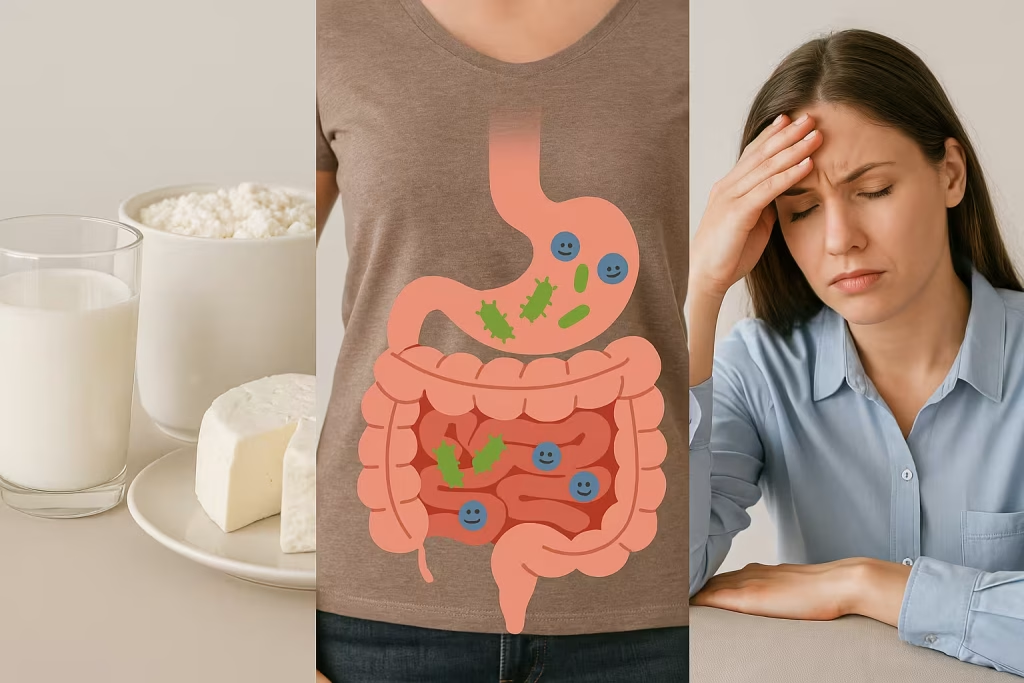
Gluten gets a ton of attention, but it’s not the only thing that can leave you feeling overstuffed like it’s Thanksgiving every day and really miserable. If you’ve already ditched the gluten and you’re still bloated, or you’re not convinced yet, below are a few other triggers that can be the cause:
- Dairy intolerance: Lactose can be hard to digest, especially as we age. If cheese and ice cream leave you bloated, it might not be gluten at all.
- Gut microbiome imbalance: A lack of healthy gut bacteria can interfere with digestion and cause excess gas and bloating.
- High FODMAP foods: Certain carbs that are found in onions, garlic, beans, apples, and wheat (yes, wheat again) can cause major bloat in individuals with a sensitivity.
- Stress or overeating: Yep, both your mindset and your portion size matter. Eating too quickly, too much, or if you’re under a lot of stress, can throw off digestion.
Getting to the root cause of it matters. Guessing your way through food triggers will only drag things out, so working with a dietitian or keeping a food and symptom journal can help you get answers.
How to Test If Gluten Is the Culprit
If gluten’s at the top of your suspect list, you don’t have to empty your kitchen. Take a methodical approach so that you’re not guessing, or worse, cutting things out without having a plan in place.
Try an Elimination Diet
Cut gluten completely out of your diet for 2 to 4 weeks. That means reading labels, passing on the breadbasket, and not eating processed foods that include it as a thickener or filler. It’s not forever! It’s just long enough to see if your body reacts differently without it.
Reintroduce It—On Purpose
After a few clean weeks, bring gluten back in for a few days and see how your body reacts. If bloating returns (or any of those side symptoms like fatigue or skin irritation), you’ve got your answer.
Don’t Skip Testing if You Suspect Celiac
If symptoms are severe and persistent, or if you have a family history of celiac, you should get tested before cutting out gluten. Blood tests and endoscopy are the most accurate ways to diagnose celiac, but they only work if gluten is still in your system.
Food Sensitivity Panels: Mixed Bag
There are at-home kits and food panels out there, but the science behind them is hit or miss. If you do go this route, it’s best to use them with guidance from a practitioner who knows how to interpret the results.
What to Do If You Suspect Gluten Is the Issue
If you tried cutting out gluten, and your stomach stopped staging a bloaty protest after you eat, what are the next steps?
Here’s how you can make the switch without making yourself miserable:
- Ease into it! You don’t have to throw everything out on Day One. Start by changing your regular bread and pasta to the gluten-free versions. Learn to read labels, and get really familiar with the brands that make food simple and safe to eat.
- Focus on the food that you can eat. Rice, potatoes, veggies, eggs, beans, meat, fish, fruit, corn tortillas, and naturally gluten-free grains like quinoa and buckwheat are all on the menu. You’ve got so many more options than you think!
- Eating out? Ask questions. Restaurants aren’t always good at labeling things in a clear way. Look for the places that have gluten-free menus or ask about prep methods. Why? Because cross-contamination can undo all of your efforts in a bite.
- Don’t do it alone. If things still feel confusing or your symptoms hang around, talk to a doctor or a dietitian who knows how to deal with food sensitivities. You don’t have to be a food investigator 24/7.
If you’re at a loss about what to cook, our AI Gluten-Free Recipe Generator on LetsGoGlutenFree.com will give you custom meal ideas based on whatever’s in your fridge. It makes mealtime so much easier, and it doesn’t assume that you’re Julia Child.
Conclusion: Literally Listen to Your Gut
Gluten might be the issue. Or it could be dairy. Or stress. Or that fourth serving of cauliflower. It could be any one of so many things.
If you’ve tried everything and you’re still walking around feeling like you’re five months pregnant after every meal, gluten should be on your radar. The only way to know for sure is to test it and to pay close attention to what your body tells you while you do it.
Read on for a brief summary of gluten and its correlation to bloating:
- Gluten is a really common bloating trigger, but it’s not the only one.
- Watch your symptoms, particularly after eating meals that contain wheat, bread, or pasta.
- Try a 2–4 week elimination diet and then reintroduce gluten to test your response to it.
- Don’t self-diagnose celiac! Go to your doctor and get tested if your symptoms are intense or long-term.
- A simple adjustment to what you eat can make a big difference!
Ready to Go Gluten-Free for a Week?
Give your gut a break and see how you feel.
Try a 7-day gluten-free challenge and use our Gluten-Free Meal Planner to plan easy meals and snacks with no guesswork. It’s free, it’s quick, and it doesn’t make you scroll through someone’s entire life story just to get to the recipe!
What have you got to lose? Nothing except for that bloat that’s making you feel miserable.
