

On this page
Gluten-Free Japan
Japan is a bucket-list trip — and one of the trickier places in the world to eat gluten-free. The reason isn’t the obvious noodle bowls; it’s that soy sauce, which is brewed with wheat, seasons almost everything, and celiac disease is rare enough here that most restaurant staff have never had to think about it.
The good news is that Japanese food is built on rice, fish, and vegetables, the country legally labels wheat on packaged foods, and a gluten-free scene is booming in the big cities. I’m Katie, a registered nurse and a gluten-free mom, and this is the system I’d use to eat safely — and genuinely well — across Japan.
Is Japan Hard for Gluten-Free Travelers?
Here’s the honest answer: Japan takes more planning than most destinations, but it’s absolutely doable — and the food can be genuinely wonderful. Three things make it tricky.
- Soy sauce is everywhere — and traditional Japanese soy sauce (shoyu) is brewed with wheat, so it quietly turns up in marinades, broths, and dipping sauces.
- Celiac disease is rare here — a screening study of non-clinical Japanese adults found a prevalence of about 0.05%, far below the roughly 1% seen in Western countries, so most restaurant staff have never had to think about gluten.
- There’s a language barrier — “gluten-free” often draws a blank, so you’ll need to communicate clearly and specifically.
Now the good news. Japanese cuisine is built on rice, fish, and vegetables, so the naturally gluten-free foundation is huge. Wheat is a legally required allergen declaration on packaged foods, which makes labels readable once you know the symbol. And dedicated gluten-free restaurants and rice-flour bakeries are multiplying in Tokyo, Kyoto, and Osaka. With a little prep, you can eat very well.
The Hidden Gluten in Japanese Food
The traps in Japan usually aren’t the obvious noodle bowls — they’re the seasonings hiding in dishes that look safe.
- Soy sauce (shoyu) — brewed with wheat, and it seasons teriyaki, the sweet tare on grilled meats, dipping sauces, and most simmered dishes.
- Battered and breaded foods — tempura, karaage (fried chicken), and tonkatsu (breaded pork cutlet) all use wheat, and they share fryers.
- Wheat noodles and wrappers — ramen and udon are wheat; so are gyoza wrappers, takoyaki, and okonomiyaki batter.
- Japanese curry — the thick roux is made with wheat flour, which surprises a lot of travelers.
- Imitation crab (kanikama) — the surimi is usually bound with wheat starch, so it hides in salads and sushi rolls.
- Barley, too — barley miso (mugi miso) and roasted-barley tea (mugicha) both contain gluten, because barley is a gluten grain.
What's Naturally Safe to Eat
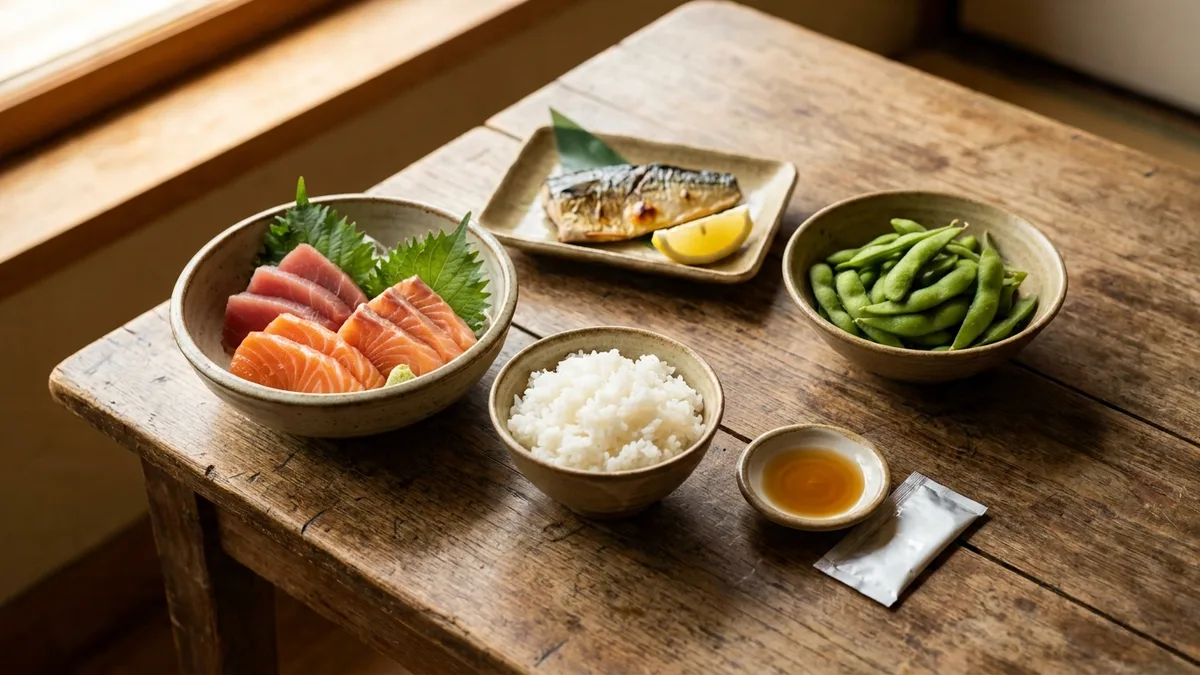
Now the upside: a great deal of Japanese food is naturally gluten-free once you take charge of the seasoning. These are the orders I lean on.
Order these with confidence (and your own tamari)
- Sashimi — plain raw fish with no sauce; bring gluten-free tamari for dipping.
- Plain steamed rice and many onigiri (rice balls) — check the filling and skip soy-glazed ones.
- Yakitori ordered shio (salt) instead of tare (sauce), and not pre-marinated.
- Shioyaki — fish simply grilled with salt.
- Edamame and plain tofu — hold the soy-sauce drizzle.
- Rice treats like mochi and plain rice crackers — skip soy-glazed mitarashi dango.
- Juwari soba (十割) — 100% buckwheat noodles, if the shop confirms no wheat and a dedicated pot.
One caution worth repeating: “naturally gluten-free” only holds if no soy sauce, marinade, or shared fryer enters the picture. Even safe foods are worth a quick confirmation, especially anything grilled or simmered.
How to Order Safely: Cards, Tamari & Key Words
Because awareness is low, you can’t rely on a restaurant to translate your needs for you — you bring the translation. A few habits make almost any meal manageable.
- Carry your own gluten-free tamari — travel-size sachets mean you never depend on the kitchen’s wheat-based soy sauce. Kikkoman’s tamari is certified gluten-free by the Gluten Intolerance Group.
- Use a Japanese gluten-free restaurant card — hand it to staff so your needs are clear in writing. Because celiac is uncommon, framing it as a wheat allergy (komugi) often lands harder than “gluten-free.”
- Learn a few words — they go a long way at a counter:
- 小麦 (komugi) — wheat
- 醤油 (shoyu) — soy sauce
- 大麦 (omugi) — barley
- アレルギー (arerugii) — allergy
- グルテンフリー (guruten furii) — gluten-free
Reading labels is easier than you’d expect. Wheat is one of the allergens Japan’s food allergen-labeling system requires be declared on packaged foods, so convenience-store and supermarket packages flag 小麦 (wheat) right in the ingredients.
Where Gluten-Free Is Easiest in Japan
Some corners of Japan are far friendlier than others. Aim for these and you’ll always have a fallback.
- Convenience stores (konbini) — 7-Eleven, Lawson, and FamilyMart stock plain rice balls, rice, and snacks, and the mandatory wheat labeling lets you scan packages quickly. A dependable safety net between meals.
- Big cities — Tokyo, Kyoto, and Osaka now have dedicated gluten-free restaurants and rice-flour (komeko) bakeries. Search ahead, read recent reviews, and reserve where you can.
- Supermarkets and depachika food halls — gluten-free tamari, rice-flour products, and plenty of naturally gluten-free whole foods to assemble a safe meal.
For the broader playbook on vetting any restaurant and talking to the kitchen, pair this with our dining-out guide — the same questions work in Tokyo as in your hometown.
Frequently Asked Questions
The questions I hear most from gluten-free travelers headed to Japan. As always, weigh your own sensitivity and confirm preparation at each restaurant — when celiac is involved, it’s worth being persistent.
Is Japan a good place to travel if you have celiac disease?
It’s doable, but it takes more planning than many destinations. Soy sauce is brewed with wheat and seasons most dishes, and celiac disease is rare in Japan, so awareness is low. The upside is a rice- and fish-based cuisine, legally required wheat labeling on packaged foods, and a fast-growing gluten-free scene in the big cities. Bring a restaurant card and your own tamari and you can eat very well.
Is sushi gluten-free in Japan?
Plain sashimi (raw fish) and rice are naturally gluten-free, but the soy sauce served alongside is made with wheat, and imitation crab and some seasoned sushi vinegars can contain gluten. Stick to sashimi and rice, bring your own gluten-free tamari for dipping, and skip anything with imitation crab or a pre-made sauce.
Are soba noodles gluten-free?
Usually not. Most soba is a blend of buckwheat and wheat flour. Only juwari (十割) soba is 100% buckwheat and naturally gluten-free — and even then, confirm it’s cooked in a dedicated pot and skip the soy-sauce dipping broth, which contains wheat.
Does Japanese soy sauce contain gluten?
Yes. Traditional Japanese soy sauce (shoyu) is brewed with wheat, so it isn’t safe for people with celiac disease. Tamari, made from soybeans without wheat, is the gluten-free alternative — but check that the bottle is labeled gluten-free, since some tamari still includes a little wheat.
How do I tell a Japanese restaurant I can't eat gluten?
Carry a printed Japanese gluten-free restaurant card and hand it to the staff. Because celiac disease is uncommon in Japan, describing it as a wheat allergy (komugi) often communicates the seriousness more clearly than “gluten-free.” Learning the words for wheat, barley, and soy sauce helps you double-check, too.
Can I find gluten-free food at Japanese convenience stores?
Yes, to a point. Konbini like 7-Eleven, Lawson, and FamilyMart carry plain rice balls, rice, and snacks, and because wheat is a legally required allergen declaration you can read packages for 小麦 (wheat). They’re a reliable fallback, though options made entirely without soy sauce are limited.
Medically reviewed and last updated 2026-06-03.