

On this page
Gluten-Free Mexico
Here’s a relief if you’re heading to Mexico with celiac disease: it might be the easiest international trip you take. Mexican cooking runs on corn, not wheat — corn tortillas, not flour — so a huge amount of the food is naturally gluten-free before you change a thing.
When we took our kids to Cabo recently, I packed a suitcase of backup snacks and barely opened it; they lived happily on corn-tortilla tacos and fresh ceviche. It still isn’t foolproof — flour, mole, and a few sneaky seasonings can trip you up. I’m Katie, a registered nurse and a gluten-free mom, and here’s how to eat safely, and really well, across Mexico.
Is Mexico Good for Gluten-Free Travelers?
Here’s a genuine relief: Mexico may be one of the easiest international trips you take with celiac disease. Mexican cooking is built on corn, not wheat — corn tortillas, not flour — so a huge share of the food is naturally gluten-free from the start.
- Corn is the staple — traditional corn tortillas are just nixtamalized corn, water, and salt, and corn is naturally gluten-free, so tacos, tamales, and tostadas begin in safe territory.
- So much is naturally safe — grilled meats, fresh seafood, beans, rice, and guacamole are everyday gluten-free wins.
- Awareness is growing — in tourist areas like Cabo, Tulum, and the resort zones, “sin gluten” is increasingly understood and many kitchens will work with you.
The catch is small but real: flour tortillas, wheat hiding in a few sauces and seasonings, and cross-contamination on shared grills and fryers. A little vocabulary and a couple of habits handle almost all of it.
The Hidden Gluten in Mexican Food
The traps usually aren’t the obvious ones. Here’s where wheat sneaks in.
- Flour tortillas (de harina) — wheat, plain and simple. Always ask for corn (de maíz), and note that northern Mexico and Baja lean on flour more than the rest of the country.
- Mole — many classic moles (negro, rojo, coloradito) are thickened with bread, cookies, or crackers, so they’re often off-limits; green and yellow moles are usually safe. Always ask.
- Sneaky seasonings — Jugo Maggi, salsa inglesa (Worcestershire), and soy sauce turn up in marinades for carne asada and fajitas, and they usually contain wheat.
- Battered and fried — Baja-style fish tacos are battered in wheat, and churros, empanadas, and some chiles rellenos use flour.
- Cerveza (beer) — beer is brewed from barley, so it isn’t safe; reach for tequila or mezcal instead.
What’s Naturally Safe (and Delicious)
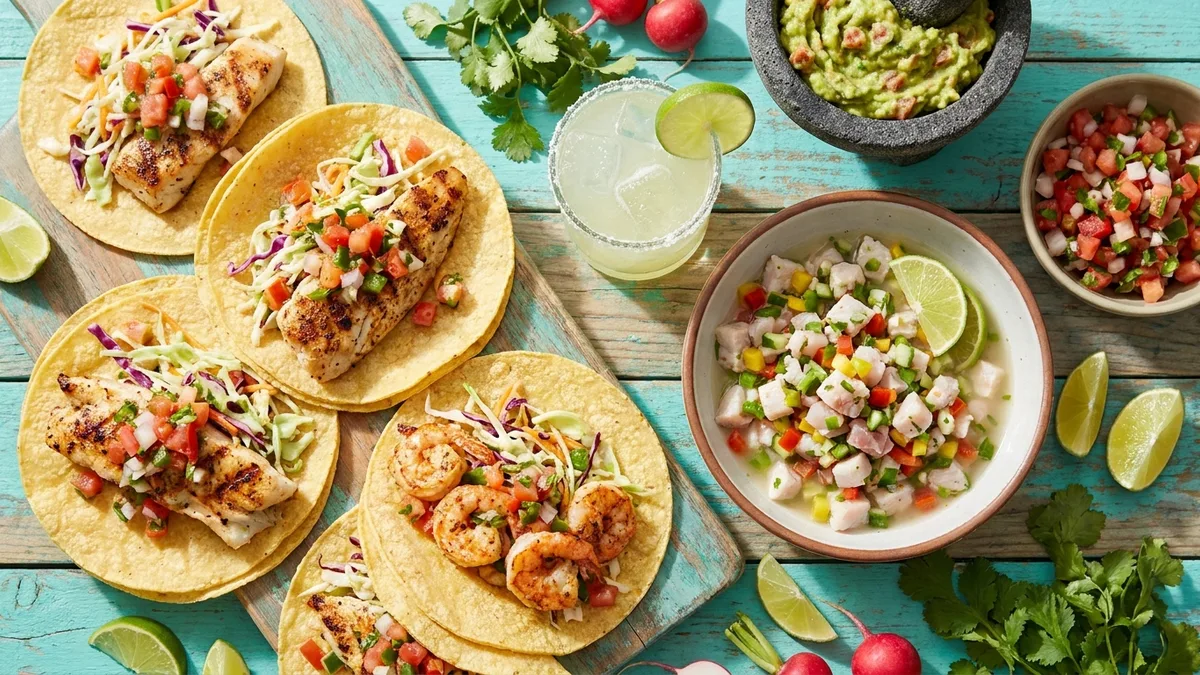
Now the fun part. So much of the Mexican table is naturally gluten-free once you take charge of the seasoning.
Order these with confidence
- Corn-tortilla tacos with grilled meat, fish, or shrimp — confirm no flour dusting or Maggi marinade.
- Ceviche and fresh seafood — naturally gluten-free; just check there’s no soy or Maggi.
- Tamales, pozole, and elote (grilled corn) — corn-based staples.
- Guacamole, beans, rice, and pico de gallo.
- Carne asada and other grilled meats — confirm the marinade.
- Tequila and mezcal instead of beer — agave spirits, so a margarita is fair game (check flavored mixers).
Even naturally gluten-free dishes earn a quick “no flour, no Maggi” check, especially anything grilled or marinated. And here’s a happy one: distilled from agave, so pure tequila and mezcal are gluten-free, so a margarita is a safe way to toast the trip — it’s the barley-based beer you leave alone.
Eating Gluten-Free in Cabo: What Our Family Found
We took our kids to Cabo (Los Cabos) recently, and I’ll be honest — I packed a suitcase of backup snacks and barely opened it. We based ourselves at a hotel and ate out for nearly every meal, which in most countries is the stressful way to travel gluten-free. In Cabo it was the opposite.
It’s a tourist destination, so English is widely spoken and restaurants are used to dietary requests. Seafood is everywhere, which plays right into a gluten-free diet: ceviche by the bowlful, grilled catch of the day, and grilled fish or shrimp tacos on corn tortillas. The kids’ default became corn-tortilla tacos and fresh ceviche, and they barely noticed they were eating gluten-free at all.
Two things kept it smooth. We handed over a Spanish restaurant card to explain cross-contamination, and we kept asking “sin harina” — because of that Baja flour habit. If you’re staying at an all-inclusive, the kitchen can usually flag gluten-free options in advance; our all-inclusive resort guide walks through arranging that before you go.
How to Order Safely: Cards & Key Words
The single most useful habit is to hand the kitchen a Spanish gluten-free restaurant card and then ask the right follow-up questions. “Sin gluten” on its own isn’t always enough, because people may hear it as “no wheat flour” and miss the bread in a mole or the Maggi in a marinade.
- sin gluten / libre de gluten — gluten-free
- trigo — wheat · harina — flour
- de maíz, no de harina — corn (tortillas), not flour
- pan — bread (the hidden thickener in many moles)
- cebada — barley (beer)
On packaged foods, Mexico’s labeling rules require wheat (trigo) to be named in the ingredients, so supermarket and tienda labels are readable once you know the word. Our free gluten-free restaurant cards include a Spanish card written exactly for this — show it to your server and ask them to share it with the kitchen.
Frequently Asked Questions
The questions I hear most from gluten-free travelers headed to Mexico. As always, weigh your own sensitivity and confirm preparation at each restaurant.
Is Mexico a good place to travel with celiac disease?
Yes — it’s one of the easier countries. Mexican cooking is built on corn, not wheat, so corn tortillas and a lot of the food are naturally gluten-free. The main risks are flour tortillas, mole (often thickened with bread), and seasonings like Maggi and Worcestershire. Bring a Spanish restaurant card, ask the right questions, and you can eat very well.
Are corn tortillas gluten-free in Mexico?
Traditional Mexican corn tortillas are made from just nixtamalized corn, water, and salt, and corn is naturally gluten-free, so they’re a safe staple. Confirm they’re 100% corn (maíz) rather than a corn-and-wheat blend, and that they’re kept separate from flour tortillas on the comal.
What Mexican foods are naturally gluten-free?
Plenty: corn-tortilla tacos, ceviche and grilled seafood, tamales, pozole, elote, guacamole, beans, rice, and carne asada (confirm the marinade). Tequila and mezcal are gluten-free too. Watch out for flour tortillas, mole, battered fish, and wheat-based seasonings like Maggi.
Is it easy to eat gluten-free in Cabo San Lucas?
Generally, yes. Cabo is a tourist area where English is widely spoken and restaurants are used to dietary requests, and seafood like ceviche and grilled-fish tacos on corn tortillas makes naturally gluten-free meals easy. One local quirk: Baja uses more flour than much of Mexico, and grilled fish is sometimes dusted with flour, so ask for it “sin harina.”
Can I drink margaritas and tequila gluten-free?
Yes. Tequila and mezcal are distilled from agave rather than grain, so pure versions are gluten-free — a classic margarita is generally fine, though it’s worth checking flavored or pre-mixed mixers. Beer (cerveza), on the other hand, is brewed from barley and isn’t safe, so skip it.
How do I ask for gluten-free food in Spanish?
Say “sin gluten” or “libre de gluten,” and ask for corn tortillas (“de maíz, no de harina”). Because “gluten-free” can be misheard, also ask specifically about wheat flour (harina de trigo), bread (pan, in sauces like mole), and seasonings like Maggi and salsa inglesa. A printed Spanish restaurant card makes all of this much easier.
Medically reviewed and last updated 2026-06-08.