

On this page
For celiac disease management, the safe gluten threshold is less than 20 parts per million (ppm) — the internationally recognized standard for foods labeled “gluten-free.” Most celiac specialists agree that keeping daily gluten intake below this level is essential to protect intestinal health and prevent long-term complications.
But here’s the thing — understanding that number is only half the battle. Knowing how it applies to your daily food choices, certifications, and dining habits is where things get complicated. And when I first went gluten-free after my own diagnosis, I had no idea what 20 ppm actually meant in real life.
As a registered nurse and someone who’s been navigating celiac disease for years, I want to break this down clearly. I’ve done the research, talked to gastroenterologists, and — honestly — learned some hard lessons about what “close enough” can do to your gut.
In this article, I’ll cover what the science actually says about safe gluten levels, how labeling laws work, what certified gluten-free really means, and the common mistakes that keep people with celiac from healing — even when they think they’re being careful.
Key Takeaways
- The FDA and most international regulatory bodies set the gluten-free threshold at fewer than 20 ppm — the level research suggests most people with celiac can tolerate without measurable intestinal damage.
- There is no universally “safe” amount of gluten for celiac disease — even small, repeated exposures can cause ongoing villous atrophy in some individuals.
- Gluten-Free Certification Organization (GFCO) certification means a product tests at 10 ppm or below, offering an extra margin of safety beyond FDA labeling requirements.
- Cross-contamination, not just labeled gluten sources, is the most common reason people with celiac fail to heal on a gluten-free diet.
- Regular follow-up testing — including tTG-IgA antibody levels — helps confirm whether your current diet is keeping you below harmful gluten exposure thresholds.
What Does “20 PPM” Actually Mean for Celiac Disease?
Parts per million sounds like a chemistry class concept, but it’s pretty simple in practice. Twenty ppm means 20 milligrams of gluten per kilogram of food. To put it another way, it’s about 20 drops of gluten in a million drops of food — a tiny amount that nonetheless matters enormously for people with celiac disease.
The U.S. Food and Drug Administration (FDA) established the 20 ppm limit for voluntary “gluten-free” labeling in 2013, codifying what research had already been pointing toward for years. The Beyond Celiac organization and the Celiac Disease Foundation both support this threshold as the appropriate regulatory standard.
Why 20 ppm specifically? Researchers chose this level for two reasons: it’s the lowest concentration that analytical testing methods can reliably detect, and clinical studies suggest the majority of adults with celiac disease can consume small amounts at this threshold without triggering measurable intestinal damage. The key word is majority — research suggests some individuals react to even lower levels.
FDA Labeling vs. GFCO Certification: What’s the Real Difference?
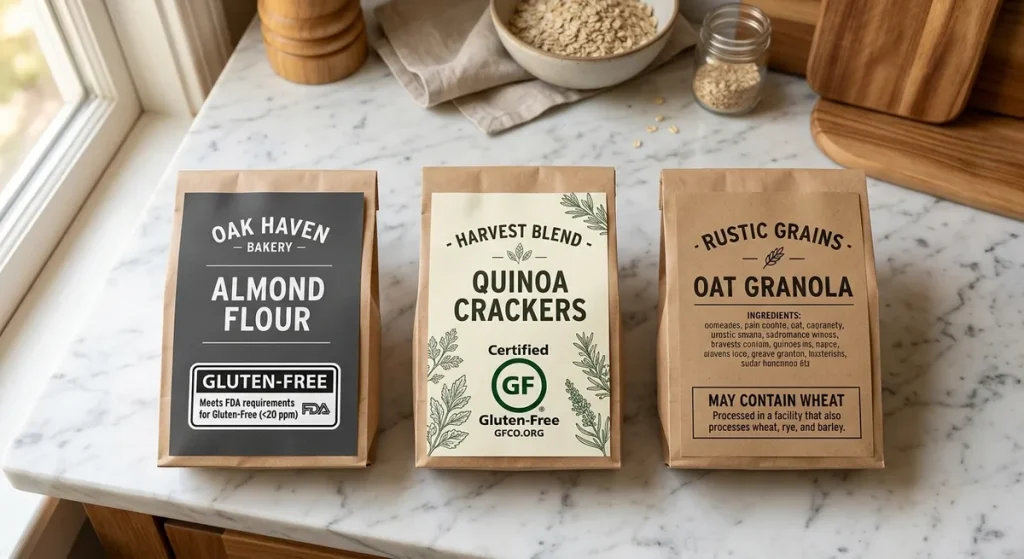
This is one of the most important distinctions for safe gluten levels in celiac disease management, and it’s one that too many newly diagnosed people miss entirely.
When a product carries an FDA “gluten-free” label, the manufacturer is claiming the product contains fewer than 20 ppm of gluten. Here’s what surprises most people: the FDA does not require pre-market testing. The label is essentially a manufacturer’s claim that the FDA can audit — but products aren’t independently verified before they hit store shelves.
Gluten-Free Certification Organization (GFCO) certification is different. GFCO, a program of the Gluten Intolerance Group, independently tests and certifies products to a stricter standard of 10 ppm or below. Manufacturers must pass regular facility audits and product testing to maintain certification. That circular “GF” logo means something specific and verifiable.
For most people with celiac disease, I recommend prioritizing GFCO-certified products when possible — especially for staple foods you eat daily. Our article on what gluten-free certification actually means breaks this down even further if you want to dig into the details.
How Much Gluten Exposure Is Actually Harmful?
This is the question I get asked most often, and the honest answer is: it varies by individual, and the research is still evolving. But here’s what the evidence currently suggests.
A landmark study published in the American Journal of Clinical Nutrition found that daily gluten intake of as little as 50 mg caused significant intestinal damage in adults with celiac disease over a 90-day period. To frame that in ppm terms: if you ate 250 grams (about 9 ounces) of food testing at 20 ppm every day, you’d consume 5 mg of gluten — well below the 50 mg threshold.
The problem isn’t usually one carefully chosen product. It’s cumulative exposure across a whole day of eating — multiple products at the FDA’s 20 ppm limit, possible cross-contamination at restaurants, shared utensils, and hidden sources like medications and supplements. Those small amounts add up faster than most people realize.
Research also suggests that intestinal healing requires consistent gluten avoidance, not just occasional adherence. Studies show that a significant portion of adults with celiac disease have persistent villous atrophy even after one to two years on a self-reported gluten-free diet, often because of ongoing low-level exposures they’re unaware of.
Where Hidden Gluten Sneaks In (and Blows Your Threshold)
Safe gluten levels in celiac disease management aren’t just about reading labels at the grocery store. The trickiest sources of gluten exposure are the ones you’re not expecting.
- Restaurant cross-contamination: Shared fryers, pasta water splashing, gluten-containing flour in the air — restaurants are one of the highest-risk environments for celiac exposure, even at dedicated “gluten-free” menu items.
- Shared kitchen equipment: In controlled testing, cooking gluten-free pasta in water already used for wheat pasta pushed every sample over 20 ppm, while washed utensils and a shared toaster tested far lower. Our article on cross-contamination from shared utensils covers exactly what’s risky and what isn’t.
- Oats: Even oats labeled gluten-free must be certified GF oats grown and processed away from wheat, barley, and rye. Additionally, some people with celiac react to avenin, the protein in oats itself, regardless of contamination.
- Sauces, seasonings, and condiments: Soy sauce, malt vinegar, certain salad dressings, and spice blends are common hidden sources. Always check labels even on products you’ve used before, because formulas change.
- Medications and supplements: Some tablets and capsules use wheat starch as a binder. This is worth investigating carefully — especially if you take daily medications.
- “May contain” warnings: These advisory statements indicate shared equipment or facility risk. They’re voluntary, and our breakdown of “may contain gluten” labeling explains how to evaluate the actual risk level for your situation.
Recommended Products for Staying Below Safe Gluten Thresholds
When you’re managing celiac disease, building your pantry around reliably low-gluten products makes staying below the safe threshold much more achievable day to day. Here are the categories and brands I trust most for keeping our household safe.
GFCO certified to 10 ppm, tested in a dedicated gluten-free facility, and widely available at mainstream grocery stores. It’s our household’s most-used GF baking staple.
GFCO certified, made in a dedicated GF bakery. One of the most reliably safe commercial breads available. ~$7-9/loaf at most grocery stores.
Purity protocol oats grown in dedicated GF fields — the safest option for celiacs who can tolerate oats. Tested to below 20 ppm. ~$6-8/bag.
GFCO certified. Manufactured in a dedicated gluten-free facility in Italy. Excellent texture and a consistent safety record. ~$4-5/box.
GFCO certified. Made with 100% soy, no wheat. The safest soy sauce swap for celiac households. ~$5-7/bottle.
One to be cautious about: Generic store-brand “gluten-free” products without third-party certification. They may meet FDA’s 20 ppm standard on paper, but without independent verification, you’re trusting the manufacturer’s word alone. I’m not saying avoid them entirely — budget is real — but for your highest-volume daily staples, certified brands offer meaningful extra protection.
Common Mistakes That Push You Over the Safe Threshold
Watch Out for These Gluten Exposure Pitfalls
- Assuming “gluten-free” on a restaurant menu means celiac-safe — always ask about dedicated prep areas and fryers
- Cooking gluten-free pasta in water already used for wheat pasta — in controlled testing, every sample went over 20 ppm, so start with fresh water
- Eating multiple FDA-labeled (not GFCO-certified) products daily without accounting for cumulative ppm exposure
- Forgetting to check medications, vitamins, and supplements for gluten-containing excipients
- Using regular oats instead of purity protocol or GFCO-certified gluten-free oats
- Skipping follow-up tTG-IgA antibody testing — the only way to know if your diet is actually working at the cellular level
Frequently Asked Questions
Research suggests that most — but not all — adults with celiac disease can tolerate food at the 20 ppm threshold without measurable intestinal damage. However, some individuals are more sensitive and may experience ongoing villous atrophy even below this level. Work with your gastroenterologist and monitor antibody levels regularly to assess your personal response.
Gluten content in food is typically measured using an ELISA (enzyme-linked immunosorbent assay) test — the R5 ELISA method is considered the most reliable for detecting gliadin proteins from wheat, rye, and barley. Twenty ppm equals 20 milligrams of gluten per kilogram of food. Reputable certification organizations like GFCO use accredited labs to conduct this testing.
Research suggests that even small, repeated gluten exposures can trigger an immune response and cause intestinal inflammation in people with celiac disease — even when no symptoms are felt. “Silent” celiac disease (no obvious symptoms but ongoing damage) is well-documented. This is why symptom absence alone isn’t a reliable indicator of safe gluten levels — regular antibody testing matters.
The FDA gluten-free label requires fewer than 20 ppm but is based on manufacturer compliance — no mandatory pre-market third-party testing is required. GFCO certification from the Gluten Intolerance Group requires independent laboratory testing to 10 ppm or below, plus facility audits. GFCO offers a stricter and more independently verified standard.
The most reliable method is monitoring your tissue transglutaminase IgA (tTG-IgA) antibody levels through blood testing — your gastroenterologist should check these at regular intervals after diagnosis. Falling antibody levels suggest healing, while persistently elevated levels indicate ongoing gluten exposure. Some providers also use follow-up endoscopy to assess villous recovery directly. Our article on recovery from gluten exposure also covers what the healing process looks like.
The Bottom Line on Safe Gluten Levels for Celiac Disease Management
The science is clear: for celiac disease management, keeping gluten exposure below 20 ppm is the established standard — and aiming even lower with GFCO-certified products (10 ppm) gives you a meaningful safety buffer. But safe gluten levels aren’t just about what’s on the label. They’re about cumulative daily exposure, cross-contamination risks, and consistent dietary adherence that you verify through regular medical follow-up.
The most important thing I can tell you is this: don’t assume you’re safe just because you feel fine. Celiac disease can cause intestinal damage without obvious symptoms, and the only way to know your diet is truly working is through antibody testing. Managing this condition well means staying informed, choosing certified products for your staples, and maintaining an ongoing relationship with a gastroenterologist who takes your numbers seriously. For more on how gluten physically affects your intestinal lining, our guide to how gluten affects the gut is a great next read.
You’re not overreacting when you’re vigilant about 20 ppm. You’re protecting your long-term health — and that’s absolutely worth it.
Want help navigating the gluten-free diet safely? Download our free GF Nutrition Cheat Sheet — it covers the key nutrients most people with celiac miss, safe food lists, and what to ask your doctor at your next follow-up appointment.