

On this page
Every guide to cross-contamination from shared utensils seems to agree on the same four villains: the wooden spoons, the colander, the cutting board and the toaster. When I first went gluten-free, I did the full kitchen audit those lists describe and started replacing everything at the top of them. Until now, this article told you to do the same.
Then I went looking for the testing behind that list, and it tells a different story. Two small controlled studies measured how much gluten actually reaches gluten-free food from shared kitchen tools. Washed utensils and a crumb-filled toaster left the food under the gluten-free limit.
The one scenario that failed every single time wasn’t on the list at all: gluten-free pasta cooked in water that had already boiled wheat pasta.
Getting this wrong costs you in both directions. You can spend real money replacing tools that stayed under the limit in testing and still share the one pot of water that didn’t. As a registered nurse, I’ve rebuilt this guide around what those two studies measured, what they didn’t, and the precautions I still keep anyway.
A quick note if you’ve read this post before: an earlier version called strainers, wooden spoons, cutting boards and toasters the four highest-risk items in a shared kitchen. The controlled testing doesn’t support that ranking, so we’ve corrected it.
Key Takeaways
- Shared pasta water is the proven risk. Gluten-free pasta cooked in water already used for wheat pasta tested over the 20 ppm gluten-free limit in 12 of 12 samples. Start with fresh water every time.
- Washing does most of the work. A rinsed pot, a washed knife, and a wooden spoon, colander and ladle cleaned after wheat foods all left gluten-free food under the limit in testing.
- Toasters tested far lower than their reputation. Gluten-free bread from an uncleaned, crumb-filled pop-up toaster showed no detectable gluten in 20 of 20 samples. A dedicated toaster is still a sensible, inexpensive precaution, just not your first priority.
- Plenty has never been tested. Cutting boards, scratched plastic, cast iron, shared fryer oil and flour dust weren’t measured in either study, so the usual precautions still apply there.
- If you buy one thing, make it a color-coded cutting board set. It covers a gap the research left open and settles “which board is ours?” for everyone in a mixed household.
Why Every Shared-Utensil Guide Blames the Same Four Things
The usual list makes intuitive sense. Wood has grain, mesh has holes, knives score cutting boards, and toasters collect crumbs you can see. It feels obvious that gluten would hide in all of them.
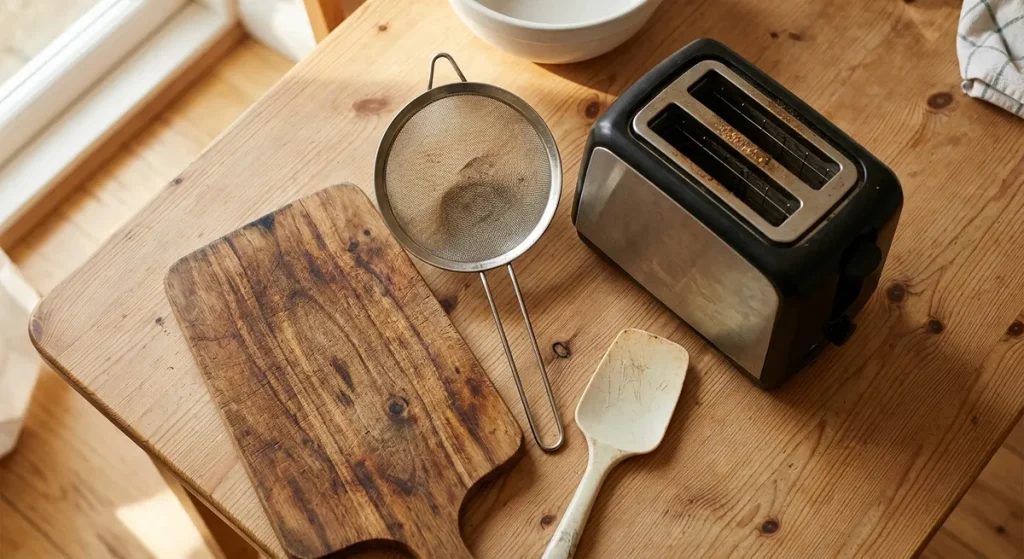
But “feels obvious” is most of what that list rests on. The Gastroenterology researchers covered below point out that gluten-free diet guides recommend dedicated toasters and give conflicting advice about utensils, and that the advice comes from expert consensus with very little data behind it. So they measured it.
The number that matters is 20 parts per million (ppm). The FDA only lets a food carry a gluten-free label if it contains less than 20 ppm of gluten. What that means for your daily intake is its own topic, and our guide to safe gluten levels with celiac disease walks through it.
Here is everything the two studies tested, side by side:
| What was tested | Result | Study |
|---|---|---|
| Gluten-free pasta cooked in water already used for wheat pasta | 12 of 12 over 20 ppm (33.9–115.7 ppm) | Weisbrod 2020 |
| The same pasta, rinsed under cold water for 30 seconds | 0 of 6 over 20 ppm; one at 17.5 ppm | Weisbrod 2020 |
| A pot that cooked wheat pasta, rinsed with water or washed with soap, then filled with fresh water | 0 of 12 with detectable gluten | Weisbrod 2020 |
| Gluten-free bread in uncleaned pop-up toasters with visible wheat crumbs | 0 of 20 with detectable gluten | Weisbrod 2020 |
| Gluten-free bread in a hospital cafeteria’s conveyor toasters | 0 of 20 over 20 ppm; four at 5.1–8.3 ppm | Weisbrod 2020 |
| Gluten-free cupcake cut with a knife that had just cut a wheat cupcake | 2 of 30 over 20 ppm; 28 of 30 detectable | Weisbrod 2020 |
| The same, after washing, rinsing or wiping the knife | 0 of 30 over 20 ppm | Weisbrod 2020 |
| Wooden spoon, colander, ladle and knife used for wheat foods, then for gluten-free bread and pasta | All under 20 ppm; all under 10 ppm after cleaning | Studerus 2018 |
Two honest caveats before we go item by item. Both studies are small, and the pasta-and-toaster authors list their own limits: small sample sizes, testing a portion of each blended-up food, and a lab test that can miss gluten that has been broken down. Neither study tested your kitchen, your tools or your body.
Shared Pasta Water: The One Item That Tested High Every Time
Of everything measured, gluten-free pasta cooked in reused pasta water was the clear outlier. In a 2020 study in Gastroenterology, all 12 samples came back over 20 ppm, ranging from 33.9 to 115.7 ppm. That’s up to nearly six times the gluten-free limit, from a step a lot of families don’t even think of as sharing.
Rinsing the cooked pasta under cold water for 30 seconds pulled all six rinsed samples back under 20 ppm, but one still landed at 17.5. I wouldn’t count on a fix that lands that close to the line.
The pot was a different story. Pots that had cooked wheat pasta and were then rinsed with plain water, or scrubbed with soap, left no detectable gluten in any of the 12 gluten-free samples cooked in fresh water afterward. You don’t need a separate pot. You need fresh water.
This is also where the lab result and the expert advice line up exactly. Beyond Celiac’s cross-contact guidance answers the shared-pasta-water question with a flat no, because boiling doesn’t destroy gluten. When you order gluten-free pasta at a restaurant, it’s worth asking whether it gets its own fresh water.
Washed Utensils Stayed Under the Limit, Wooden Spoon Included
The utensil study most people have never heard of came from Switzerland, from a team that included the Swiss Celiac Association and the Basel state food laboratory. They used a wooden spoon, a colander, a ladle and a knife on wheat pasta and bread, then used the same tools to prepare gluten-free bread and pasta.
Every sample in the 2018 Swiss study stayed under 20 ppm, and after each of the three cleaning methods they compared, every sample was under 10 ppm. The authors concluded that shared utensils used for wheat pasta and for cutting bread shouldn’t pose a relevant problem for people with celiac disease, at least in a home kitchen.
That includes the wooden spoon, the item most guides insist has to go. It was one spoon in one small study, so it doesn’t prove every old, cracked spoon is fine. But it does undercut the idea that wood holds onto gluten no amount of washing can reach.
One detail is worth keeping. The ladle used to serve the gluten-free pasta carried the most wheat DNA of anything tested, even though its gluten level stayed under the limit, and the researchers suspect shared serving ladles carry more risk than the other tools. Use a clean ladle for the gluten-free pot.
The knife results in the pasta-and-toaster study point the same way. A knife that had just cut a frosted wheat cupcake left detectable gluten on 28 of 30 gluten-free cupcakes, and 2 of the 30 went over 20 ppm. Once the knife was washed with soap and water, rinsed with water alone or wiped with a wet wipe, none of the 30 did.
So can you get cross-contamination from shared utensils? Some, when a tool goes straight from wheat to gluten-free food without a wash. But washing brought every utensil these studies tested under the gluten-free limit.
Toasters Tested Far Lower Than Their Reputation
The toaster is where the testing surprised me most. Researchers toasted gluten-free bread in three shared pop-up toasters right after wheat bread, with wheat crumbs visible in every toaster and no cleaning at all. All 20 samples came back below the test’s 5 ppm detection limit.
In a busy hospital cafeteria’s conveyor toasters, 16 of 20 samples were undetectable and the other four measured 5.1 to 8.3 ppm. The highest of all 40 toaster samples was 8.3 ppm, well under 20.
That doesn’t make a shared toaster risk-free, and I’m not going to tell you it does. It was 40 slices of one brand of gluten-free sandwich bread, and the study didn’t test waffles, bagels, toaster pastries or toaster bags. Beyond Celiac still advises against sharing a toaster, citing celiac experts.
Here’s how I read the two together. The toaster isn’t where your biggest risk lives, so it shouldn’t be your first purchase or your biggest worry. A dedicated toaster is still an inexpensive way to take one daily decision off the counter, especially if someone in your home is newly diagnosed or still has symptoms.
What Hasn’t Been Tested, and the Precautions I Still Keep
Both studies left big gaps, and I don’t want to fill them with guesses in either direction. Neither one tested cutting boards, scratched plastic, non-stick coatings, cast iron, shared fryer oil or flour dust in the air. For those, I keep the standard precautions because they’re cheap and the evidence isn’t there yet.
Precautions I Keep Where the Research Runs Out
- Cutting boards: a dedicated, color-coded gluten-free board. Knife scores are hard to clean, and Beyond Celiac recommends a board used only for gluten-free food.
- Fryer oil: never shared. Beyond Celiac says a separate fryer is a must, and neither study tested oil.
- Cast iron and scratched non-stick: a dedicated pan, or a smooth stainless one. The pots that left no detectable gluten after washing in the pasta study were stainless steel.
- Flour dust: bake with wheat flour well away from gluten-free prep, and wipe surfaces down afterward.
The system that holds all of this together is the one I started with. Everything gluten-free in our kitchen is green, from the cutting board to the spatulas to the colander, and it lives in its own labeled caddy on the counter. I still cook and plate Austin and Alex’s portions first, before any wheat gets opened.
None of that was tested either. It just takes the guesswork away from everyone who cooks in our house, and the weekly crumb sweep in my Sunday reset is where most of the upkeep happens.
Our Top Picks: Inexpensive Precautions Worth Having
None of these are required, and the research above is a good reason not to panic-buy. These are the few things I’d spend money on, in this order, because each one either covers a gap the testing left open or makes the fresh-water rule easier to keep.
As an Amazon Associate I earn from qualifying purchases.
Neither study tested cutting boards, knife scores are genuinely hard to clean, and Beyond Celiac recommends a board used only for gluten-free food. A color-coded set turns that into a rule nobody has to remember: green is gluten-free. Replace a board once it’s deeply scored. View on Amazon
A second toaster is a peace-of-mind purchase rather than a proven necessity. I’d still buy one for a household with someone newly diagnosed or still symptomatic, because it takes a daily judgment call off the counter. It’s small enough to sit beside the family toaster. View on Amazon
Jovial says this organic brown rice pasta is certified gluten-free. Whichever gluten-free pasta you buy, the testing above says the water matters more than the box, so give it its own pot of fresh water. View on Amazon
Labeled gluten-free and made from a corn and rice blend, from a brand most relatives already know. Hand it over with one instruction: fresh water, never the wheat pot’s. View on Amazon
Two Things I’d Skip
- A day-one replacement set of colanders and wooden spoons. If yours wash clean, the testing suggests they aren’t where your risk is. Put that money toward a board set and keep your pasta water fresh.
- Deeply scored boards and flaking non-stick pans for gluten-free cooking. Neither was tested, so I can’t point you to a number. I retire them anyway, because I can’t tell by looking whether they’re clean.
Common Mistakes to Watch Out For
- Reusing pasta water, at home or out. It’s the one shared step that failed every sample. Start the gluten-free pot with fresh water, and ask restaurants whether theirs does too.
- Serving from the wheat pot’s ladle. The ladle carried the most wheat DNA in the Swiss study. A clean ladle for the gluten-free pot costs nothing.
- Skipping the wash between uses. An unwashed knife left detectable gluten on 28 of 30 cupcakes and pushed 2 over the limit. Soap, a water rinse or even a wet wipe brought every sample under it.
- Counting on a rinse to rescue the pasta. Rinsing pulled shared-water pasta under 20 ppm in testing, but one sample still measured 17.5 ppm. Fresh water is the fix; a rinse is a backup.
- Double-dipping shared condiment jars. Neither study measured how much a knife carries from wheat toast back into a jar. Separate jars or squeeze bottles, the way we handle two peanut butter jars in one kitchen, take the question off the table.
- Treating one study as permission for everyone. These were small studies, and sensitivity varies. If someone in your home is newly diagnosed or still symptomatic, start cautious and relax rules with your care team’s input.
Frequently Asked Questions
Can you get glutened from a shared wooden spoon?
In a controlled Swiss study, gluten-free food prepared with a wooden spoon previously used for wheat pasta stayed under the 20 ppm gluten-free limit, and under 10 ppm once the spoon was cleaned. That was a single small study, so it doesn’t prove every old or cracked spoon is fine. Wash spoons well between uses, and retire any with deep cracks you can’t get clean.
Do I need a separate colander for gluten-free pasta?
The testing so far says the colander matters much less than the water. A colander used for wheat pasta and then for gluten-free pasta left the food under 20 ppm, and under 10 ppm once it was cleaned, while gluten-free pasta cooked in reused wheat-pasta water tested over the limit in all 12 samples. A dedicated colander is a reasonable extra step, but fresh cooking water comes first.
Do I really need a separate toaster for gluten-free bread?
It’s a sensible precaution rather than a proven necessity. In one small study, gluten-free bread toasted in uncleaned, crumb-filled pop-up toasters showed no detectable gluten in 20 of 20 samples, though Beyond Celiac still recommends a separate toaster. If someone in your home is newly diagnosed or still symptomatic, a dedicated toaster is an inexpensive way to remove the question, and your doctor or dietitian can help you decide what fits.
Do toaster bags prevent cross-contamination?
Neither of the studies in this article tested them. Beyond Celiac describes toaster bags as useful in a pinch but not foolproof: keep wheat crumbs out of the bag, and never set the bag itself on a gluten-free plate.
Can I share stainless steel pots and pans?
In testing, a stainless steel pot used for wheat pasta and then either rinsed with plain water or washed with soap left no detectable gluten in the next gluten-free batch, across all 12 samples. Cast iron and scratched non-stick pans weren’t tested, so many families keep a dedicated pan for those.
Can gluten-free pasta be cooked in the same water as regular pasta?
No. Every sample of gluten-free pasta cooked in water that had already boiled wheat pasta tested over 20 ppm, from 33.9 to 115.7 ppm. Rinsing brought the samples under the limit, but one still measured 17.5 ppm, so start with fresh water every time.
Where to Start if You’re Still Getting Glutened
If you’re doing everything right and still reacting, start with the one scenario the testing actually caught: shared cooking water, at home and when you eat out. Then look for tools going from wheat to gluten-free food without a wash in between.
After that, work through the untested list: cutting boards, fryer oil, condiment jars and flour dust on baking days. Replacing a colander or wooden spoon you already wash well sits lower on that list than most guides suggest, and a dedicated toaster buys peace of mind rather than fixing a proven source.
If symptoms keep going despite a careful diet, talk to your gastroenterologist. Your kitchen is only one place gluten can come from, and ongoing symptoms deserve a proper look. If you’re setting up a kitchen from scratch, our complete kitchen guide walks through it room by room.
Get the Gluten-Free Kitchen Setup Checklist
Storage, labeling and the everyday habits for a shared kitchen, on a printable checklist you can work through in about an hour.
You don’t need a brand-new kitchen to cook gluten-free food with confidence. You need fresh pasta water, a real wash between uses, and a few cheap habits pointed at the right things. You’ve got this.