

On this page
Updated October 2, 2026: we rewrote this article after checking the research on wheat breeding. Earlier versions said modern wheat carries more, harder-to-digest gluten than the wheat our grandparents ate. Side-by-side studies don’t support that, so the sections below now follow the evidence.
Have you ever wondered if gluten is getting blamed for something bigger? I know I did. When I first started paying attention to how certain foods made me feel, I kept coming back to one simple question: Why does wheat seem to bother so many people today when our grandparents ate it daily without thinking twice?
The answer you hear most often is that modern wheat is the villain: bred to carry more gluten, sprayed with more chemicals and harder to digest. It’s a tidy story. When we checked it against the research, though, most of it didn’t hold up.
Scientists have tested the modern-wheat idea directly, growing old and new wheat side by side and measuring the gluten. Below is what they found, what really has changed, and what’s more likely behind the rise in wheat problems.
This isn’t about fear or cutting out foods just because it’s trendy. If you’ve ever felt confused or frustrated trying to figure out what your body is reacting to, you’re not alone — and this might finally help things click.
Key Takeaways
- Modern wheat doesn’t have more gluten. When 60 wheat varieties from 1891 to 2010 were grown side by side, total gluten stayed the same.
- Ancient grains are still wheat. Einkorn, emmer, spelt, farro and khorasan all contain gluten, often more than modern bread wheat, and none is safe with celiac disease.
- Celiac disease really is more common. Undiagnosed celiac is about four times as common in US blood samples as it was in the early 1950s, and better testing doesn’t explain it.
- Gluten isn’t always the trigger. In a blinded trial of people without celiac, fructans, a carbohydrate in wheat, caused more symptoms than gluten did.
- Get tested before you go gluten-free. Cutting gluten first can throw off celiac test results.
What “Gluten” Really Is (In Simple Terms)
Let’s take a breath and break this down without getting lost in science terms. Gluten is simply a group of proteins found in wheat, barley and rye. The two big ones in wheat are gliadin (the stretchy one) and glutenin (the strong, binding one). Together, they’re what make pizza dough stretchy, bread fluffy, and pasta hold its shape.
Next Steps If Wheat Seems to Bother You
- Ask your doctor about celiac testing before you cut out gluten.
- Keep a simple food-and-symptom log to bring to that appointment.
- Don’t treat einkorn, spelt or “heritage” wheat as a celiac-safe swap; they all contain gluten.
- If celiac is ruled out, ask whether a dietitian-guided low-FODMAP trial makes sense for you.
- Learn to read labels for wheat, barley, rye and malt.
For some people, these proteins trigger real issues — especially those with celiac disease, gluten intolerance, or non-celiac gluten sensitivity. When gluten hits their system, it can cause inflammation, digestive upset, headaches, fatigue, and a whole list of symptoms that make everyday life harder.
But here’s the part most people never hear: for people without celiac disease, gluten often isn’t the part of wheat causing the trouble. When researchers hide gluten, other wheat components or a placebo inside identical foods, symptoms don’t always follow the gluten.
Think of it like this. When people react to wheat today, it might be because of:
- Celiac disease, an autoimmune reaction to gluten that has genuinely become more common
- Fructans, a fermentable carbohydrate in wheat that can cause gas and bloating
- A wheat allergy, a different immune reaction to wheat proteins
- Non-celiac gluten or wheat sensitivity, which is real for some people but has no lab test yet
- Expectation itself: in blinded trials, many people react to a placebo too, so the symptoms are real even when the food isn’t the cause
So yes, gluten can cause real reactions — but the full story is more layered than “gluten = bad.” The trigger might be gluten, another part of wheat, or something else entirely, and the right next step depends on which one it is.
How Modern Wheat Became… Modern Wheat
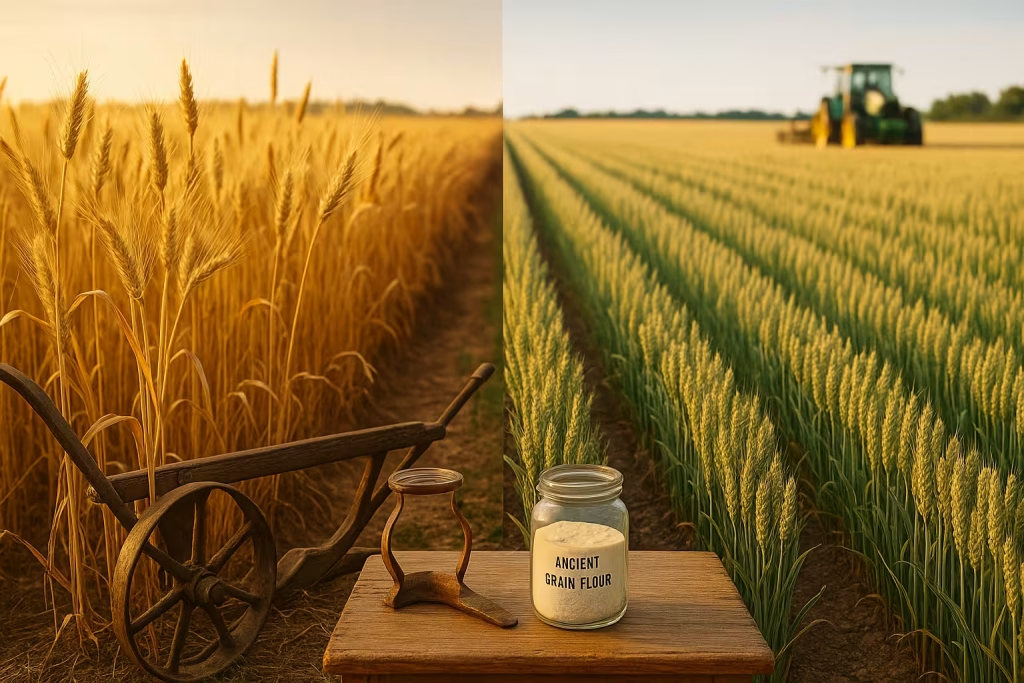
To understand the modern-wheat theory, it helps to know what actually changed — because wheat really did change. Through the 20th century, breeders made it shorter and far higher-yielding. From the 1960s, “semi-dwarf” varieties spread, which is where the popular phrase “dwarf wheat” comes from.
Their goal was good: grow more wheat, feed more people. The question that matters for your gut is whether all that breeding changed the gluten. Scientists have tested it directly:
- Same total gluten. A 2020 German study grew 60 wheat varieties first registered between 1891 and 2010 side by side over three harvests. Total gluten didn’t change. Protein and gliadin trended down, glutenin went up, and the harvest year mattered more than the variety.
- Same celiac-triggering fragments. The same team measured four celiac-active gluten fragments, including the well-known “33-mer,” in those 60 varieties. The amounts in the flour showed no upward trend, and the researchers concluded the potential of old and modern wheat to trigger celiac “appears to be similar.”
- No rise in US gluten. A USDA scientist who reviewed a century of US wheat data wrote that he had “not found clear evidence of an increase in the gluten content of wheat” in the United States during the 20th century.
- Fewer minerals — this part is real. In England’s Broadbalk experiment, running since 1843, zinc, iron, copper and magnesium in wheat grain held steady until the mid-1960s, then fell as semi-dwarf, high-yielding varieties arrived. The researchers tied the drop to bigger yields, not poorer soil. That’s a nutrition issue, not a gluten one.
What did change is how much extra gluten goes into food. The same USDA review estimated that added “vital wheat gluten” roughly tripled per person since 1977. It’s still a small slice next to the 11 to 12 pounds of gluten a year Americans get from flour, and the author called its role “difficult to say.”
So when people say, “But humans have eaten wheat forever,” they’re closer to right than the modern-wheat story suggests. The wheat our grandparents ate was taller and lower-yielding, but its gluten was about the same.
What About Farming, Processing, and Additives?
The second half of the modern-wheat story is everything that happens after the grain is grown: farm chemicals, flour milling and packaged-food additives. Here’s how each piece holds up.
1. Farm Chemicals Like Glyphosate
Glyphosate, the active ingredient in Roundup, is the chemical most often blamed. The case against it traces back to a 2013 hypothesis paper by Samsel and Seneff, which proposed glyphosate as the main cause of rising celiac disease but presented no new data. When we searched PubMed in October 2026, we found no population studies linking glyphosate exposure to celiac disease.
If you’d rather limit pesticide residues for general reasons, organic is a reasonable choice. It just isn’t a celiac fix: organic wheat has the same gluten as any other wheat.
2. Flour Processing
White flour is very different from the whole grain. Milling removes the bran and germ, and with them most of the fiber and some vitamins and minerals.
Today’s white flour is often:
- Stripped of bran and germ
- Bleached to whiten it (unbleached versions are easy to find)
- Enriched with some B vitamins and iron added back
- Blended with dough conditioners in some commercial flours
That’s a good reason to choose whole grains if you can eat wheat. But refining removes fiber, not gluten: the gluten proteins sit in the starchy part of the grain that white flour keeps. Refined flour isn’t any more or less risky for celiac than whole wheat.
3. Additives in Packaged Foods
Many packaged wheat products come with ingredients you wouldn’t bake with at home. They’re added to help bread stay soft for weeks or to give pastries that perfect “fluffy” texture.
Common additives include:
- Preservatives to extend shelf life
- Emulsifiers to change texture
- Dough conditioners to speed up production
- Sweeteners and added sugars
- Flavor enhancers and colorings
Are these a hidden reason people react to wheat? So far the evidence is thin. In a small 2022 feeding study, 16 healthy adults ate a diet with or without the emulsifier carboxymethylcellulose for 11 days, and the emulsifier group saw shifts in gut bacteria and slightly more stomach discomfort.
That study didn’t test celiac disease or gluten reactions. A separate idea, that a food enzyme called microbial transglutaminase drives celiac, is still a hypothesis.
Your great-grandmother’s bread recipe called for flour, water, yeast, salt… and maybe a little butter. Today, many breads have ingredient lists longer than a children’s chapter book.
Does the “Stacking Effect” Hold Up?
The stacking idea goes like this: modern wheat, plus modern chemicals, plus modern processing and additives, adds up to more reactions. It sounds intuitive. The problem is that its biggest piece, modern wheat, doesn’t hold up, and the other pieces haven’t been shown to cause gluten reactions.
There’s another wrinkle. Americans eat less flour than they used to: USDA estimates per-person flour use peaked at 146.8 pounds in 1997 and was about 126.6 pounds in 2025. Celiac diagnoses kept climbing anyway.
None of this means people who feel better without wheat are imagining it. It means the explanation is more likely a specific diagnosis, like celiac disease, a wheat allergy or trouble with fructans, than a change in the wheat.
Do Ancient Grains Really Trigger Fewer Reactions?
If you’ve ever heard someone say they can handle einkorn or spelt but can’t touch modern wheat, you’ve heard one of the most common arguments for the modern-wheat theory. Here’s what the research says.
First, these grains are wheat. Einkorn, emmer, spelt, farro and khorasan (sold under the brand KAMUT®) all appear on the Celiac Disease Foundation’s list of gluten sources.
Second, they don’t contain less gluten. A 2022 review in Nutrition Bulletin found that, compared with modern bread wheat, ancient wheats contain more protein and gluten and more of many of the gluten fragments that trigger celiac disease. The same review notes that older bread-wheat varieties grown side by side with modern ones also carry more protein, gluten and gliadin.
There are real differences. Einkorn and emmer lack the part of bread wheat’s genome that carries the best-known celiac fragment, the “33-mer.” In a small study of 17 young people with celiac disease, einkorn caused a weaker immune response than bread wheat, and the researchers still concluded einkorn is “not suitable for the diet of celiacs.”
What about people without celiac who say ancient grains sit better? The evidence is thin. A 2018 review in the Journal of Cereal Science found the research focused heavily on one branded grain (Kamut khorasan) from a small number of research groups, and called for more, better-standardized studies.
Here’s how the two compare on what the studies actually measured:
| Feature | Modern Bread Wheat | Ancient Wheats (Einkorn, Emmer, Spelt) |
|---|---|---|
| Total gluten | Unchanged across varieties from 1891 to 2010 | Often higher than modern bread wheat |
| Celiac-triggering fragments | Similar in old and modern varieties | Present in all; einkorn and emmer lack the “33-mer” but are still unsafe for celiac |
| Safe with celiac disease? | No | No — they’re all wheat |
| Minerals | Lower than pre-1960s wheat as yields rose | Vary widely by variety and growing conditions |
| Farm chemicals | Depend on the farm, not the grain | Depend on the farm, not the grain |
| Easier to digest without celiac? | The usual comparison point | Not established; few studies, mostly one branded grain |
So ancient grains aren’t a clue that modern wheat is the problem. If anything, they show the opposite: the older wheats carry as much gluten or more.
What Might Really Explain the Rise in Wheat Problems
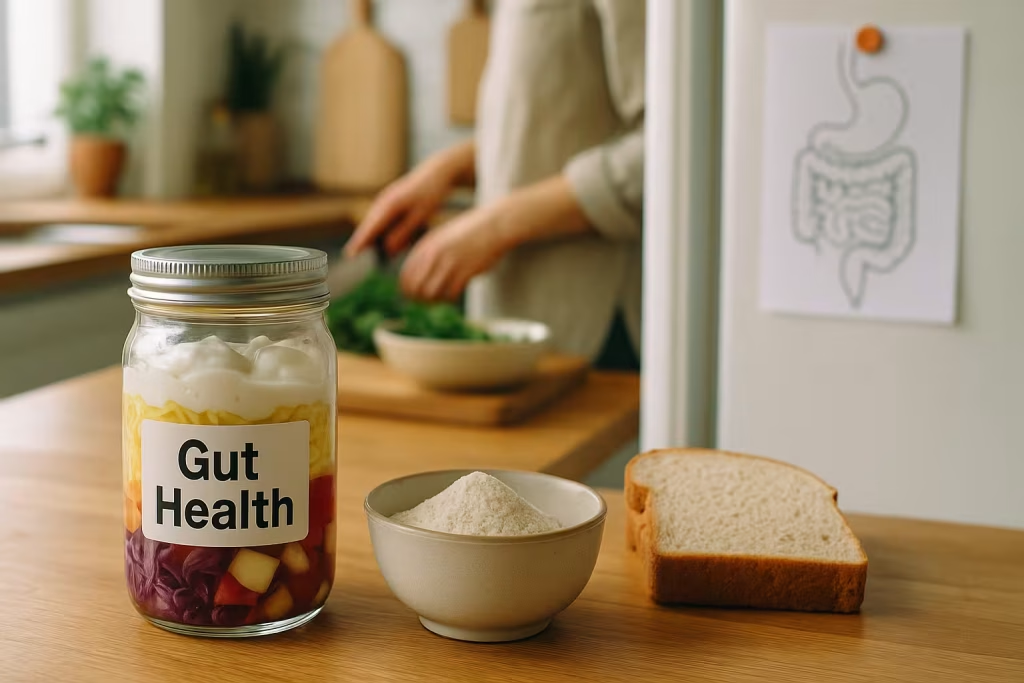
If wheat didn’t change in the ways that matter, why do so many more people seem to have trouble with it? Two different things have gone up, and they have different explanations.
Celiac Disease Has Truly Increased
Blood samples frozen at a US Air Force base between 1948 and 1954 showed undiagnosed celiac disease in 0.2% of the young adults tested. In comparable Minnesota adults tested decades later, the rate was about four times higher. Both groups were undiagnosed, so better testing can’t explain the gap.
Finland saw the same pattern, with total celiac prevalence nearly doubling between 1978–80 and 2000–01. Because wheat’s gluten didn’t change, researchers have turned to what’s different about us. The leading suspects are real signals, not proven causes:
- Early-life infections. In a study following more than 6,000 genetically at-risk children, a gut infection raised the risk of celiac autoimmunity over the next three months by about a third.
- How much gluten young children eat. In the same group of children, each extra gram of gluten a day was linked to a higher risk of celiac disease. That study observed children; it didn’t test cause and effect.
- Environment. Children in Russian Karelia, who share much of their ancestry and grain intake with children across the border in Finland, had roughly a fifth as much biopsy-confirmed celiac, though only four Karelian cases were confirmed.
Some popular explanations haven’t held up. Two large randomized trials published in 2014 found that the timing of gluten introduction and breastfeeding didn’t change celiac risk in high-risk babies. Antibiotic links weaken the closer researchers look, and C-section birth hasn’t shown up as a risk factor.
Self-Reported Gluten Sensitivity Has Climbed Even Faster
About 1 in 10 adults worldwide now say gluten or wheat bothers them, according to a 2025 analysis of 25 studies. In one English city, the share who said so jumped from 12.9% in 2012 to 32.8% in 2015, while celiac disease and gluten-free diet rates held steady.
When those symptoms are tested blind, gluten often isn’t the trigger. In a Norwegian trial of 59 people who had gone gluten-free on their own, bars with hidden fructans caused more symptoms and bloating than bars with hidden gluten, and gluten scored no worse than placebo. Still, 13 of the 59 reacted most to gluten, so gluten sensitivity is real for some people.
Fructans are one of the FODMAPs, a group of fermentable carbs, which is why gluten-free and low-FODMAP eating overlap but aren’t the same thing.
Whatever the cause, the encouraging part is the same: once you know what you’re reacting to, you can focus on supporting your gut and eating in a way that works for you, instead of guessing. For more on how much of the rise is real, see our myth-busting look at whether celiac is more common now.
How to Shop Smarter Without Fear
Grocery shopping shouldn’t feel like walking through a minefield — even when you’re gluten-free. One of the biggest mindset shifts that helped me was realizing I didn’t need to be scared of food. I just needed to understand it. Once you know what to look for (and what to skip), the grocery store becomes a whole lot less stressful.
The good news? You don’t have to memorize long ingredient names or become a food scientist. Most gluten-free families can make better choices by focusing on a few simple habits that keep shopping clean, clear, and uncomplicated.
Here are some of the smartest (and easiest) things you can do:
1. Keep Ingredient Lists Short
Look for products with simple, real-food ingredients.
Shorter lists are quicker to scan for wheat, barley, rye and malt.
2. Choose Whole-Food Gluten-Free Flours
Better options include:
- Almond flour
- Coconut flour
- Cassava flour
- Buckwheat flour
- Sorghum flour
- Brown rice flour
Buy versions labeled gluten-free. In a US test of naturally gluten-free grains, seeds and flours sold without that label, 7 of 22 had gluten at or above the FDA’s 20 ppm (parts per million) gluten-free limit.
3. Be Cautious With “Gluten-Free” Packaged Foods
Not all gluten-free foods are created equal. Some are packed with:
- Emulsifiers
- Stabilizers
- Gums
- Starches
- Added fibers like inulin or chicory root (both fructans)
- Excess sugar
These ingredients can still upset sensitive stomachs — even without gluten.
4. Know the Sneaky Places Wheat Hides
Wheat isn’t just in bread. It shows up in:
- Soy sauce
- Soups and gravies
- Salad dressings
- Spice blends
- French fries (yep, really)
- Pre-made burgers and meatballs
- Seasoned rice mixes
A simple label check can save you a lot of guessing.
5. Choose Organic If It Matters to You
Organic standards restrict synthetic pesticides, so organic is a reasonable choice if you want fewer residues. Just remember organic isn’t the same as gluten-free: organic oats and flours still need a gluten-free label.
6. Stick to Naturally Gluten-Free Staples
Fruits, veggies, lean meats, legumes, nuts, seeds, and whole gluten-free grains should make up most of your cart. They’re naturally safe and naturally nourishing.
7. Look for Certifications When It Matters
“Certified Gluten-Free” is the safest label for products that tend to get contaminated during manufacturing (like oats, snacks, flours, and processed foods).
Shopping gluten-free doesn’t have to feel overwhelming. With a few simple guidelines and a little practice, you’ll build confidence — and your cart will naturally start leaning toward foods that help your family feel their best.
Eating Out: Where Wheat Hides in Restaurant Food

Let’s be honest — eating out with food sensitivities can feel like walking a tightrope. You want to enjoy yourself and not feel like the “difficult” one at the table, but you also want to avoid spending the rest of the day with stomach cramps or worse. If you’ve ever had a reaction after a restaurant meal and thought, “I ordered gluten-free — what happened?” — you’re not alone.
The challenge isn’t that wheat changed. It’s that wheat flour turns up in so many restaurant ingredients, from roux to marinades, and most kitchens share fryers, grills and prep space.
Most restaurant kitchens aren’t set up to prevent cross-contact the way a gluten-free household is, so a dish can be gluten-free on paper and still pick up gluten along the way.
Common Places Wheat Hides in Restaurants
Even if you’re not eating bread or pasta, wheat might still be lurking. Here’s where it often hides:
| Dish Type | Hidden Wheat Sources |
|---|---|
| French fries | Coated in flour or fried in shared oil |
| Soups & sauces | Thickened with wheat flour or roux |
| Grilled proteins | Marinated in soy sauce or spice blends with gluten |
| Salads | Croutons, dressings, or seasoning packets |
| Eggs & omelets | Some diners add pancake batter to bulk them up |
| Burgers & sandwiches | Buns, seasonings, and shared grill space |
| Smoothies & shakes | Protein powders or flavorings with malt or wheat |
| Desserts | Garnishes, dustings, or fillings containing flour |
Even if something sounds safe, it might be cross-contaminated or cooked alongside wheat-heavy ingredients.
Simple Tips to Stay Safe (Without the Stress)
Eating out can still be fun — you just need a game plan. Here are some tips I use when dining out with my family:
- Ask for the allergen menu (if available) — it’s your best friend.
- Let your server know clearly: “I have a gluten sensitivity” tends to get more attention than “I eat gluten-free.”
- Avoid deep fryers — unless the restaurant confirms they use a dedicated gluten-free fryer.
- Stick to simply prepared meals like grilled meat with steamed veggies or baked potatoes.
- Watch for sauces and dressings — ask for them on the side or skip them if unsure.
- Double-check “gluten-free” items — just because it’s labeled doesn’t mean it’s handled safely.
- Use apps or review sites that rate restaurants on gluten-free friendliness (like Find Me Gluten Free).
- Trust your gut — literally. If something feels off, it’s okay to ask more questions or make a different choice.
Dining out while gluten-free takes a little more effort, but it doesn’t have to steal your joy. With a few habits and a confident voice, you can enjoy meals out and protect your health at the same time.
What the Research Actually Says (Simplified)
Experts still debate plenty about gluten. On the modern-wheat question, though, the research has become fairly clear, and it points somewhere more useful than “wheat is evil.”
Where the Evidence Stands
- Known: Modern wheat is shorter, higher-yielding and lower in some minerals, but its total gluten and celiac-triggering potential haven’t measurably increased.
- Known: Celiac disease is more common than it was 70 years ago, beyond what better testing explains.
- Known: Einkorn, emmer, spelt, farro and khorasan are wheat, and none is safe with celiac disease.
- Known: Many people who blame gluten react to other things, especially fructans, when tested blind, though a minority do react to gluten itself.
- Suspected: Early-life infections, how much gluten young children eat, and environment may help explain celiac’s rise. None is proven.
- Weak: Glyphosate, food additives and a “stacking effect” as causes of gluten problems. These are hypotheses without population evidence.
- Ruled out: The timing of gluten introduction and breastfeeding, in two randomized trials.
Why This Matters for You
Research is evolving, but the takeaway is encouraging: you’re not imagining your symptoms, you’re not being dramatic, and you’re definitely not alone.
If wheat bothers you, the most useful question isn’t “What happened to wheat?” It’s “What’s happening in my body?” A celiac blood test is the place to start, and doctors don’t recommend going gluten-free before testing because it can affect the results.
Frequently Asked Questions
Does modern wheat have more gluten than older wheat?
No. When researchers grew 60 German wheat varieties first registered between 1891 and 2010 side by side, total gluten didn’t change, and a USDA review of US wheat data found no clear evidence of an increase during the 20th century. Some protein fractions shifted, with gliadin trending down and glutenin up, but the celiac-triggering fragments measured were similar in old and modern varieties.
Are einkorn, spelt or other ancient grains safe for celiac disease?
No. Einkorn, emmer, spelt, farro and khorasan (KAMUT®) are all forms of wheat and contain gluten, often more than modern bread wheat. One small study found einkorn caused a weaker immune response than bread wheat in people with celiac disease, but the researchers still called it unsuitable for a celiac diet.
Is glyphosate causing celiac disease?
There’s no good evidence that it is. The idea comes from a 2013 hypothesis paper that presented no new data, and a PubMed search in October 2026 turned up no population studies linking glyphosate exposure to celiac disease. Organic food can be a reasonable choice for other reasons, but it won’t change how your body reacts to gluten.
Why do I feel better without wheat if I don’t have celiac disease?
Several things can be at work. Wheat contains fructans, fermentable carbohydrates that caused more bloating than gluten in a blinded Norwegian trial, and some people have a wheat allergy or true non-celiac gluten sensitivity. Cutting wheat also tends to change the rest of your diet. A doctor or dietitian can help you sort out which applies, ideally after celiac testing.
Should I stop eating gluten before a celiac test?
No. The National Institute of Diabetes and Digestive and Kidney Diseases says doctors don’t recommend starting a gluten-free diet before diagnostic testing, because it can affect test results. Keep eating gluten until your testing is complete, and talk with your doctor before making changes.
Wheat Changed. The Answer Is in Your Diagnosis.
If there’s one thing I hope you take away from this, it’s that modern wheat isn’t the hidden villain it’s often made out to be. Breeding changed how wheat grows and how much it yields, but side-by-side studies show its gluten is about the same as a century ago.
That doesn’t make your symptoms any less real. Celiac disease has genuinely become more common, and many people without celiac react to other parts of wheat, like fructans. Those are different problems with different fixes, which is why testing comes first.
Choosing gluten-free isn’t about fear or perfection. It’s about knowing what your body needs and building simple, real-food meals around it. And it’s about giving yourself permission to listen to your body without second-guessing yourself.
You don’t need to have all the answers to make better choices. Just take the next small step. You deserve to feel good — and your family does too.
Figuring out whether gluten is really your problem?
Our First 30 Days guide is the plan we wish we’d had: a day-by-day transition plan, a label-reading cheat sheet and a pantry restocking checklist.