

On this page
The gluten-free pretzel aisle is bigger than it looks. Sticks, mini twists, square snaps, grain-free recipes, and frozen soft nuggets solve different snack problems—and even three shapes from the same brand can have different sodium numbers.
This guide compares eight exact products, separates crunchy snacks from soft pretzels, and shows which label details deserve a second look. Use it to build a lunchbox shortlist, plan a snack board, or find a warm pretzel option without confusing gluten-free, grain-free, dairy-free, and allergen-free claims.
Choose the Pretzel Style Before the Brand
Snyder’s GF Sticks or Quinn Sea Salt Sticks
Long shapes are convenient for a dip cup. Compare the formulas separately: Quinn’s product has a shared-equipment peanut and almond statement.
Snyder’s Gluten Free Snaps
The grid-shaped format gives small toppings a broader base. Its nutrition is different from the same brand’s GF minis and sticks.
FitJoy or Savor by Suzie
Both listed products use grain-free formulas. Grain-free is a separate preference from gluten-free; it is not required for every gluten-free shopper.
The Greater Knead Classic Soft Pretzel Nuggets
This frozen product is a different category from shelf-stable crunchy pretzels. Plan for heating, freezer storage, and any shipping costs.
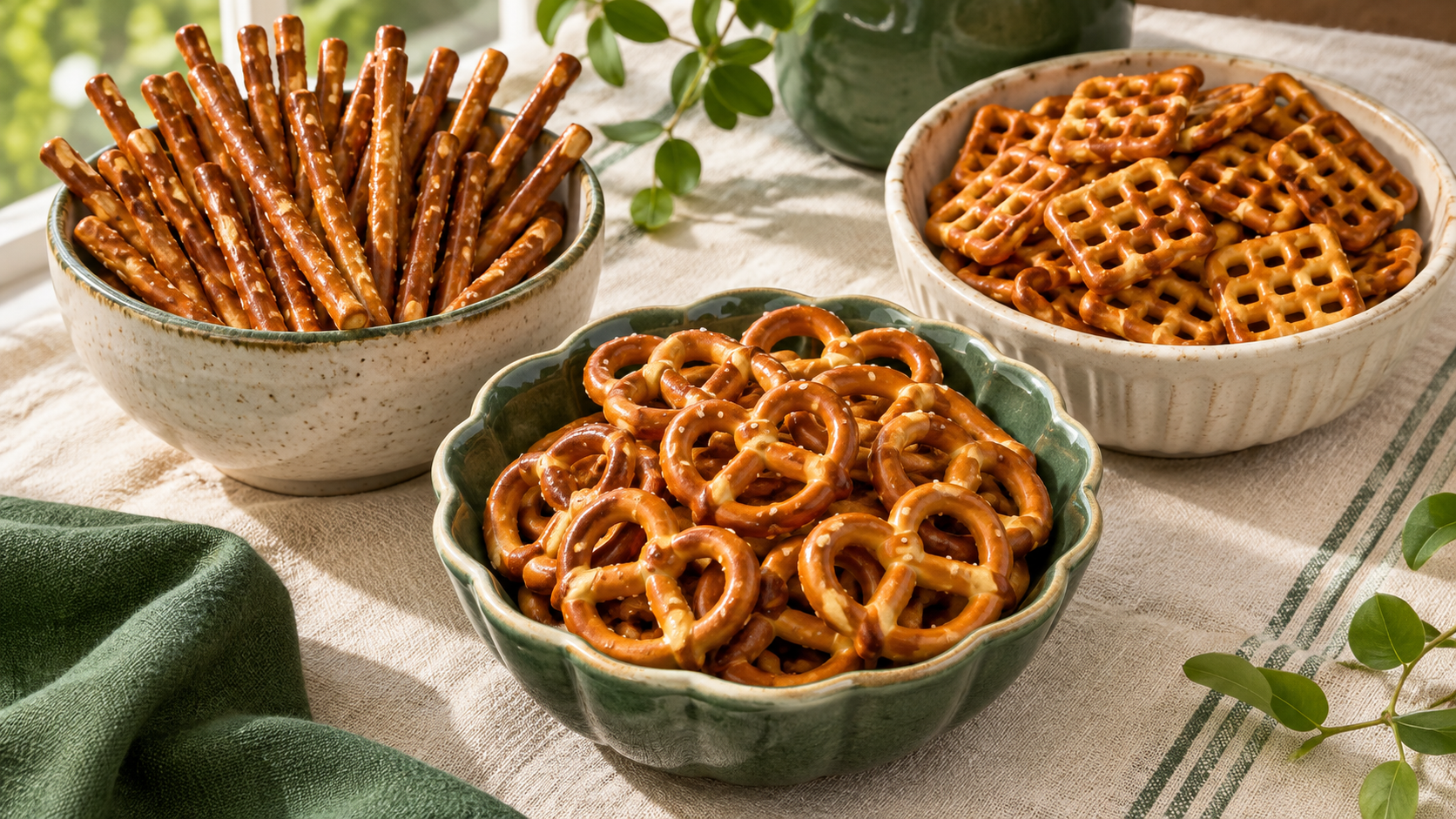
Eight Gluten-Free Pretzel Options Compared
| Exact product | Format | Published claim or distinction | Check before buying |
|---|---|---|---|
| Snyder’s of Hanover Gluten Free Sticks | Crunchy sticks | Gluten-free | GF package; regular sticks are a different product |
| Snyder’s of Hanover Gluten Free Mini Pretzels | Crunchy mini twists | Gluten-free | Different sodium from the sticks and snaps |
| Snyder’s of Hanover Gluten Free Snaps | Crunchy square grids | Gluten-free | Choose the specifically GF version |
| Glutino Original Pretzel Twists | Crunchy twists | Gluten-free; manufacturer lists no dairy or egg ingredients | Original twists are separate from coated flavors |
| FitJoy Sea Salt Pretzel Twists | Crunchy grain-free twists | Certified GF mark shown on product page; dairy-free | Cassava and chickpea ingredients; match the current bag |
| Quinn Sea Salt Pretzel Sticks | Crunchy sorghum-based sticks | Certified GF mark on published panel; dairy- and soy-free claims | Shared equipment processes peanuts and almonds |
| Savor by Suzie Sea Salt Grain Free Pretzels | Crunchy grain-free twists | Certified gluten-free and top-nine-allergen-free claims | Direct listing was sold out when checked |
| The Greater Knead Classic Soft Pretzel Nuggets | Frozen soft nuggets | GFCO-certified; dedicated GF and top-nine-allergen-free facility | Requires heating; compare delivered cost |
These are use-based comparison candidates, not a taste ranking. We have not measured crunch, breakage, salt distribution, or how long each stays crisp after opening. Those details are best judged from an actual bag under the conditions in which you plan to serve it.
Nutrition: Same Brand Does Not Mean Same Numbers
Snyder’s three gluten-free shapes all publish a 28-gram serving, making them useful direct comparisons. Quinn uses 30 grams; The Greater Knead uses 54 grams. Keep those weights visible whenever you compare calories or sodium.
| Product | Published serving | Calories | Sodium | Carbs | Protein |
|---|---|---|---|---|---|
| Snyder’s GF Sticks | About 32 sticks / 28 g | 120 | 330 mg | 24 g | 0 g |
| Snyder’s GF Minis | About 23 pretzels / 28 g | 110 | 440 mg | 22 g | 0 g |
| Snyder’s GF Snaps | About 25 pretzels / 28 g | 100 | 420 mg | 22 g | 0 g |
| Quinn Sea Salt Sticks | 34 pretzels / 30 g | 130 | 390 mg | 24 g | 2 g |
| The Greater Knead Classic Soft Nuggets | 6 pieces / 54 g | 140 | 380 mg | 27 g | 2 g |
We could verify matching manufacturer nutrition panels for these five products. Glutino, FitJoy, and Savor by Suzie remain in the buying guide, but are excluded from the numerical comparison because a matching current panel was not verified during this review. Missing data is not a negative product rating.
Quinn’s 390 milligrams per 30 grams works out to approximately 364 milligrams per 28 grams. That calculation helps compare serving weights, but label rounding still applies. We have kept the soft pretzel out of the chart: a moist, heated snack and a dry crunchy snack serve different purposes, so a single “healthiest pretzel” score would hide useful context.
For snack planning, measure the amount you expect to eat instead of assuming one handful equals one label serving. Toppings and dips also contribute to the snack. Gluten-free status does not, by itself, mean a pretzel is low in sodium, high in fiber, or a substantial protein source.
What Each Pretzel Brings to the Table
Snyder’s Gluten Free Sticks
A straightforward stick format for portion cups, snack mixes, or dipping. The manufacturer’s current panel lists 330 milligrams of sodium per 28 grams. The coating formula uses starches including corn, potato, and tapioca. Shop by the full gluten-free name rather than assuming every Snyder’s stick product is equivalent. Check the sticks label →
Snyder’s Gluten Free Minis
Mini twists fit mixed snack bowls and small containers. Their listed 28-gram serving has 440 milligrams of sodium, compared with 330 for the GF sticks. That difference is easy to miss if you choose only by brand. Shape preference and your planned portion should be part of the decision. Check the minis label →
Snyder’s Gluten Free Snaps
The square grid shape is useful when you want to build small topped bites. The published panel lists 100 calories and 420 milligrams of sodium per 28 grams. The manufacturer also describes this exact product as free of dairy and egg ingredients. Check toppings separately, especially cheese or chocolate. Check the snaps label →
Glutino Original Pretzel Twists
Glutino lists original twists in 8-ounce and 14.1-ounce sizes, giving shoppers another package-size comparison. Its page identifies the product as gluten-free and lists no dairy or egg ingredients. Coated pretzels and other Glutino snacks are separate products; do not carry those statements across the brand. View original twists →
FitJoy Sea Salt Pretzel Twists
The current ingredient image lists cassava flour, potato starch, and chickpea flour, with chickpea protein also included. Product-page imagery shows a certified gluten-free mark and dairy-free wording. This is useful for comparing recipe styles, but we have not assigned it a taste or nutrition advantage. View the current ingredient images →
Quinn Sea Salt Pretzel Sticks
Whole-grain sorghum flour leads the published ingredient list. The 30-gram serving supplies 2 grams of protein. The manufacturer lists gluten-, dairy-, and soy-free attributes, but the panel also states that shared equipment processes peanuts and almonds. Those are separate facts; the gluten-free claim does not erase the nut statement. Read the full product panel →
Savor by Suzie Sea Salt
The manufacturer describes these pretzels as certified gluten-free, vegan, and free of the top nine allergens. Its grain-free formula includes cassava ingredients and faba bean protein. The direct listing was sold out when checked, so verify a retailer or restock before building a shopping trip around it. Check current availability →
The Greater Knead Classic Nuggets
These frozen bite-size soft pretzels are GFCO-certified and made in a dedicated gluten-free, top-nine-allergen-free facility, according to the manufacturer. They need heating rather than simply opening a snack bag. The listed serving is six pieces, making this a distinct warm-snack option. See the frozen product →
Read Gluten and Allergen Claims Separately
For FDA-regulated foods such as these pretzels, a “gluten-free” claim has a defined standard: the food must contain less than 20 parts per million of gluten and meet the rule’s ingredient requirements. FDA explains the rule, certification, and shared-facility labeling here. Third-party certification is voluntary; the absence of a certification logo does not automatically invalidate a gluten-free label.
- Gluten-free: Does the exact product make a gluten-free claim?
- Certified gluten-free: Is an identified third party certifying this product?
- Grain-free: Does its recipe avoid grains? This is separate from gluten-free.
- Allergen information: What ingredients and manufacturing statements matter for your other allergies?
Wheat-free alone is not the same as gluten-free because barley and rye also contain gluten. A product can be gluten-free while containing milk or egg, or while carrying a peanut or tree-nut equipment statement. Read the ingredient list and allergen statements together. Contact the manufacturer when the package leaves an important question unresolved.
For a party or classroom, keep the original package available instead of relying on a handwritten “safe” label. Ask guests or the school about their actual requirements. A top-nine-allergen-free claim does not address every possible allergy, and a gluten-free claim does not mean a product is appropriate for every person in the room.
Sticks, Twists, Snaps, or Soft Pretzels?
| Your plan | Format to compare | Practical buying check |
|---|---|---|
| A dip cup | Sticks or larger twists | Test whether the piece fits the cup; thick dips can break small pieces |
| A school or work snack | Twists, minis, or sticks | Use a container that limits crushing; follow school rules where relevant |
| Topped party bites | Flat snaps | Add wet toppings close to serving; check each topping’s ingredients |
| A snack mix | Crunchy minis or sticks | Check every cereal, seasoning, nut, and candy separately |
| A warm movie-night snack | Frozen soft pretzel nuggets | Allow time for heating and include delivery costs in the comparison |
| A chocolate treat | A specifically labeled GF coated product | Read its own dairy, soy, and other allergen statements |
Shape can be more useful than a broad brand ranking. A bag you enjoy plain may not be the best base for a topped bite, and a soft pretzel is not a direct replacement for a shelf-stable lunchbox snack. Start with how the food will be served, then narrow the ingredients and price.
How to Prepare the Frozen Soft Pretzel Option
The Greater Knead instructs shoppers to keep its classic nuggets frozen, moisten them, apply the included topping as directed, and heat before eating. Its published methods include a 350°F air fryer for 5–8 minutes or a 350°F oven for 8–10 minutes. It also gives a microwave method for six nuggets, about 60 seconds, until soft throughout. Follow your current package.
Use only a moistening ingredient that fits your needs. Adding ordinary butter changes an otherwise dairy-free snack. Keep any mustard, cheese-style dip, or sweet topping separate and check its label. Plan the serving time before heating so the warm pretzels are ready when people want to eat.
Compare Package Value and Delivered Cost
For crunchy pretzels, compare price per ounce within a similar style. For frozen pretzels, add shipping and any minimum-order requirement before deciding what the snack will cost. A large multipack is only a good purchase if the quantity works for your household.
Compare two packages at your store
Enter the prices and net weights you see today. Use the same currency for both packages. This compares the food price before tax, shipping, or membership fees.
Example only: $6.99 ÷ 12 oz = $0.58/oz; $9.49 ÷ 20 oz = $0.47/oz. These are sample inputs, not quoted product prices.
Make the store comparison more useful
- Match the product. Verify flavor, gluten-free wording, and net weight before comparing listings.
- Separate package price from unit price. A cheaper bag can contain considerably less food.
- Use the total delivered price when ordering. If a shipment contains several items, decide how to allocate shipping before comparing individual products.
- Check availability at your location. An online product page does not guarantee stock in your nearby store.
- Try one package first. Your own experience with texture, breakage, and portion size is more useful than committing to a case based on a picture.
Use the manufacturer links above to identify the right item. Our gluten-free grocery store finder can help locate shopping options; confirm the exact product with the retailer. Explore additional snack ideas in the Gluten-Free Swap Finder.
Four Ways to Serve Them Beyond the Bag
Build separate zones
Use a clean board with pretzels, fruit, vegetables, and checked dips. Keep gluten-containing foods on a separate board with separate utensils.
Top a snap
Add a small amount of a suitable spread and a piece of fruit. Assemble near serving time so moisture does not sit on the pretzel for long.
Pack a simple combination
Pair pretzels with other foods that fit the eater’s needs and appetite. Keep wet foods in a separate compartment and use suitable temperature control for perishable items.
Crush a small amount
Use checked pretzels as a crunchy topping for a salad or a finished casserole. Add them near serving if you want to preserve the contrast in texture.
For a fuller family-food shortlist, visit our gluten-free chicken nugget guide and frozen pizza guide. Check each part of the meal separately rather than assuming an entire spread is gluten-free because its main packaged snack is.
Gluten-Free Pretzel Questions
Are regular pretzels gluten-free?
Many conventional pretzels use wheat flour. Look for a gluten-free claim on the exact package rather than assuming a plain, salted pretzel is gluten-free.
Are all Snyder’s pretzels gluten-free?
No brand-wide assumption is appropriate. This guide covers the specifically named gluten-free sticks, minis, and snaps. Check for the GF wording when choosing among similar packages.
Which Snyder’s GF shape has the least sodium?
Of the three manufacturer panels compared here, the sticks list the least sodium: 330 milligrams per 28 grams. The snaps list 420 and the minis 440. Check your current bag in case the formula changes.
Does grain-free mean better for someone eating gluten-free?
Not automatically. Grain-free is a different recipe choice. Many gluten-free products use grains such as corn, rice, or sorghum. Choose according to the exact label and your own dietary needs.
Can gluten-free pretzels contain other allergens?
Yes. Read the complete label. Quinn’s sea salt sticks, for example, carry a shared-equipment statement for peanuts and almonds. Gluten-free certification does not certify the absence of every other allergen.
Are there gluten-free soft pretzels?
Yes. The Greater Knead Classic Soft Pretzel Nuggets are a frozen option in this guide. They need heating and should be compared separately from crunchy shelf-stable pretzels.
Are chocolate-covered gluten-free pretzels dairy-free?
Do not assume that. The coating has its own ingredients and allergen information. A plain pretzel’s dairy-free claim cannot be transferred to a chocolate-covered version.
Why are some products missing from the nutrition table?
We included numerical data only where we verified a matching manufacturer panel. Three listed brands remain useful shopping candidates, but we did not fill their data gaps with assumptions or potentially mismatched retailer panels.
Can I serve these to a guest with celiac disease?
Choose a product with a gluten-free claim and review the guest’s needs with them. Keep the package available, use clean serving equipment, and prevent contact with gluten-containing foods. Certification and manufacturing details can help inform the choice, but no article can guarantee a particular serving situation.
How do I keep crunchy pretzels from going stale?
Follow the package’s storage directions and reseal it promptly after serving. Keep wet dips and toppings separate until eating. If freshness is a recurring issue, compare smaller packages or portion only what you need.
Sources, Selection, and What We Have Not Tested
We selected eight exact US products spanning sticks, twists, snaps, grain-free recipes, and frozen soft nuggets. Manufacturer pages linked in the comparison table supply the claims and product details. Nutrition comes from matching published panels, including the Quinn label image. FDA provides the gluten-free labeling explanation. All were reviewed for this November 11, 2026 update.
This guide does not contain fabricated taste scores or a claim that every product was tested in our kitchen. We have not verified stock at every retailer or independently tested gluten levels. The use-based suggestions are editorial judgments about format and documented features. A future hands-on comparison could add measured breakage, dip performance, freshness after opening, and photos of actual products; those results are not being implied here.
Build a Shortlist Around the Snack You Want
The best starting point is the way you plan to use the pretzels. For a dip cup, compare sticks. For small topped bites, look at snaps. For a warm snack, investigate the frozen soft option. If grain-free is a separate household preference, compare FitJoy and Savor by Suzie without assuming that preference makes every other gluten-free recipe unsuitable.
Pretzels are one shelf of the snack aisle. Our guide to the best gluten-free snacks covers chips, crackers, popcorn and bars the same way.
Then read the exact package. Check its gluten-free wording, other allergens, serving weight, and storage or heating instructions. Keep the current label ahead of older retailer descriptions or a familiar brand name. Where this guide has verified data, use it to narrow your choice; where a panel is missing, use the package rather than guessing.
Finally, compare the price for the amount of food you will actually use. A small trial bag can be the more practical purchase before a multipack. Take note of your household’s preferences and how the pretzels work with your usual snacks. A repeat favorite should fit the real occasion, dietary needs, and budget—not simply win an abstract ranking.