Your toddler just got diagnosed with celiac disease — or is highly gluten-sensitive — and now you’re staring down a daycare drop-off wondering how on earth you’re going to keep them safe. I’ve been there. When my youngest, Alex, was in a toddler program, I spent weeks anxiety-spiraling over shared snack tables and mystery craft supplies. The good news? With the right systems in place, gluten-free daycare is absolutely manageable.
Most parents don’t realize that gluten hides in far more than just snacks at daycare. Play dough, finger paints, sensory bins, and even glue can contain wheat. For a toddler with celiac disease, touching these materials and then putting their hands in their mouth is enough to trigger a reaction.
A gluten-free toddler can thrive in daycare — you just need a clear communication plan, safe snack alternatives, and a few key conversations with caregivers before day one.
In this guide, I’ll walk you through everything: how to talk to daycare staff, which craft supplies contain hidden gluten, what safe snacks to send, and how to build a written care plan that actually gets followed.
Key Takeaways
- Play dough, many sensory bin fillers, and some craft supplies contain wheat flour — not just food.
- A written gluten-free care plan dramatically reduces the risk of accidental exposure at daycare.
- Sending your child’s own clearly labeled snacks is the single most reliable safety strategy.
- Daycare staff can be wonderful allies — but they need specific, written guidance from you.
- Celiac Disease Foundation resources can help you educate caregivers with credible, easy-to-understand materials.
Why Daycare Is Uniquely Risky for Gluten-Free Toddlers
Toddlers touch everything and then touch their faces. That’s just developmentally normal — but for a child with celiac disease or non-celiac gluten sensitivity, it creates a very real exposure risk. The challenge at daycare isn’t just the snack table; it’s the entire environment.
According to the Celiac Disease Foundation, even small amounts of gluten — as little as 20 parts per million — can trigger an immune response in someone with celiac disease. For toddlers who explore the world mouth-first, that threshold matters enormously.
Here’s what makes daycare different from home: you’re not there. You can’t catch the moment a well-meaning aide offers your child a graham cracker during free play. That’s why systems, not just conversations, are what keep your child safe.
Hidden Gluten in Daycare Crafts and Sensory Play
This is the part that surprises most parents. Food allergies at snack time feel obvious to manage. But crafts? Nobody thinks to check those.
Building a Gluten-Free Care Plan for Daycare
A verbal conversation with your child’s teacher is a starting point — but a written care plan is what actually protects your child when there’s a substitute teacher or a staff changeover. Think of it like a 504 plan, but simpler and designed for a daycare setting.
Your written care plan should include:
- Your child’s diagnosis (celiac disease, NCGS, or wheat allergy) in plain language
- What gluten is and where it hides (food AND crafts)
- A clear list of approved snacks your child can eat
- What to do if accidental exposure is suspected
- Your contact information and your child’s pediatrician’s contact information
- A note about hand-washing protocols (before and after eating, after crafts)
Daycare Meeting Checklist
- Schedule a dedicated meeting with the director AND lead teacher — not just a drop-off chat
- Bring printed materials (Celiac Disease Foundation’s school resources are excellent)
- Walk through the classroom snack and craft areas together
- Ask about shared tables and hand-washing procedures
- Get agreement on play dough and sensory bin alternatives
- Ask how substitutes are informed of special health needs
- Leave a laminated copy of your care plan in your child’s cubby
Beyond Celiac has a free school and childcare resource section that includes printable materials you can hand directly to caregivers. These are credible, professionally designed, and make the conversation so much easier.
Safe Snacks to Send to Daycare
The simplest, most reliable safety strategy is to send all of your child’s food from home. This removes the guesswork entirely and means you control every ingredient. Many daycares are completely supportive of this once you explain the reason.
When I packed Alex’s snacks, I kept a rotation of about 10 items that I knew were safe, kid-approved, and easy to pack. Here are categories that work well:
- Fresh fruit and vegetables: Naturally gluten-free and zero prep required for older toddlers
- Certified gluten-free crackers: Simple Mills Almond Flour Crackers and Schär Table Crackers are both GFCO-certified
- Rice-based snacks: Lundberg Family Farms rice cakes are certified gluten-free and come in toddler-friendly sizes
- Cheese sticks: Plain, single-ingredient cheese is naturally gluten-free and protein-rich
- Certified GF applesauce pouches: GoGo Squeez is generally considered gluten-free and beloved by the preschool crowd
- Nut-free certified GF granola bars: SunButter Energy Bars and Enjoy Life Foods Chewy Bars are both good options for nut-free, GF environments
Our Top Picks: Gluten-Free Craft Supply Swaps
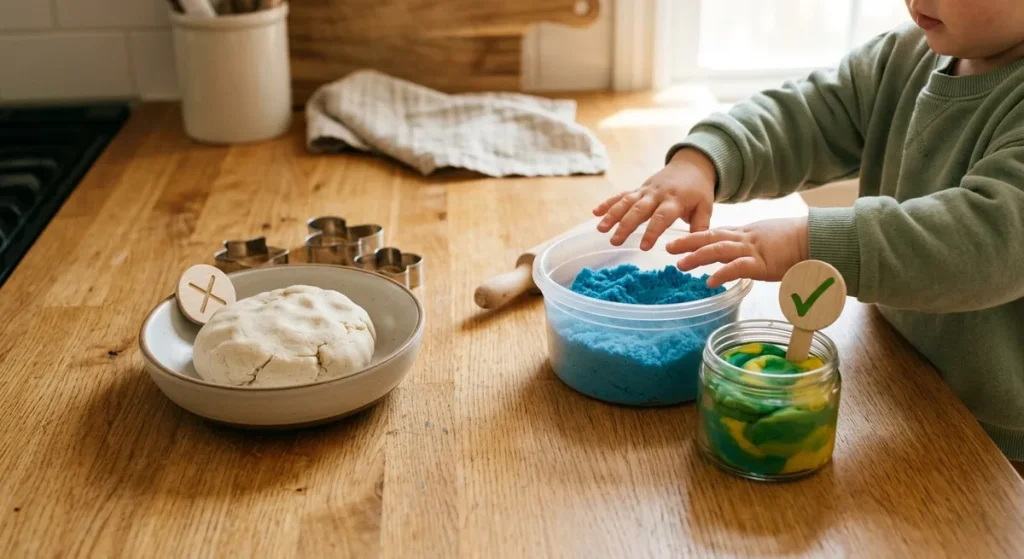
You don’t have to ask daycare to eliminate all sensory play — you just need to suggest safe alternatives. Most daycare providers are happy to switch when you offer a specific replacement recommendation.
Explicitly marketed as gluten-free and non-toxic. I bought a set for Alex’s classroom and his teachers loved it just as much as he did. It holds together well and comes in bright colors toddlers adore.
Naturally gluten-free sensory material. Made from 98% sand and 2% polydimethylsiloxane. No wheat, no mess, endlessly re-moldable. A great classroom swap for wheat-based sensory bins.
Crayola states their washable paints do not contain gluten-containing ingredients. Always verify the specific product batch with the manufacturer, as formulations can change.
Elmer’s Glue-All and school glue products are generally considered gluten-free. A reliable swap for any wheat-based paste used in art projects.
Naturally gluten-free alternatives to dried pasta or wheat berries in sensory bins. Dried lentils, black beans, and rice work beautifully and are celiac-safe when purchased from dedicated GF facilities.
One to Approach With Caution: Homemade salt dough recipes, which typically call for 2 cups of all-purpose wheat flour. If the daycare makes holiday ornaments or sculptures with salt dough, request an alternative activity for your child or ask them to use a rice-flour-based recipe instead.
Common Mistakes to Watch Out For
- Assuming “shared snack day” doesn’t apply to your child. Even if your child has a note on file, a busy room with a substitute teacher may default to “everyone eats the same thing.” Always send backup safe snacks.
- Not asking about the table surface. If another child eats a wheat cracker at the same table and your toddler immediately touches that surface, cross-contamination is real. Ask if your child can have a designated placemat or wiped-down spot.
- Forgetting to update the plan seasonally. Holiday seasons bring seasonal crafts and special snacks. Touch base with the director every few months — not just at enrollment.
- Relying only on verbal reminders. Staff turnover in daycares is high. A laminated card in your child’s cubby is more reliable than a conversation from three months ago.
- Assuming “gluten-free” on a label means certified safe. There’s a real difference between a product that’s labeled “gluten-free” and one that carries a Gluten-Free Certification Organization (GFCO) seal. Teach staff this distinction if they’re sourcing their own classroom snacks.
- Not having a plan for birthday treats. Birthdays happen constantly in toddler rooms. Keep a stash of certified GF cupcakes or cookies in the freezer at daycare so your child always has something safe to celebrate with.
Frequently Asked Questions
For most children with celiac disease, this is a risk worth avoiding. Toddlers frequently touch their faces and mouths after handling play dough, which can lead to ingestion of small amounts of wheat flour. Many celiac specialists recommend switching to certified gluten-free play dough in any environment where your child plays.
In the United States, celiac disease is recognized as a disability under the Americans with Disabilities Act (ADA) in many contexts, which means programs receiving federal funding may be required to provide reasonable accommodations. Consult with your pediatrician and potentially a disability rights advocate for guidance specific to your situation and state.
Contact your child’s pediatrician or pediatric gastroenterologist for guidance on next steps based on your child’s specific diagnosis. Document what happened and when, and have a follow-up conversation with the daycare director to review how it occurred and prevent it going forward. Keeping a simple exposure log can be helpful at medical appointments.
Keep your explanation simple and action-focused: “My child has celiac disease, which means gluten — found in wheat, barley, and rye — makes her physically sick. She needs her own snacks, gluten-free play dough, and hand-washing before and after activities.” Pair this with printed materials from the Celiac Disease Foundation, which are written specifically for educators.
A fully gluten-free classroom is ideal but not always realistic to request, especially in a multi-child setting. A more achievable goal is a “gluten-safe” approach: your child has their own snacks, uses gluten-free craft supplies, has a clean eating space, and consistent hand-washing is enforced. Many families find this middle ground works very well.
Education, Systems, and Communication: Your Safety Net
Keeping a gluten-free toddler safe at daycare comes down to three things: education, systems, and communication. You can’t be in that room all day — but a well-written care plan, a labeled snack bag, and a daycare team that understands why this matters can come very close to the next best thing.
Don’t try to do this perfectly from day one. Start with the big stuff: the written care plan, the snack strategy, and the play dough swap. Build from there. And give yourself grace — you’re doing something genuinely hard, and every step you take makes your child safer.
If you’re just starting out on the gluten-free journey with your family, our Gluten-Free 101 beginner’s guide is a great next read. And grab our free School Lunch Guide below — it’s packed with 20 gluten-free lunches that toddlers and kids actually eat.