

On this page
Hair loss is one of the scariest symptoms nobody warns you about when you’re first diagnosed with celiac disease. You finally get a diagnosis, you start eating gluten-free, and then — a few weeks later — your hair is coming out in the shower in alarming amounts. It feels like everything is going wrong at once.
Here’s the reassuring truth: gluten-free diet hair loss is almost always temporary, and it has a clear nutritional explanation. When your small intestine has been damaged by gluten for months or years, it loses the ability to absorb the nutrients your hair follicles depend on — specifically iron, zinc, and biotin. Hair loss is often a sign of healing in progress, not a sign that something new is going wrong.
As a nurse and someone who’s managed my own family’s gluten-free life for years, I want to walk you through exactly what’s happening, what you can do about it, and when it’s time to call in a specialist. Your hair will most likely come back — but it takes patience and the right nutritional support.
Key Takeaways
- Hair loss after going gluten-free is usually caused by nutrient malabsorption — especially iron, zinc, and biotin — not the diet itself.
- A condition called telogen effluvium (stress-triggered shedding) is the most common culprit, and it’s reversible.
- Most people see significant improvement in hair regrowth within 6–12 months of strict gluten-free eating and correcting nutritional deficiencies.
- Targeted supplementation can speed up recovery, but always test first — more isn’t always better.
- If hair loss is severe, patchy, or not improving after 6 months GF, a dermatologist referral is warranted.
Why Celiac Disease and Gluten Sensitivity Cause Hair Loss
Celiac disease triggers an immune response that damages the villi — the tiny finger-like projections lining your small intestine. These villi are responsible for absorbing nearly everything your body needs: vitamins, minerals, proteins, and fats. When they’re flattened and inflamed, absorption drops dramatically.
Hair follicles are among the fastest-cycling cells in your body. They’re incredibly sensitive to nutritional shortfalls. When your body is running low on key nutrients, it prioritizes vital organs — your heart, brain, and immune system — and deprioritizes hair growth. This is your body being smart, not broken.
Research published through the National Institute of Diabetes and Digestive and Kidney Diseases (NIDDK) confirms that nutrient deficiencies are a hallmark of untreated celiac disease. The most hair-relevant deficiencies are:
Understanding Telogen Effluvium: The Real Diagnosis Behind the Shedding
The type of hair loss most people with celiac experience has a name: telogen effluvium. It sounds scary, but it’s actually a well-understood and reversible process. Here’s what happens.
Your hair grows in cycles. Most strands are in the “anagen” (growth) phase at any given time. When your body experiences significant stress — whether that’s a major illness, nutritional crisis, surgery, or the immune chaos of undiagnosed celiac — it can push large numbers of follicles into the “telogen” (resting/shedding) phase all at once.
The tricky part? There’s a delay. Telogen effluvium typically shows up 2–4 months after the triggering event. So if you start noticing hair loss shortly after your celiac diagnosis, the shedding you’re seeing now was likely triggered by the nutritional damage that happened before you went gluten-free. The diagnosis itself — and the healing that follows — is actually the beginning of recovery.
The Hair Loss Recovery Timeline on a Gluten-Free Diet
Let’s be honest: recovery takes longer than anyone wants to hear. But understanding the realistic timeline helps you stay the course instead of panicking.
- Months 1–3 GF: Shedding may continue or even worsen as telogen effluvium runs its course. This is normal. Intestinal healing has begun, but nutrient stores haven’t recovered yet.
- Months 3–6 GF: Shedding should begin to slow as gut healing progresses and nutritional absorption improves. You may notice “baby hairs” (new regrowth) along your hairline.
- Months 6–12 GF: Most people see meaningful regrowth in this window, especially with corrected deficiencies. Hair texture and thickness often improve noticeably.
- 12–24 months GF: Full recovery of hair density is possible for most people. The villi in your small intestine take time to fully regenerate, and hair follows that healing curve.
The Beyond Celiac organization notes that hair loss related to celiac disease is highly responsive to a strict gluten-free diet — which is both encouraging and a reminder that strict compliance matters.
Supplementation Strategies for GF-Related Hair Loss
Once your gut starts healing, you can give it a nutritional assist. The goal isn’t to take everything at once — it’s to identify your specific deficiencies and address them strategically. Always talk to your doctor before starting supplements, especially iron, which can cause harm in excess.
Nutrients to Test and Consider Supplementing
- Ferritin (stored iron) — ask for this specific test, not just hemoglobin
- Serum zinc — low normal is still worth addressing
- 25-OH Vitamin D — target 40–60 ng/mL for optimal function
- B12 and folate — commonly depleted with celiac-related malabsorption
- Biotin — typically supplemented without testing, as toxicity risk is low
- Full thyroid panel — thyroid issues co-occur with celiac and also cause hair loss
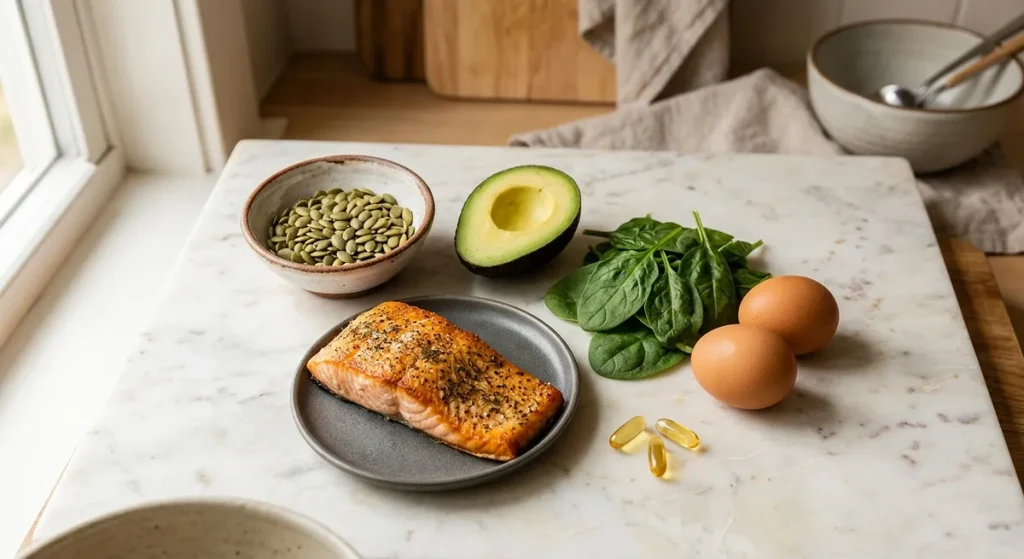
For food sources, focus on naturally gluten-free whole foods that are rich in these key nutrients: beef, oysters, and pumpkin seeds for zinc; red meat and leafy greens for iron; eggs and salmon for biotin; and fatty fish and fortified GF foods for vitamin D. A well-rounded gluten-free diet supports hair recovery from the inside out.
Our Top Supplement Picks for Celiac-Related Hair Loss
These are products I’ve researched and would consider for my own family. Always confirm suitability with your healthcare provider, especially for iron supplements.
Thorne is one of the most trusted supplement brands for people with celiac because they’re rigorous about gluten-free manufacturing. Iron bisglycinate is a gentler, more absorbable form than ferrous sulfate — less likely to cause constipation. Only take iron if your ferritin is confirmed low.
Pure Encapsulations is hypoallergenic and gluten-free certified. Zinc picolinate form has strong bioavailability. Take with food to reduce nausea. Around $20–25 for 60 capsules.
Pairs D3 with K2 to support proper calcium metabolism — a thoughtful combo for those with celiac-related bone density concerns. Gluten-free and verified by the brand. Around $25–30.
A well-reviewed, affordable biotin option with clean ingredients and no gluten-containing fillers. Often combined with coconut oil for better fat-soluble absorption. Around $15.
A comprehensive hair health supplement with clinically studied ingredients including ashwagandha, biotin, and marine collagen. Gluten-free formulation. Pricier at ~$80/month but has strong reviews from people with chronic illness-related hair loss.
Common Mistakes That Slow Down Hair Recovery
- Supplementing without testing first. Taking iron when your ferritin is normal won’t help your hair — and iron overload is a real concern. Get the labs first.
- Accidental gluten exposure derailing gut healing. Even trace amounts of gluten can trigger intestinal inflammation and restart the damage cycle. Check labels carefully, including on supplements themselves.
- Expecting results too quickly. Hair grows about half an inch per month. Even once regrowth starts, it takes 6–12 months to see significant density changes. Give it time.
- Ignoring thyroid health. Celiac disease increases the risk of autoimmune thyroid conditions like Hashimoto’s thyroiditis, which independently causes hair loss. If your hair isn’t recovering, ask your doctor to check your thyroid.
- Skipping protein. Hair is made of keratin, a protein. If your gluten-free diet is heavy on refined GF carbs and light on quality protein, your hair follicles won’t have what they need to rebuild.
- Using harsh hair products during recovery. Heat styling, tight hairstyles, and harsh chemical treatments stress already-fragile hair. Be gentle while your follicles are recovering.
When to See a Dermatologist
Most celiac-related hair loss resolves with a strict gluten-free diet and nutritional correction. But there are situations where you should get a professional evaluation sooner rather than later.
See a dermatologist if you notice patchy hair loss (rather than diffuse thinning across the scalp), significant eyebrow or eyelash loss, scalp redness, scaling, or itching, or if you’ve been strictly gluten-free for 6 months or more and see no improvement. These patterns can indicate separate conditions like alopecia areata — another autoimmune condition that occurs at higher rates in people with celiac disease — or androgenetic alopecia, which requires different treatment.
A dermatologist can perform a scalp biopsy or pull test to determine the type of hair loss you’re experiencing. That information changes the treatment approach significantly.
Frequently Asked Questions
The gluten-free diet itself does not cause hair loss. The hair loss comes from the nutritional deficiencies and gut damage caused by celiac disease or long-term gluten sensitivity — damage that occurred before the dietary change. The GF diet is the solution, not the problem. Shedding that begins shortly after going gluten-free is usually telogen effluvium triggered by prior damage, with a 2–4 month delay before it becomes visible.
Most people begin to see new hair growth within 3–6 months of strict gluten-free eating, with more significant recovery between 6–12 months. Full restoration of hair density can take up to 18–24 months, especially if nutritional deficiencies were severe. Correcting iron, zinc, and vitamin D levels can meaningfully accelerate this timeline.
Iron deficiency (specifically low ferritin) is the most strongly linked nutrient deficiency to hair loss in celiac disease. Zinc, biotin (B7), vitamin D, and B12 are also commonly deficient and contribute to poor hair follicle function. Research suggests that restoring ferritin levels above 70 ng/mL — not just to the low end of normal — may be necessary for optimal hair regrowth.
Biotin is low-risk and widely used to support hair health, but the evidence is strongest for people with a confirmed biotin deficiency. Given that gut damage can impair biotin absorption and gut bacteria production of biotin, many people with celiac disease may benefit from supplementation. Standard doses of 2,500–5,000 mcg are commonly used, but high doses can interfere with lab tests — let your doctor know if you’re taking it.
Yes, though typically to a lesser degree than celiac disease. Non-celiac gluten sensitivity (NCGS) doesn’t cause the same level of intestinal villous damage, so severe malabsorption is less likely. However, chronic inflammation and some degree of nutrient disruption can still contribute to hair thinning in people with NCGS. Many people with NCGS report improvement in hair quality after going gluten-free.
The Bottom Line
Gluten-free diet hair loss is one of the most emotionally distressing parts of the post-diagnosis journey — and one of the least talked about. But it almost always has a clear nutritional explanation, and it’s almost always reversible. Your hair follicles are waiting for the signal that healing has happened and that nutrients are flowing again.
The most important things you can do right now are: commit to strict gluten-free eating to allow gut healing, get a comprehensive nutritional panel to identify your specific deficiencies, and supplement strategically based on those results. Give your body 6–12 months before expecting full results, and don’t hesitate to see a dermatologist if the pattern of loss seems unusual or doesn’t improve with time.
You’ve got this — and your hair does too. If you want a head start on building a nutrient-dense GF eating plan that supports recovery, grab our free 4-week meal plan below. It’s built with whole-food, naturally gluten-free ingredients that your hair (and the rest of you) will love.