If your child needs a gluten-free diet, you’re already reading labels like a detective. But there’s another question that comes up a lot in our house: what about the dyes? Natural dyes in gluten-free foods are generally safe for celiac kids, but the source matters more than the word “natural” on the front of the box.
Here’s the good news up front. Most natural food dyes — like beet juice, turmeric, and annatto — are derived from gluten-free sources and pose no risk to people with celiac disease. The bigger concern for many parents isn’t gluten at all, but how certain dyes affect behavior, sensitivities, or overall health.
I’m Katie, a registered nurse and mom of two boys who don’t always love their veggies but do love anything brightly colored. Let me walk you through what natural dyes actually are, which ones are safe, and where the real watch-outs hide.
Key Takeaways
- Most natural dyes (beet, turmeric, annatto, spirulina) come from gluten-free plant or mineral sources and are celiac-safe.
- “Natural” does not mean “gluten-free” — cross-contamination during processing is the real risk to watch.
- Synthetic dyes like Red 40 and Yellow 5 are also gluten-free, but some families avoid them for behavioral reasons.
- The safest approach is choosing products with a recognized gluten-free certification, regardless of the dye type.
- Always read the full ingredient list — coloring is just one piece of the puzzle.
What Are Natural Dyes, Really?
Natural dyes are food colorings derived from plants, minerals, or other natural sources, rather than created in a lab from petroleum. They’ve become popular as more parents look for cleaner ingredient lists for their kids.
You’ll find them in everything from gluten-free candy to yogurt to cereal. Common natural dyes include beet juice (red and pink), turmeric (yellow), annatto (orange), spirulina (blue and green), and carrot or paprika extract (orange).
Here’s what matters for celiac families: the source ingredients for these dyes are almost always naturally gluten-free. A beet doesn’t contain gluten. Turmeric is a root. Spirulina is algae. The plant itself isn’t the problem.
Are Natural Dyes Gluten-Free?
Yes — natural dyes themselves are almost always gluten-free because they come from gluten-free plant and mineral sources. The risk, if there is one, comes from how the dye is processed or what carrier ingredients are added.
Some powdered colorings use a “carrier” to stabilize them — things like maltodextrin or starch. While maltodextrin in the U.S. is typically corn-derived and gluten-free, it’s worth a quick label check if your child is highly sensitive. According to the Celiac Disease Foundation, the bigger concern is usually cross-contamination during shared manufacturing.
This is the same reason I always tell newly diagnosed families: ingredients can be safe, but the facility might not be. That’s why certification matters so much. If you’re still learning the basics, our Gluten-Free 101 guide covers how to read labels with confidence.
Natural vs. Synthetic Dyes: What’s the Real Difference?
Both natural and synthetic dyes are typically gluten-free. The distinction parents care about usually comes down to health and behavior, not celiac safety.
Synthetic dyes — Red 40, Yellow 5, Yellow 6, Blue 1 — are made in a lab and don’t contain gluten. The U.S. Food and Drug Administration regulates these as approved color additives. They’re safe from a gluten standpoint, full stop.
So why do families switch to natural dyes? Some children seem more sensitive to artificial colors, with parents reporting changes in focus or activity levels. Research on this is mixed, and you should always talk to your pediatrician before making big dietary changes based on behavior.
How to Check Dyed Gluten-Free Products
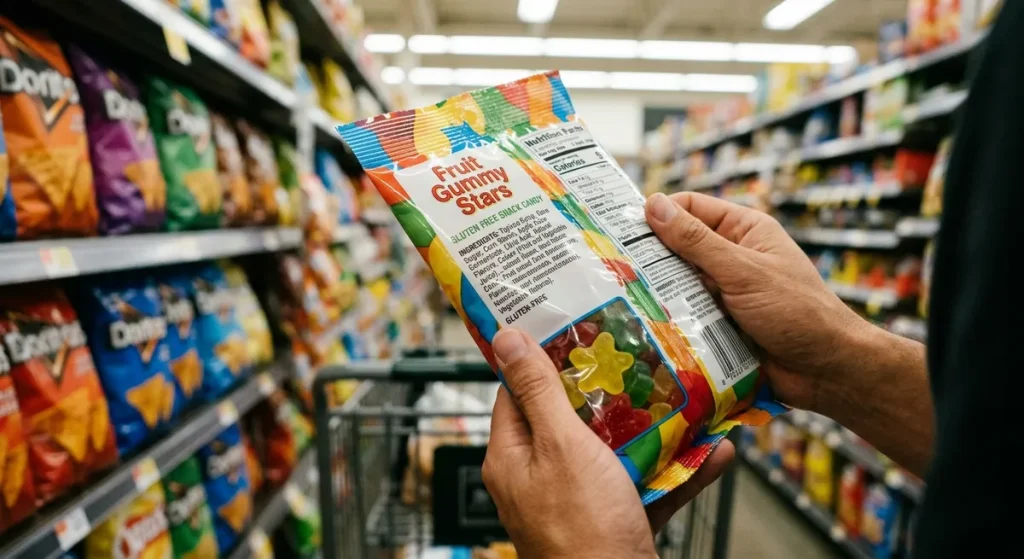
The most reliable approach is to ignore the front of the package and go straight to two things: the ingredient list and the gluten-free certification.
Quick Label Check for Dyed Foods
- Look for a certified gluten-free seal (GFCO or similar)
- Scan the full ingredient list, not just the dye name
- Check for “may contain wheat” or shared-facility warnings
- Note carrier ingredients like maltodextrin or modified starch
- When in doubt, contact the manufacturer directly
One thing worth knowing: a gluten-free claim and a certification aren’t the same. We dug into this in why a gluten-free label doesn’t always mean what you think, and it’s eye-opening for newer families.
You can also run specific products through our Is It Gluten-Free checker when you’re standing in the store and need a fast answer.
Where Dyes Show Up Most for Kids
Candy, cereal, sodas, and snacks are the biggest sources of food dye in most kids’ diets — and these are exactly the products gluten-free families scrutinize anyway.
Some popular dyed treats are naturally gluten-free; others aren’t, and the dye has nothing to do with it. For example, Skittles are gluten-free and Starburst are gluten-free, dyes and all. But Froot Loops aren’t safe — not because of the colors, but because of the wheat.
This is the trap I see parents fall into. They assume a brightly colored food is automatically suspect, when the actual gluten risk lives in the grain ingredients. The color is rarely the issue.
Common Mistakes Parents Make
- Assuming “natural” means “gluten-free.” It doesn’t. Natural refers to the source, not the cross-contamination risk.
- Avoiding all dyed foods unnecessarily. Most dyes are gluten-free, so you may be restricting foods your child can safely enjoy.
- Skipping the certification check. A clean-looking label still needs a gluten-free seal or manufacturer confirmation.
- Confusing dye sensitivity with a gluten reaction. Behavioral changes from dyes aren’t the same as a celiac immune response.
- Ignoring carrier ingredients. Stabilizers like maltodextrin are usually safe, but worth a glance for highly sensitive kids.
- Trusting front-of-package marketing. “No artificial colors” says nothing about gluten.
Frequently Asked Questions
Yes, in nearly all cases. Natural dyes like beet juice, turmeric, and annatto come from gluten-free plant sources. The only caution is potential cross-contamination during processing, which is why a gluten-free certification adds peace of mind.
Yes, Red 40 is gluten-free. It’s a synthetic dye made in a lab with no gluten-containing ingredients. Some families avoid it for behavioral reasons, but it poses no risk for celiac disease.
The dye itself won’t trigger celiac disease, since approved dyes don’t contain gluten. A reaction would only happen if the dye was cross-contaminated with wheat during manufacturing, which is uncommon but possible in shared facilities.
Some children are sensitive to artificial dyes, with parents noticing changes in focus or energy. This is separate from a gluten reaction. Research is mixed, so talk with your pediatrician before making changes based on behavior.
Usually no. Maltodextrin in U.S. products is typically corn-derived and gluten-free, even when it’s listed as “wheat maltodextrin” (it’s processed to remove gluten). Still, highly sensitive families may prefer to confirm with the manufacturer.
The Bottom Line: It’s the Label, Not the Color
Natural dyes in gluten-free foods are almost always safe for celiac kids because they come from gluten-free sources like beets, turmeric, and algae. The word “natural” is reassuring, but it’s the gluten-free certification — not the color claim — that should guide your decision.
Don’t fall into the trap of avoiding every brightly colored food. The real gluten risk almost always lives in the grain ingredients, not the dye. Read the full label, look for a trusted seal, and remember that a dye sensitivity is a separate concern from celiac disease.
You’re doing the hard work of protecting your kids, and you don’t have to do it from memory. Grab our free First 30 Days checklist to make label-reading simpler and shopping less overwhelming — it’s the cheat sheet I wish I’d had when we started.