
Setting up a gluten-free vacation rental kitchen comes down to three things: choosing the right rental, packing a small “safety kit” of essentials, and creating clean cooking zones once you arrive. With a little planning, you can cook celiac-safe meals away from home without the stress of a shared, contaminated kitchen.
I get it — vacation is supposed to be relaxing, and the last thing you want is to spend it worrying about crumbs in someone else’s toaster. When my family first traveled after my oldest son’s diagnosis, I packed a whole tote of kitchen gear because I didn’t trust a rental kitchen at all.
As a registered nurse and mom managing a gluten-free household, I’ve learned exactly what’s worth bringing and what you can skip. This guide walks you through booking smart, packing light, and keeping cross-contamination out of your rental so you can actually enjoy your trip.
Key Takeaways
- Choose vacation rentals with full kitchens and message the host about cleaning before you book.
- Pack a compact “GF safety kit” — toaster bags, a cutting board, a colander, and a sponge — to avoid the rental’s shared gear.
- Stock up at a local grocery store on arrival instead of hauling food across the country.
- Set up dedicated gluten-free prep zones and store your food separately from anyone eating gluten.
- The biggest risks are shared toasters, colanders, cutting boards, and sponges — plan around those four items.
Start With the Right Rental
Your vacation rental kitchen setup actually begins before you book. A rental with a full, well-equipped kitchen gives you control over your meals — which is the whole point of staying somewhere with a kitchen instead of a hotel room.
Look for listings that specifically mention a full kitchen with an oven, stovetop, and plenty of counter space. Photos help you spot whether the kitchen looks clean and reasonably equipped before you commit.
If you’re choosing between several options, prioritize rentals with a dishwasher. A hot dishwasher cycle removes gluten residue far more reliably than hand-washing in shared sponges. For more strategies on traveling safely, our gluten-free travel hub covers everything from resorts to cruises.
Pack a Gluten-Free Safety Kit
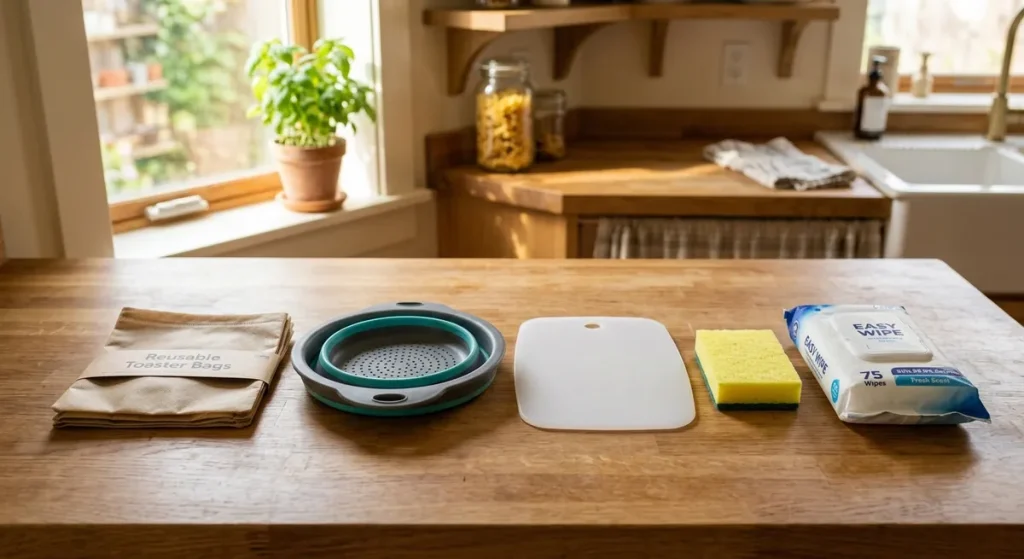
You don’t need to bring an entire kitchen — just the handful of items most likely to harbor gluten in a shared space. These small tools fit in a packing cube or zip-top bag and solve the most common contamination problems.
The four highest-risk shared items in any rental are the toaster, the colander, cutting boards, and sponges. Gluten hides in the scratches and crevices of these tools, and a quick rinse won’t remove it.
🛒 Your Travel GF Safety Kit
- Reusable toaster bags (so you can use the rental’s toaster safely)
- A flexible plastic cutting board or two
- A collapsible silicone colander
- A fresh sponge and a small bottle of dish soap
- Disinfecting wipes for wiping down counters
- A few pieces of foil and parchment paper
- A permanent marker to label your shelf or food
Toaster bags are my single favorite travel hack. They let you toast gluten-free bread right in the rental’s existing toaster without any contact with crumbs from previous guests.
Shop Local Instead of Hauling Food
Here’s a relief for anyone dreading a packed cooler: you usually don’t need to bring much food. Most destinations have grocery stores with solid gluten-free sections, and shopping on arrival saves you luggage space and stress.
Before your trip, do a quick search for grocery stores near your rental and check whether they carry GF staples. Naturally gluten-free basics — eggs, fresh produce, plain meats, rice, potatoes, and dairy — are available almost everywhere and make easy rental meals.
I do recommend bringing a few “comfort” items that are hard to find or pricey on the road — your favorite GF crackers, a couple of granola bars, and a loaf of bread if you can’t be sure the destination carries one you trust. For long trips, you might explore gluten-free subscription boxes shipped ahead to your rental.
Set Up Clean Zones When You Arrive
Once you’re settled, spend ten minutes creating a gluten-free workflow. Wipe down your main prep counter with disinfecting wipes, then designate that space as your dedicated gluten-free zone for the trip.
If others in your group are eating gluten, give them a separate counter and keep your tools apart. Store your gluten-free food on its own shelf in the pantry and fridge — ideally the top shelf, so nothing crumbs down onto it.
Rental Kitchen Setup Checklist
- Wipe down counters and your prep zone with disinfecting wipes
- Run the rental’s pots, pans, and utensils through a hot dishwasher cycle
- Use your own cutting board, colander, and sponge — not the rental’s
- Toast GF bread only in toaster bags, never directly in the toaster
- Store GF food on a separate, labeled shelf above gluten foods
- Cook GF items first if you’re sharing the stove that day
Pots, pans, and the oven are generally safe to use after a good wash, since smooth metal surfaces don’t trap gluten the way scratched plastic or wood does. A run through the dishwasher or a thorough hand-wash with your own clean sponge handles them well.
Cast iron and any heavily scratched nonstick pans are the exceptions — those can hold residue. If a rental only has beat-up nonstick cookware, line baking sheets with foil or parchment and cook in those instead.
Easy Meals to Cook in a Rental
Keep your rental meals simple. You’re on vacation, and one-pan or sheet-pan meals minimize both cleanup and contamination risk.
For more inspiration, browse our gluten-free dinner recipes and breakfast ideas before you pack — bookmark a few that use ingredients you can grab anywhere.
Common Mistakes to Watch Out For
- Trusting a “clean” toaster. Visual cleanliness doesn’t mean gluten-free. Always use toaster bags or skip toast entirely.
- Using the rental’s sponge. Shared sponges spread gluten between dishes. Bring your own and toss it after the trip.
- Forgetting about the colander. Gluten pasta water clings to colander holes. Pack a collapsible one or rinse pasta a different way.
- Sharing condiment jars. Double-dipped butter, mayo, and jam carry crumbs. Use squeeze bottles or label your own jars.
- Cooking gluten food first. If you share the kitchen, prep and cook your gluten-free meal before anything with gluten touches the space.
- Skipping the host conversation. Booking without asking about the kitchen can leave you stuck. A two-minute message saves headaches.
Frequently Asked Questions
You don’t need a full set — just the high-risk items that trap gluten: a cutting board, a colander, a sponge, and toaster bags. These are small, lightweight, and solve the most common cross-contamination problems in a shared rental kitchen.
Most smooth metal pots, pans, and the oven are safe after a thorough wash or a hot dishwasher cycle, since gluten doesn’t bond to smooth metal. Avoid scratched nonstick pans and cast iron, which can hold residue — line them with foil or parchment if that’s all the rental has.
Use reusable toaster bags, which let you toast GF bread inside the rental’s existing toaster with zero contact with old crumbs. Alternatively, toast bread on a clean foil-lined sheet in the oven or skip toast and warm bread in a clean pan.
For most trips, shopping locally is easier and saves luggage space. Bring only hard-to-find comfort items like your favorite bread, crackers, or snacks, and buy naturally gluten-free basics — produce, eggs, meat, and rice — at a nearby grocery store.
Ask whether the kitchen has been deep-cleaned, whether there’s a dishwasher, and whether the kitchen is fully equipped with an oven and stovetop. Mention that someone in your family has celiac disease — a host’s response often tells you how accommodating they’ll be.
Cook Confidently Wherever You Travel
A gluten-free vacation rental kitchen doesn’t have to be complicated. Book a rental with a real kitchen, message the host about cleaning, pack a compact safety kit, and shop locally when you arrive. Set up clean zones, lean on simple one-pan meals, and you’ll cook safely without spending your whole vacation worrying.
The first trip after a diagnosis feels overwhelming — I packed way too much our first time and stressed the whole way there. But once you find your rhythm, traveling with a kitchen becomes one of the most freeing ways to vacation gluten-free, because you’re back in control of your food.
Want a head start? Grab our free 30-day gluten-free guide for checklists, label-reading tips, and the foundational know-how that makes trips like this so much easier.