Kids don’t want to be the different one. They want to grab a slice at the party, eat what their friends eat, and not have a conversation about their intestines at the lunch table.
When my older son Austin’s diagnosis changed how our kitchen worked, that was the part that kept me up at night — not the label reading, not the grocery bill. It was the worry that food would become a source of shame for him instead of joy.
Here’s what I’ve learned in the years since: making gluten-free food feel normal for kids is less about finding perfect replacements and more about removing the spotlight. When the whole family eats the same dinner, when the safe snack is already in the backpack, when nobody makes an announcement — that’s when it stops feeling like a diagnosis and starts feeling like just how your family eats.
Below is exactly how we do it in our house, including the products we keep stocked, the systems that reduced my mental load, and the mistakes I made early on so you can skip them.
Key Takeaways
- Feed the whole family the same meal whenever possible — separate “special” plates are what make kids feel singled out.
- Build your dinner rotation around naturally gluten-free foods (tacos, rice bowls, roasted chicken) rather than expensive swaps.
- Keep two or three reliable “party foods” in the freezer so your child is never the kid without pizza or cake.
- Teach the script, not the fear — kids who can say “I can’t have that, but I brought mine” in one calm sentence feel powerful, not fragile.
- Give yourself permission to buy convenience food. A gluten-free frozen pizza on a hard Tuesday is a win, not a failure.
Why “Normal” Matters More Than Perfect
The Celiac Disease Foundation notes that a strict gluten-free diet is currently the only treatment for celiac disease — which means this is a lifelong thing for our kids. And lifelong only works if it’s livable.
Research on chronic conditions in children consistently points to the same theme: kids do better when they feel included and in control, not policed. I’ve watched it play out at my own kitchen table. The nights I made a big production out of Austin’s “special” dinner were the nights he pushed food around his plate. The nights we all ate the same enchiladas, he ate two servings.
Normal also means letting your kid be a kid. Gluten-free junk food exists, and I buy it. Chips, cookies, boxed mac and cheese — those aren’t nutritional failures. They’re social currency at a sleepover.
Start With What Was Never About Gluten Anyway
The fastest way to make gluten-free eating feel unremarkable is to lean on meals that never needed gluten in the first place. No specialty flour, no $9 loaf, no weird texture to explain.
Here’s the core of our weeknight rotation:
- Taco night — corn tortillas, seasoned ground beef, all the toppings. Nobody has ever once called this “gluten-free tacos.”
- Rice bowls — plain rice is naturally gluten-free, plus chicken, black beans, cheese, and salsa.
- Roast chicken with potatoes and green beans — Sunday dinner that happens to be celiac-safe.
- Chili — our gluten-free chili is on repeat all fall, and it doubles as game-day food for guests.
- Breakfast-for-dinner — eggs, bacon, fruit, and gluten-free egg muffins made ahead.
When your foundation is naturally gluten-free, the specialty products become the occasional treat instead of the entire grocery list. That’s better for your budget and better for how your kid experiences food.
Recreate the Foods They Actually Miss (Not the Ones You Think)
Early on I baked artisan-style sandwich bread and fussed over crumb structure. Austin wanted chicken nuggets and birthday cake. Lesson learned: ask your kid what they miss most, then nail those three or four things.
For most kids, the emotional list is short:
- Chicken nuggets or tenders. Our gluten-free chicken tenders get requested more than anything else I make. Crushed gluten-free cornflakes or rice crumbs give you real crunch.
- Pizza. Frozen certified gluten-free pizza is the single highest-value freezer item in my house. Keep two.
- Birthday cake. A good gluten-free birthday cake means your child never has to sit out the singing-and-candles moment.
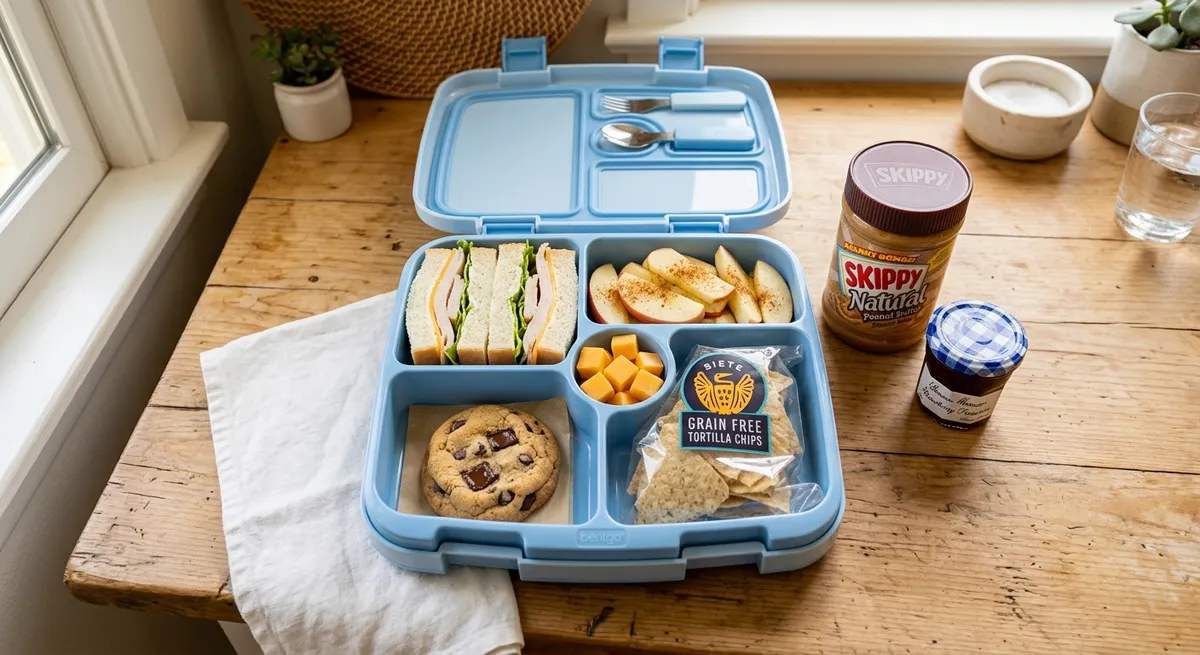
- Cookies. These gluten-free chocolate chip cookies go in lunchboxes and get traded like currency.
- Mac and cheese. Corn-and-rice blend pasta holds up best for kids — it doesn’t turn to mush.
Notice these are all foods, not health projects. The goal is for your kid to bite into something and feel like they got the same thing everyone else got.
Make the Rules Boring, Predictable, and Not About Your Kid
Shame grows in situations where a child feels like the problem. Systems fix that. When the kitchen itself is set up correctly, nobody has to be the food police.
Our systems are simple:
- Two peanut butter jars. One with a red lid, one with a blue lid. It’s not a lecture — it’s a color. (I wrote about why we have two peanut butter jars and why this tiny fix prevented so many arguments.)
- A “yes shelf.” One shelf in the pantry and one bin in the fridge where everything is safe. Both boys can grab from it without asking me.
- Gluten stays contained. Regular bread lives in one spot, gets cut on one board, and gets cleaned up right away.
- The safe snack travels. There’s a bag in my car and one in each backpack, restocked Sunday nights.
That last one is the difference between a child who has options and a child who watches. If you have an athlete, our guide to gluten-free sports snacks for kids covers what actually survives a gym bag.
Our Weekly “Feels Normal” Reset
- Restock the yes shelf and the fridge bin
- Refill car and backpack snack bags
- Bake or buy one treat for the week (cookies, muffins, brownies)
- Confirm one safe frozen pizza and one safe cupcake or cake slice are in the freezer
- Check the school/party calendar for anything food-related
Handle Parties, School, and Grandma’s House Without Drama
Social situations are where “normal” gets tested. My approach is to solve it before we walk in the door so my kid never has to negotiate on the spot.
Give your child a one-sentence script. Austin’s is: “I have celiac, so I brought my own — it’s really good, want some?” Short, confident, offers something instead of apologizing. Kids follow the tone you model.
Call ahead, but keep it low-key. For birthday parties I text the parent: “Austin has celiac — I’ll send his own cupcake so you don’t have to think about it. Thank you!” No host has ever minded, and it takes the pressure off both of us.
Keep a stash at Grandma’s. A labeled bin with safe snacks, pasta, and a treat at the houses you visit most means those visits stop being stressful. Beyond Celiac has good family-facing resources if extended family needs help understanding why crumbs matter.
Get the school plan in writing. A 504 plan or a written health plan with the school nurse — I say this as an RN — makes classroom parties, field trips, and substitute teachers dramatically less risky.
Let candy be candy. A lot of mainstream candy is safe, and knowing which brands work means Halloween and treat jars stay fun. Our gluten-free candy guide is bookmarked on my phone for exactly this.
What We Keep Stocked (Kid-Approved)
These are the categories that do the most work in our house. Always check the current package for a certification mark, because formulas and facilities change.
It’s the loaf my boys stopped noticing was gluten-free. Soft enough to eat straight from the bag, sturdy enough for a lunchbox sandwich that isn’t crumbs by noon, and certified gluten-free by the Gluten-Free Certification Organization (GFCO).
Tapioca-based crust with a chewy, real-pizza texture. Made in a dedicated gluten-free facility, which matters for celiac families. My go-to for “everyone else is having pizza” nights.
Both hold their shape in mac and cheese and reheated leftovers. Corn-and-rice blends generally beat 100% rice pasta for kid texture. See our Barilla gluten-free guide for which boxes qualify.
Certified gluten-free and free from the top common allergens, which makes them the easiest thing to send to a classroom party where other kids have allergies too.
Shelf-stable and warm up beautifully, so we keep them for spaghetti nights and sub sandwiches. Great for travel because they don’t need a freezer.
One good cup-for-cup blend replaces a shelf of single flours. We use Bob’s Red Mill 1-to-1 for muffins and cookies and King Arthur Measure for Measure for cakes.
Two things I’d skip. Plain 100% brown rice pasta in kid-favorite shapes — it gets gummy fast and reheats badly, which kills lunchbox leftovers. And most “wheat-free” or “made with gluten-free ingredients” products that carry no certification and no gluten-free claim. As our article on naturally gluten-free versus certified gluten-free explains, the wording on the front of the box tells you far less than the certification mark does.
Common Mistakes I Made (So You Don’t Have To)
1. Cooking two separate dinners. It burned me out and made Austin feel like a problem to be managed. One safe meal for everyone fixed both.
2. Chasing perfect bread before nailing nuggets. Ask your kid what they miss. Solve that first.
3. Making a public announcement. Explaining Austin’s diet to a room full of eight-year-olds embarrassed him. Now I hand the food to the adult quietly and let him be a kid.
4. Treating every treat as a nutrition decision. Gluten-free cookies aren’t health food, and they don’t need to be. Kids need to feel included more than they need a perfect macro split.
5. Forgetting the backup snack. Once. Never again. A hungry kid at a party with nothing safe to eat is the exact moment food starts to feel like loss.
6. Skipping non-food items. Play dough, some art supplies, and even certain lip balms can contain wheat. For younger kids especially, that’s worth a quick check.
Frequently Asked Questions
You don’t have to, but many families find a gluten-free kitchen with occasional outside-the-house gluten is far easier and safer than managing a fully shared kitchen. Our compromise: all cooking and all shared foods are gluten-free, and gluten-containing bread is kept contained with its own tools. Talk with your child’s gastroenterologist or dietitian about what fits your household.
Keep it simple and non-scary. We told Alex, “Gluten hurts Austin’s insides, so his food is made differently — it’s not a punishment and it’s not his fault.” For your celiac child, focus on what they *can* have and give them a short script for saying no. Kids handle this better when adults are calm and matter-of-fact about it.
Get a written health plan on file with the school nurse and ask to be notified before food-based celebrations. I keep a small container of safe cupcakes in our freezer and a shelf-stable treat in the classroom so surprise parties are covered. Packing lunch from home is usually the safest option for celiac kids.
Yes. Packaged gluten-free snacks help kids feel included, and no one eats perfectly. Balance them with naturally gluten-free whole foods like fruit, yogurt, eggs, cheese, and beans across the week rather than judging any single snack. Some gluten-free products are lower in fiber and certain B vitamins, so variety matters.
Choose the restaurant before you go and let your child help pick from options you’ve already vetted. Chains with clear allergen protocols and dedicated fryers are easier wins early on — our gluten-free fast food scorecard and restaurant finder can help. Calling ahead during off-hours often gets you a much more thorough answer.
When Gluten-Free Just Becomes Dinner
Making gluten-free food feel normal for your kids isn’t about perfect substitutions or a Pinterest-worthy pantry. It’s about three quiet things: one meal for the whole family, a short list of nailed-down favorites they genuinely love, and a system that means they always have something safe in reach.
The spotlight is the enemy — not the diet. Once the rules were boring and the snacks were automatic, my boys stopped talking about gluten-free food at all. It just became dinner. That’s the goal, and it’s absolutely reachable, even if this week feels impossible.
Be patient with yourself, too. You’re learning a new skill while also parenting, and some weeks the win is a frozen pizza and everybody fed. That counts. Our article on giving your family grace during busy seasons exists because I needed to hear it myself.
Want the lunchbox part solved for you? Download our free guide to 20 gluten-free school lunches kids will actually eat — real combinations from our kitchen, packable in under 10 minutes, no soggy sandwiches.