

On this page
Peanut-free tables. Dairy-free classrooms. Gluten-free lunches. EpiPens in backpacks. Was this always happening and we just didn’t recognize it, or has something actually changed?
If you grew up in the ’80s or ’90s, you may not remember a single classmate who carried epinephrine. Now it can feel like every class has a food-allergy plan, and every birthday party needs a label check. As a nurse and a mom, I wanted a real answer, not a scary one.
So for the third LGGF Investigates, I went back to the national surveys, the hospital records and the trials, and graded every explanation I could find. Some of what I found is reassuring. Some of it surprised me. And a few of the theories you see online don’t hold up at all.
The short answer
Partly. Hospital admissions for food reactions in children have climbed, and celiac is about four times as common as in blood frozen in the early 1950s. But part of the rise is better noticing, and many children are thought to be allergic who aren’t. No single cause explains it; the strongest evidence points to when babies first eat peanut and egg.
Key Takeaways
- The rise is partly real and partly better noticing — U.S. children’s peanut allergy more than tripled on the same survey between 1997 and 2008, while far more kids are believed to be allergic than truly are.
- Celiac really is more common — blood frozen in the early 1950s shows undiagnosed celiac was 4 to 4.5 times rarer than it is today.
- Allergy, intolerance and celiac are different problems — they have different causes and different tests, and mixing them up leads to cutting foods for no reason.
- The strongest finding is one you can act on — babies fed peanut and egg early, following pediatric guidance, are less likely to become allergic than babies kept away from them.
- Several popular theories don’t hold up — the evidence for glyphosate, GMOs, vitamin D and the age a baby first eats gluten is weak, or it was tested and failed.
Three Different Things: Allergy, Intolerance and Celiac
Before asking whether these conditions are rising, it helps to know they’re not one thing. A food allergy, a food intolerance and celiac disease involve different parts of the body, and the research on each one is different.
These differences matter at home. A positive skin or blood test on its own doesn’t prove a food allergy. The NIAID’s guidance on diagnosing food allergy calls a supervised oral food challenge the gold standard, and it warns that false-positive tests can lead to an unnecessarily restrictive diet.
Is It Really Rising, or Are We Just Noticing?
Both, and the balance is different for each condition.
The U.S. government’s national health survey has asked parents about food allergy since at least 1997. On the old survey question, children with a food or digestive allergy went from 3.4% in 1997–99 to 5.1% in 2009–11.
In 2019 the question changed to count only allergies a doctor diagnosed, so the newer numbers can’t sit on the same line. In the CDC’s latest 2024 data brief on children’s allergic conditions, 5.3% of U.S. children had a diagnosed food allergy.
Some of the rise is clearly recognition. In one large U.S. survey, more than 11% of children were seen as food-allergic by their parents, but 7.6% had reactions that fit a true allergy. In European studies, 6.0% of people report a milk allergy, and only 0.6% have one confirmed by a food challenge.
But recognition can’t explain all of it. Hospital records in England show admissions of children under 15 for food anaphylaxis rising from 2.1 to 9.2 per 100,000 a year between 1998 and 2018, according to a 2021 BMJ study of food anaphylaxis admissions. Hospital admissions are recorded by clinicians, not reported by parents.
Celiac gives the clearest answer. Mayo Clinic researchers tested blood frozen from Air Force recruits in 1948–54 and compared it with people tested recently. In that study of stored blood samples, undiagnosed celiac was about 4 to 4.5 times more common in the recent groups. More testing is part of the story, as our post on whether celiac is more common now explains, but the disease itself has become more common too.
Food intolerance is the honest gap. We found no study tracking whether children’s intolerances are rising. Nobody has measured it.
What Changed for Kids?
So much shifted between 1980 and today, and not all of it in the same direction. Move through the years below and watch what changed, and in what order.
Case file 003 · What Changed for Kids?
1980 to today, nine things at once
Drag the slider, or press play. Every row shows where things stood that year, so you can see what changed, in what order, and what didn’t line up.
Food allergy in kids
1980No national count of children’s food allergy yet.
20265.3% of kids have a doctor-diagnosed food allergy.
Celiac diagnosis
1980Diagnosed by intestinal biopsy, with no simple blood test.
2026About 1.4% of people worldwide test positive on blood screening.
Antibiotics for kids
1980Doctors’ antibiotic prescriptions for children are rising, and keep rising until 1992.
2026598 prescriptions per 1,000 under-20s, a pharmacy measure that isn’t comparable with the earlier one.
C-section births
198016.5% of U.S. births.
202632.4%, about the same as 2009.
Ultra-processed food
1980No national measure of ultra-processed eating exists yet.
202661.9% for ages 1–18 (2021–23), measured differently, so it isn’t a decline.
What parents were told
1980No formal advice on when to give babies allergenic foods.
2026Allergy groups: peanut and egg around 6 months, other allergens too, and a varied diet.
Microbiome research
1980Not a research field yet.
202616,430 papers mention the microbiome in one year. The allergy links are still being sorted out.
Food labels
1980No federal allergen-labeling law.
2026Sesame becomes the ninth labeled allergen. “May contain” warnings are still voluntary.
Public awareness
1980No national food-allergy organization.
2026Every state lets schools keep emergency epinephrine on hand.
What happened, and when
-
1989
The hygiene hypothesis
Children with more older siblings had less hay fever. The idea that early germs train the immune system starts here.
Strachan, BMJ 1989
-
1991
Parents organize
The Food Allergy & Anaphylaxis Network is founded.
FARE history
-
1998
A practical celiac blood test
The tTG antibody test makes large screening studies possible.
Dieterich et al., Gastroenterology 1998
-
2000
Wait on peanut
U.S. pediatricians advise delaying allergenic foods for high-risk babies.
AAP 2000, as summarized by Fleischer et al., J Allergy Clin Immunol Pract 2013
-
2003
Celiac isn’t rare after all
Screening 13,145 people finds celiac in 1 in 133 of those with no known risk.
Fasano et al., Arch Intern Med 2003
-
2006
Allergens named on labels
Packaged food must name eight major allergens in plain language.
FDA, FALCPA
-
2007
The microbiome project
The NIH starts a 10-year effort to map the bacteria living in and on us.
NHGRI
-
2009
C-sections peak
32.9% of U.S. births, up from 20.7% in 1996.
National Vital Statistics Reports 61(1)
-
2015
The advice reverses
In the LEAP trial, high-risk babies who ate peanut early had far less peanut allergy at 5 (1.9% against 13.7%).
Du Toit et al., NEJM 2015
-
2017
Start peanut early
New U.S. guidelines recommend early peanut, with evaluation first for high-risk babies.
Togias et al., J Allergy Clin Immunol 2017
-
2021
Epinephrine in every state
All 50 states and DC now let schools stock emergency epinephrine.
Volerman et al., J Sch Health 2022
The U.S. food allergy survey question changed in 2019, so numbers before and after can’t be read as one trend. C-section rates before 1996 come from a hospital survey and later ones from birth certificates. The antibiotic figures use two different measures. Sources: CDC/NCHS, FDA, NIH, AAP, and the peer-reviewed studies named in the log.

A few things jump out. The advice on feeding babies reversed completely in 15 years, and C-sections climbed, then flattened after 2009.
And children’s antibiotic prescriptions fell sharply after the early 1990s, while allergies kept going up. That last one matters when you read the suspects below. (The wheat side of this story was our first investigation: why nobody seemed to have a gluten problem in the ’90s.)
The Suspects, Graded on the Evidence Meter
Every theory below gets its own grade for food allergy, celiac disease and food intolerance, because a cause for one isn’t automatically a cause for the others. Tap a condition to regrade the whole board.
Case file 003 · LGGF Investigates
17 suspects on the Evidence Meter
Each suspect is graded separately for food allergy, celiac disease and food intolerance, because the evidence is different for each. Pick a condition to re-grade the board, or open any card for the studies.
- Strong evidence · Measured in people and replicated, ideally in a trial.
- Moderate evidence · Consistent human studies and a plausible mechanism, but not proven to cause it.
- Interesting but unproven · Early, animal, lab or mixed human evidence.
- Weak / no convincing evidence · Studied, and the support is thin or inconsistent.
- Ruled out · Tested, and it failed or backfired.
Grade the board for
Show only
-
Exhibit 01 Moderate evidence
Better diagnosis and awareness
The theory Nothing really changed. We just notice and test for it more.
Part of the rise is exactly that, especially for celiac. But hospital records and repeated identical surveys show more children really are reacting to food, so awareness can’t be the whole story.
- Food allergyModerate evidence
Self-reported allergy runs far above confirmed allergy, and the U.S. survey question changed. But UK hospital admissions for food reactions in children rose more than fourfold.
- Celiac diseaseStrong evidence
Blood screening shows most cases used to go undiagnosed. The same studies show a real rise too.
- Food intoleranceNot well studied
No one has tracked diagnosed intolerances in children over time.
See the evidence
- U.S. children’s peanut allergy went from 0.4% (1997) to 1.4% (2008) on the same telephone questionnaire, though fewer families answered each time.
- More than 11% of U.S. children are seen as food-allergic by their parents; 7.6% have reactions that fit a true food allergy (2015–16 survey).
- In European studies, 6.0% of people report a milk allergy, but 0.6% have one confirmed by a supervised food challenge.
- England, 1998–2018: hospital admissions of children under 15 for food anaphylaxis rose from 2.1 to 9.2 per 100,000 a year.
- Finland: diagnosed celiac in adults went from 0.03% (1978–80) to 0.52% (2000–01), while total celiac found by blood screening roughly doubled.
Sicherer et al., J Allergy Clin Immunol 2010; Gupta et al., Pediatrics 2018; Nwaru et al., Allergy 2014; Baseggio Conrado et al., BMJ 2021; Lohi et al., Aliment Pharmacol Ther 2007
- Food allergyModerate evidence
-
Exhibit 02 Weak / no convincing evidence
Genetics
The theory Food allergies and celiac run in families, so it’s in the genes.
Genes decide who is susceptible. They can’t explain why there are more cases now, because a population’s genes don’t change much in 30 years. Something around the susceptible children changed.
- Food allergyWeak / no convincing evidence
Strong evidence for who gets allergies (twins, skin-barrier genes); no evidence for why there are more.
- Celiac diseaseWeak / no convincing evidence
About 40% of Americans carry the celiac genes, and the rise happened within the same populations.
- Food intoleranceNot well studied
Lactose genetics are well understood, but nothing links genes to any change over time.
See the evidence
- In a small twin study, identical twins shared a peanut allergy 64.3% of the time, fraternal twins 6.8%.
- Children with a faulty skin-barrier gene (filaggrin) had about five times the odds of a confirmed peanut allergy.
- Celiac genes (HLA-DQ2/DQ8) are carried by roughly 40% of Americans, yet only about 1 in 100 people has celiac.
- Frozen blood from Air Force recruits in 1948–54 shows undiagnosed celiac was 4 to 4.5 times rarer than in people tested recently.
Sicherer et al., J Allergy Clin Immunol 2000; Brown et al., J Allergy Clin Immunol 2011; Kagnoff, J Clin Invest 2007; Rubio-Tapia et al., Gastroenterology 2009
- Food allergyWeak / no convincing evidence
-
Exhibit 03 Strong evidence
Waiting too long to introduce allergens
The theory Keeping babies away from peanut and egg made allergies more common.
For a baby, yes. In 2000, U.S. pediatricians told parents of high-risk babies to hold off peanut until age 3. Trials later showed that avoiding it led to far more peanut allergy. How much of the national rise the old advice caused has never been measured.
- Food allergyStrong evidence
Randomized trials and two meta-analyses: early peanut and egg lower allergy risk. Unproven for milk, sesame, fish and wheat.
- Celiac diseaseNot well studied
Celiac has its own timing question. See the gluten cards.
- Food intoleranceNot well studied
No trial measured intolerance.
See the evidence
- AAP advice in 2000 for high-risk babies: no cow’s milk until 1, egg until 2, peanut, tree nuts and fish until 3. The AAP withdrew it in 2008.
- LEAP trial: among high-risk babies with a negative skin test, 13.7% who avoided peanut had a peanut allergy at age 5, against 1.9% who ate it.
- The gap held to age 12: 15.4% against 4.4%.
- A 2023 analysis of 23 trials rated the evidence high-certainty for peanut and egg.
- Australia after its 2016 guideline change: egg allergy at age 1 fell modestly (9.2% to 7.6%); the drop in peanut allergy (3.1% to 2.6%) was not statistically significant.
Fleischer et al., J Allergy Clin Immunol Pract 2013; Du Toit et al., NEJM 2015; Du Toit et al., NEJM Evidence 2024; Scarpone et al., JAMA Pediatr 2023; Koplin et al., JAMA Pediatr 2026; Soriano et al., JAMA 2022
- Food allergyStrong evidence
-
Exhibit 04 Ruled out
The age a baby first eats gluten
The theory Introducing gluten too early, or too late, causes celiac.
Tested in two large randomized trials, and it doesn’t. Starting gluten at 4 months, 6 months or 12 months made no difference to who had celiac a few years later.
- Food allergyInteresting but unproven
Early-feeding trials that included wheat found no clear effect on wheat allergy.
- Celiac diseaseRuled out
Two randomized trials and a high-certainty meta-analysis: timing doesn’t change celiac risk.
- Food intoleranceNot well studied
Not measured.
See the evidence
- PreventCD: 944 high-risk babies given a small daily dose of gluten or a placebo from 16 to 24 weeks. Celiac by age 3: 5.9% against 4.5%, not a real difference.
- CELIPREV: gluten at 6 or 12 months. Later gluten delayed celiac, but at age 5 the rates were the same (16% in both groups).
- Breastfeeding during gluten introduction didn’t change the risk in either trial.
Vriezinga et al., NEJM 2014; Lionetti et al., NEJM 2014; Ierodiakonou et al., JAMA 2016
- Food allergyInteresting but unproven
-
Exhibit 05 Moderate evidence
How much gluten young children eat
The theory Toddlers eating more gluten raises their celiac risk.
A large study of genetically at-risk children found that more gluten in the first five years went with more celiac. No trial has tested it and no safe amount is known, so no guideline tells parents to limit gluten for babies.
- Food allergyNot well studied
Not studied for food allergy.
- Celiac diseaseModerate evidence
One large prospective study and several smaller ones agree, in at-risk children only. No trial.
- Food intoleranceNot well studied
Not studied.
See the evidence
- TEDDY (6,605 at-risk children in four countries): each extra gram of gluten a day went with a 50% higher risk of celiac disease.
- A 2023 review found six observational studies pointing the same way, and not enough evidence to name an amount.
- These children carried celiac genes. The finding may not apply to everyone.
Andrén Aronsson et al., JAMA 2019; Szajewska et al., Aliment Pharmacol Ther 2023
- Food allergyNot well studied
-
Exhibit 06 Moderate evidence
Allergens through damaged skin
The theory Babies with eczema get sensitized through their skin before they ever eat the food.
Eczema is the strongest single risk factor for food allergy in babies, and the idea that food proteins sneak in through broken skin is plausible. But daily moisturizing from birth, the obvious test, didn’t prevent food allergy.
- Food allergyModerate evidence
Eczema is the most consistent risk factor; the direct test (moisturizers) failed, and dust studies disagree.
- Celiac diseaseNot well studied
No research links skin to celiac.
- Food intoleranceNot well studied
Not studied.
See the evidence
- In Melbourne, half of babies whose eczema began before 3 months and needed steroid cream had a confirmed food allergy.
- A 2026 analysis of 190 studies: eczema in the first year roughly quadrupled the odds of food allergy.
- BEEP and PreventADALL: daily moisturizers for newborns didn’t prevent eczema or food allergy.
Martin et al., Clin Exp Allergy 2015; Islam et al., JAMA Pediatr 2026; Chalmers et al., Lancet 2020; Skjerven et al., Lancet 2022
- Food allergyModerate evidence
-
Exhibit 07 Weak / no convincing evidence
C-section births
The theory More babies born by C-section miss out on their mother’s bacteria.
C-sections rose sharply, and the gut-bacteria idea is reasonable. But the link to food allergy is small, about 1 extra case per 100 children, and the reviewers who found it said it couldn’t explain much of the rise.
- Food allergyWeak / no convincing evidence
Small associations, signs of publication bias, and two good cohorts found nothing.
- Celiac diseaseWeak / no convincing evidence
A meta-analysis found no link.
- Food intoleranceNot well studied
Not studied.
See the evidence
- A 2026 analysis of 190 studies put the added risk at about 1 percentage point.
- A 2008 meta-analysis estimated only 1 to 4% of cases were attributable to C-section.
- For celiac, a 2022 meta-analysis of 11 studies found no association.
Islam et al., JAMA Pediatr 2026; Bager et al., Clin Exp Allergy 2008; Yang et al., J Matern Fetal Neonatal Med 2022
- Food allergyWeak / no convincing evidence
-
Exhibit 08 Interesting but unproven
Antibiotics in infancy
The theory Early antibiotics wipe out the bacteria that teach the immune system.
It works that way in mice. In children the evidence is muddier, partly because sick babies who get antibiotics may already be on the road to allergy. And children’s antibiotic prescriptions fell sharply after the early 1990s while allergies kept rising.
- Food allergyInteresting but unproven
Some human associations, strong confounding, and two careful cohorts found nothing.
- Celiac diseaseWeak / no convincing evidence
The best prospective study found no link; registry links look like more testing.
- Food intoleranceNot well studied
Not studied.
See the evidence
- Mice given antibiotics, or raised without gut bacteria, became sensitized to food more easily.
- A 2018 meta-analysis found a link, but from only three studies that disagreed a lot.
- Prescriptions to U.S. children under 15 fell from 838 to 503 per 1,000 a year between 1989–90 and 1999–2000.
- TEDDY: antibiotics in the first four years showed no link to celiac autoimmunity.
Stefka et al., PNAS 2014; Ahmadizar et al., Allergy 2018; McCaig et al., JAMA 2002; Kemppainen et al., JAMA Pediatr 2017
- Food allergyInteresting but unproven
-
Exhibit 09 Interesting but unproven
A changed gut microbiome
The theory Kids’ gut bacteria are different now, and that’s driving allergies.
Babies who develop food allergy do tend to have different gut bacteria, and in mice healthy babies’ bacteria protected against allergy. But giving babies probiotics hasn’t prevented food allergy in trials.
- Food allergyInteresting but unproven
Striking mouse experiments and consistent human associations; no human test has worked.
- Celiac diseaseInteresting but unproven
One tiny study saw bacterial shifts before celiac began.
- Food intoleranceNot well studied
Not studied.
See the evidence
- Germ-free mice given gut bacteria from healthy babies, but not from milk-allergic babies, were protected from allergic reactions.
- A 2026 review of 40 studies linked food allergy to less diverse gut bacteria in early infancy.
- Cochrane 2025, 24 trials: probiotics may make little to no difference to food allergy by age 2.
Feehley et al., Nat Med 2019; Ventura et al., Allergy 2026; Wang et al., Cochrane Database Syst Rev 2025
- Food allergyInteresting but unproven
-
Exhibit 10 Interesting but unproven
Too clean: fewer microbes, siblings and pets
The theory Kids grow up too clean, so their immune systems pick fights with food.
The hygiene idea started with hay fever in 1989, and the strongest evidence is still for asthma and hay fever. For food allergy there are small protective signals from older siblings and dogs, but no test and no agreed mechanism.
- Food allergyInteresting but unproven
Small, consistent signals for siblings and dogs in two cohorts; no causal test.
- Celiac diseaseNot well studied
Not verified for celiac.
- Food intoleranceNot well studied
Not studied.
See the evidence
- Melbourne: each older sibling, and having a dog, went with about 28% lower odds of egg allergy.
- Amish children, raised on farms, had far less asthma than Hutterite children; the study measured asthma, not food allergy.
Koplin et al., Allergy 2012; Stein et al., NEJM 2016; Strachan, BMJ 1989
- Food allergyInteresting but unproven
-
Exhibit 11 Weak / no convincing evidence
Less breastfeeding
The theory Formula-fed babies are more likely to develop allergies and celiac.
Breastfeeding has real benefits, but preventing food allergy doesn’t appear to be one of them, and it didn’t change celiac risk in two trials.
- Food allergyWeak / no convincing evidence
Reviews find no consistent protection; the AAP says no conclusions can be drawn.
- Celiac diseaseRuled out
Two randomized trials and a 2023 review found no effect on celiac.
- Food intoleranceNot well studied
Not studied.
See the evidence
- An 89-article meta-analysis found no association between breastfeeding and food allergy.
- AAP 2019: no conclusions can be made about breastfeeding preventing specific food allergies.
- In PreventCD and CELIPREV, breastfeeding didn’t change who developed celiac.
Lodge et al., Acta Paediatr 2015; Greer et al., Pediatrics 2019; Szajewska et al., Aliment Pharmacol Ther 2023
- Food allergyWeak / no convincing evidence
-
Exhibit 12 Interesting but unproven
Ultra-processed food and additives
The theory Processed food is wrecking kids’ immune systems.
Kids eat a lot of it: about two-thirds of their calories. Some studies link it to allergy, others don’t, and the only forward-looking test was null. A food-glue enzyme theory for celiac comes almost entirely from one lab.
- Food allergyInteresting but unproven
Linked in many but not all studies; the one prospective test of the main theory found nothing.
- Celiac diseaseInteresting but unproven
No study tests processed food as a cause. The transglutaminase additive theory is a hypothesis.
- Food intoleranceNot well studied
No study in children.
See the evidence
- U.S. youth got 61.4% of calories from ultra-processed food in 1999–2000 and 67.0% in 2017–18.
- A 2024 review of 26 papers: associated with allergy in many, but not all, studies; more research needed.
- In 962 Colorado mother–child pairs, diet in pregnancy rich in browned, high-heat foods (AGEs) wasn’t linked to food allergy by age 8.
- The microbial transglutaminase (“food glue”) theory of celiac is described by its own authors as a hypothesis.
Wang et al., JAMA 2021; Berni Canani et al., Pediatr Allergy Immunol 2024; Venter et al., Clin Exp Allergy 2021; Lerner & Matthias, Nutr Rev 2015
- Food allergyInteresting but unproven
-
Exhibit 13 Interesting but unproven
Less variety in babies’ diets
The theory Babies eat a narrower range of foods than they used to.
Babies who eat more different foods in their first year have less allergy in several studies. But allergic babies get fewer foods to begin with, and when one big study allowed for that, only late introduction of allergens held up.
- Food allergyInteresting but unproven
Consistent direction, but hard to separate from allergen timing. Graded down for that overlap.
- Celiac diseaseNot well studied
Not studied.
- Food intoleranceNot well studied
Not studied.
See the evidence
- In 856 European children, each extra food in the first year went with less asthma, and a similar effect was seen for food allergy.
- France, 6,662 children: after removing babies with early allergy, only leaving out major allergens at 10 months stayed linked to food allergy.
- European allergy experts still recommend a varied diet for every baby, citing no harm and possible benefit.
Roduit et al., J Allergy Clin Immunol 2014; Adam et al., Allergy 2023; Venter et al., Allergy 2020
- Food allergyInteresting but unproven
-
Exhibit 14 Interesting but unproven
Pollution, microplastics and household chemicals
The theory Modern chemicals are damaging the barriers that keep food proteins out.
There’s a serious scientific idea behind this, the barrier hypothesis, and lab work supports it. Human evidence is thin: links to positive allergy tests, not allergy, and no human studies at all for microplastics.
- Food allergyInteresting but unproven
Air pollution links are inconsistent; detergent work is in cells; microplastics not studied in people.
- Celiac diseaseInteresting but unproven
The gut barrier is faulty in celiac, but no study links these exposures to onset.
- Food intoleranceNot well studied
Not studied.
See the evidence
- Birth cohorts link fine-particle pollution to positive allergy tests, with large differences between studies.
- Rinse aid from professional dishwashers damaged human gut cells in the lab; no people or allergy outcomes were studied.
- A 2026 review: microplastics’ effect on food allergy in humans has not been studied.
- Triclosan: food sensitization rose only in boys, in one cross-sectional survey.
Bowatte et al., Allergy 2015; Ogulur et al., J Allergy Clin Immunol 2023; Rutkowska et al., Int J Mol Sci 2026; Savage et al., J Allergy Clin Immunol 2012
- Food allergyInteresting but unproven
-
Exhibit 15 Weak / no convincing evidence
Low vitamin D
The theory Kids spend less time in the sun, and low vitamin D raises allergy risk.
Allergy is more common farther from the equator, which made this a strong theory. But vitamin D supplements in pregnancy and infancy haven’t prevented food allergy in trials, and the celiac results point in both directions.
- Food allergyWeak / no convincing evidence
Region-level and subgroup links; reviews of trials find no preventive effect.
- Celiac diseaseWeak / no convincing evidence
TEDDY found risk at both low and high levels, and more celiac with higher intake in Sweden.
- Food intoleranceNot well studied
Not studied.
See the evidence
- In Australia, EpiPen prescriptions for young children were higher in the south, farther from the equator.
- Two reviews of randomized trials: supplementing mothers or babies didn’t prevent food allergy.
- In Melbourne, low vitamin D went with food allergy only in babies of Australian-born parents.
Mullins et al., Ann Allergy Asthma Immunol 2009; Zeng et al., Clin Exp Allergy 2023; Luo et al., Chin Med J 2022; Allen et al., J Allergy Clin Immunol 2013
- Food allergyWeak / no convincing evidence
-
Exhibit 16 Weak / no convincing evidence
Childhood obesity
The theory Rising childhood obesity inflames the immune system.
Barely studied for food allergy. One survey linked obesity to positive allergy tests, and a 2023 review found a single food allergy study and called the evidence very low quality.
- Food allergyWeak / no convincing evidence
One cross-sectional survey; very low quality evidence.
- Celiac diseaseNot well studied
No studies found.
- Food intoleranceNot well studied
No studies found.
See the evidence
- U.S. children 2–19 (2005–06): obesity went with higher odds of a positive food allergy test.
- A 2023 review of 11 studies on weight in childhood found only one on food allergy.
Visness et al., J Allergy Clin Immunol 2009; Chang et al., Clin Exp Allergy 2023
- Food allergyWeak / no convincing evidence
-
Exhibit 17 Weak / no convincing evidence
Glyphosate and GMO foods
The theory Weed killer and genetically modified crops are behind celiac and food allergies.
The celiac version comes from a 2013 paper with no new data. The National Academies found no link between GE foods and rising food allergy, and celiac diagnoses rose before GE crops arrived and in the UK, where GE food isn’t typically eaten.
- Food allergyWeak / no convincing evidence
The National Academies found no relationship.
- Celiac diseaseWeak / no convincing evidence
A hypothesis paper; the timing and the UK comparison don’t fit.
- Food intoleranceWeak / no convincing evidence
Same hypothesis paper; the supporting research is too weak to conclude anything.
See the evidence
- Samsel & Seneff (2013) proposed glyphosate as the main cause of celiac, citing fish studies and possible mechanisms, not people.
- That paper put celiac and gluten intolerance at an estimated 5% of North Americans and Europeans, well above measured celiac rates.
- National Academies, 2016: no relationship found between eating GE foods and the rise in food allergy.
Samsel & Seneff, Interdiscip Toxicol 2013; National Academies of Sciences, Engineering, and Medicine 2016; Barnett & Gibson, Front Microbiol 2020
- Food allergyWeak / no convincing evidence
How we graded the evidence
The Evidence Meter
Strong means measured in people and replicated, ideally in a trial. Moderate means consistent human studies and a plausible mechanism, but not proven to cause it. Interesting but unproven means early, animal, lab or mixed human evidence. Weak means it was studied and the support is thin or inconsistent. Ruled out is a separate stamp: it was tested, and it failed or backfired. Not well studied means nobody has really looked.
How we graded
Each grade answers one question: does the evidence support this as part of why the condition is more common in children now? A theory can be strong for one condition and untested for another, so every suspect is graded three times. Where a study only partly supported a claim, or a call was close, we graded down.
What this isn’t
This is a review of research, not medical advice. It can’t tell you whether your child has a food allergy or celiac disease. A pediatrician or allergist can.
Reviewed October 21, 2026 by Katie Wilson, RN.
What the Evidence Says, From Strongest to Weakest
Strong: when babies first eat allergens
The best evidence on this page is also the most useful. In 2000, U.S. pediatricians advised parents of high-risk babies to delay peanut until age 3.
Then the LEAP trial randomly assigned high-risk babies to eat or avoid peanut. At age 5, 13.7% of the avoiders had a peanut allergy, against 1.9% of the babies who ate it, and the gap held to age 12.
That doesn’t prove the old advice caused the national rise. Nobody has measured how much it contributed. But it does show that keeping allergens away from babies didn’t protect them.
Moderate: eczema and how much gluten toddlers eat
Eczema is the strongest single risk factor for food allergy in babies. In Melbourne, half of babies whose eczema started before 3 months and needed steroid cream had a confirmed food allergy. The theory is that food proteins get in through broken skin before a baby eats them. But daily moisturizing from birth, the obvious test, didn’t prevent food allergy in two large trials.
For celiac, a large study of genetically at-risk children found that eating more gluten in the first five years went with a higher risk. No trial has tested it and no safe amount is known. No guideline tells parents to limit gluten for babies, and you shouldn’t either without your pediatrician.
Interesting but unproven: the microbiome, antibiotics and modern living
This is where most of the online claims live: the gut microbiome, antibiotics, being “too clean”, ultra-processed food, pollution and microplastics. Each has a real scientific idea behind it, and several have striking mouse experiments.
What they lack is a test in children that worked. Probiotics haven’t prevented food allergy in trials. Microplastics haven’t been studied in people at all. These deserve more research, and they don’t deserve your fear yet.
Weak: genetics, C-sections, vitamin D and glyphosate
Genes decide which children are susceptible, but they can’t change fast enough to explain a rise within one generation. The C-section link is real but small, about 1 extra case per 100 children. Vitamin D supplements didn’t prevent food allergy in trials.
The glyphosate theory of celiac comes from a 2013 paper with no new data. The National Academies found no link between genetically engineered foods and rising food allergy, and noted that celiac diagnoses began rising before those crops arrived.
Ruled out: the age a baby first eats gluten
Parents of babies with celiac in the family often worry about timing. Two large randomized trials settled it.
In the PreventCD trial, early small doses of gluten didn’t prevent celiac, and in a second trial, waiting until 12 months only delayed it. Breastfeeding didn’t change the risk either. Our guide to introducing gluten when celiac runs in the family covers what to do instead.
The Correlation Isn’t Causation Lab
Once you start looking, lots of things rose in the same decades as food allergy. That’s exactly how scary health claims are built: two lines going up together, and a story connecting them. Try sorting these.
The Correlation Isn’t Causation Lab
Everything went up. What actually matters?
These 7 things all rose in the same decades that childhood food allergy did. Sort each one, then see what the research says.
- A real research linkA mechanism, and studies in people.
- Just rides the same curveIt rose at the same time. That’s all.
- The arrow points the other wayMore allergies caused this, not the reverse.
-
C-section births
20.7% of U.S. births (1996) → 32.4% (2024)
A real research link
Large studies find a real link with a plausible cause: babies born by C-section start with different gut bacteria. But it’s small, about 1 extra case per 100 children, so it can’t explain most of the rise.
CDC/NCHS birth data; Islam et al., JAMA Pediatr 2026
See the answer
A real research link
Large studies find a real link with a plausible cause: babies born by C-section start with different gut bacteria. But it’s small, about 1 extra case per 100 children, so it can’t explain most of the rise.
CDC/NCHS birth data; Islam et al., JAMA Pediatr 2026
-
Advice to keep babies away from peanuts
Recommended for high-risk babies in 2000 → reversed by 2017
A real research link
The strongest evidence on this page. A randomized trial found that high-risk babies kept away from peanut were far more likely to be allergic at 5 than babies who ate it early (13.7% against 1.9%).
Du Toit et al., NEJM 2015; Togias et al., J Allergy Clin Immunol 2017
See the answer
A real research link
The strongest evidence on this page. A randomized trial found that high-risk babies kept away from peanut were far more likely to be allergic at 5 than babies who ate it early (13.7% against 1.9%).
Du Toit et al., NEJM 2015; Togias et al., J Allergy Clin Immunol 2017
-
Mozzarella eaten per American
6.9 lb a year (1990) → 12.5 lb (2024)
Just rides the same curve
Pizza got more popular in the same years allergies rose. No research ties mozzarella to children’s allergies. Two lines going up together isn’t a link.
USDA Economic Research Service, dairy data
See the answer
Just rides the same curve
Pizza got more popular in the same years allergies rose. No research ties mozzarella to children’s allergies. Two lines going up together isn’t a link.
USDA Economic Research Service, dairy data
-
Adults who use the internet
52% of U.S. adults (2000) → 96% (2025)
Just rides the same curve
Almost everything modern rose between 2000 and 2025. The internet didn’t change children’s immune systems. It just happened in the same years.
Pew Research Center, Internet/Broadband Fact Sheet
See the answer
Just rides the same curve
Almost everything modern rose between 2000 and 2025. The internet didn’t change children’s immune systems. It just happened in the same years.
Pew Research Center, Internet/Broadband Fact Sheet
-
Organic food sales
$39.6 billion (2012) → $70.1 billion (2025), in 2025 dollars
Just rides the same curve
Organic sales climbed alongside allergy reports, but no one has shown organic food causes or prevents allergies. It reflects how people shop, not what makes kids allergic.
USDA Economic Research Service, citing the Organic Trade Association
See the answer
Just rides the same curve
Organic sales climbed alongside allergy reports, but no one has shown organic food causes or prevents allergies. It reflects how people shop, not what makes kids allergic.
USDA Economic Research Service, citing the Organic Trade Association
-
Epinephrine auto-injector prescriptions
555 per 100,000 people (2004) → 939 (2010), in one Minnesota county
The arrow points the other way
More prescriptions follow from more children being diagnosed. They’re a result of the allergy rise, not a cause. (This is the only long local series we could verify; there’s no national one.)
Lee et al., J Allergy Clin Immunol Pract 2016 (Olmsted County, Minnesota)
See the answer
The arrow points the other way
More prescriptions follow from more children being diagnosed. They’re a result of the allergy rise, not a cause. (This is the only long local series we could verify; there’s no national one.)
Lee et al., J Allergy Clin Immunol Pract 2016 (Olmsted County, Minnesota)
-
States letting schools stock epinephrine
A 2013 federal law began rewarding it → all 50 states and DC by 2021
The arrow points the other way
States passed these laws because more children were having serious reactions at school. The laws respond to allergies. They don’t produce them.
Public Law 113-48 (2013); Volerman et al., J Sch Health 2022
See the answer
The arrow points the other way
States passed these laws because more children were having serious reactions at school. The laws respond to allergies. They don’t produce them.
Public Law 113-48 (2013); Volerman et al., J Sch Health 2022
Perfect. You’d be hard to fool with a scary chart.
Sharp. The reverse-arrow ones trip up most people.
That’s the point. Two lines rising together look convincing, and most of the time they mean nothing.
How to Read a Scary Health Claim
- Did the study measure people, or mice and cells?
- Did it test the thing, or just notice two trends together?
- Could the arrow point the other way?
- How big is the effect, in real numbers?
- Has anyone repeated it?
What This Means for Your Family
The good news is that the things with the best evidence are mostly simple, and none of them require specialty foods.
- Introduce common allergens early — current guidance is to offer peanut and egg around 6 months, not before 4 months, along with other allergens. The 2017 NIAID peanut guidelines explain the timing for each risk group.
- Offer a varied diet — allergy experts recommend variety for every baby, citing no harm and a possible benefit.
- Treat eczema seriously — it’s the clearest warning sign, so talk to your pediatrician early rather than waiting it out.
- Use antibiotics when they’re needed — the allergy evidence is unproven, and celiac researchers say it shouldn’t stop appropriate use.
- Don’t cut major food groups without a reason — get a proper diagnosis first, because unnecessary restriction has its own costs.
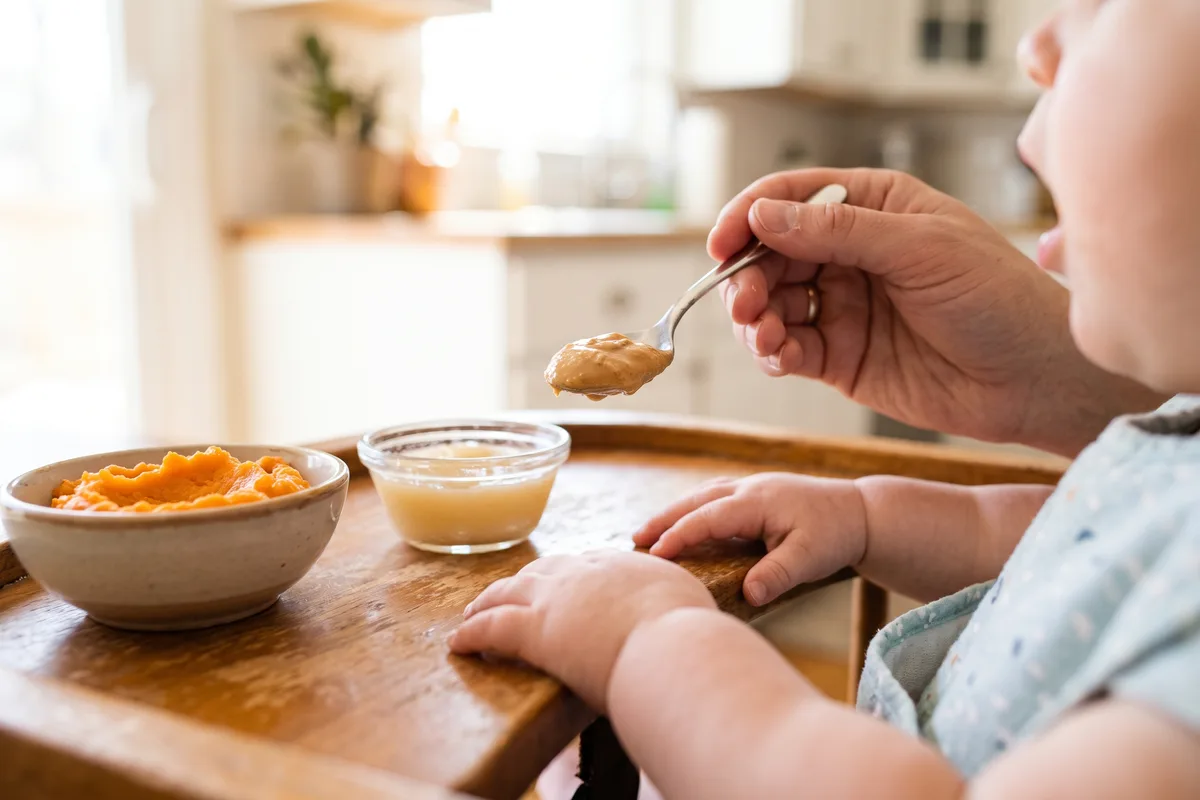
Mistakes Parents Make When Worrying About Food Allergies
- Treating a positive test as a diagnosis — skin and blood tests can be positive in children who eat the food without trouble, and only a food challenge confirms an allergy.
- Delaying allergens “to be safe” — for most babies, waiting is the riskier choice for peanut and egg.
- Calling every reaction an allergy — an intolerance causes discomfort but not anaphylaxis, and the two need different plans.
- Cutting gluten before celiac testing — the blood test can miss celiac in a child who has already stopped eating gluten.
- Believing the scariest headline — theories built on mice, cells or two rising trends aren’t proof, however confident they sound.
Frequently Asked Questions
Why do so many kids have food allergies now?
Part of the rise is better recognition, and part appears to be real, since hospital admissions for food reactions in children have climbed too. Science hasn’t found one cause. The strongest evidence points to when babies first eat allergens like peanut and egg, and eczema is the biggest risk factor.
What is the difference between a food allergy and a food intolerance?
A food allergy involves the immune system and can cause fast, severe reactions, including anaphylaxis. A food intolerance is a digestive problem, such as lactose intolerance, that causes discomfort but not that kind of reaction. Celiac disease is a third thing: an immune disorder triggered by gluten that damages the small intestine.
Is celiac disease really more common than it used to be?
Yes. Blood frozen from young adults in the early 1950s shows undiagnosed celiac was about 4 to 4.5 times rarer than in people tested recently. Better testing has also found many more cases that used to be missed.
When should I introduce peanut and egg to my baby?
Current allergy guidance is around 6 months, and not before 4 months. If your baby has severe eczema or an egg allergy, talk to your pediatrician first, because U.S. guidelines recommend evaluation before introducing peanut. Babies with no eczema or food allergy can have peanut foods introduced freely.
Do C-sections or antibiotics cause food allergies?
Not in any way that’s been proven. The C-section link is small, about 1 extra case per 100 children. Antibiotics are linked to allergy in some studies, but sick babies may get more of them, and children’s antibiotic prescriptions fell sharply after the early 1990s while allergies rose.
Does the age a baby starts gluten affect celiac risk?
No. Two large randomized trials found that introducing gluten early or late didn’t change who developed celiac. Breastfeeding didn’t change the risk either.
So, Are We Raising a More Allergic Generation?
In some ways, yes. More children really are reacting to food, and celiac really is more common than it was when our parents were kids. But a good part of what feels like an epidemic is better noticing, plus some children labeled allergic who aren’t.
No single villain explains it. What the evidence offers instead is a short list of things you can actually do: start allergens early following your pediatrician’s advice, take eczema seriously, keep your child’s diet varied, and get symptoms properly checked. That’s a lot more useful than fearing every ingredient.
If you want help keeping meals varied without a lot of extra work, our free four-week meal plan is a good place to start.
Keep family meals varied, without the extra work
Our free 4-week gluten-free meal plan comes with weekly grocery lists, so variety doesn’t have to mean more planning.