

On this page
I grew up in the ’90s. I don’t remember gluten-free menus. I don’t remember kids bringing special bread to school. I don’t remember anyone talking about gluten at all.
Today, gluten-free products take up whole sections of the grocery store, and it can feel like every third person you meet has “a thing with gluten.” So what happened? Why is everyone gluten intolerant now?
The answers you usually hear are either smug (“it’s a fad”) or scary (“they ruined the wheat”). Neither is good enough if you or your child actually has celiac disease. The story people believe about that shift shapes how seriously your diagnosis gets taken, by a server, by a relative, and sometimes by a doctor.
So for the first LGGF Investigates, I did what I would want a friend to do. As a registered nurse, I went back to the primary research: blood samples frozen in the 1950s, national survey data, wheat-breeding trials, and the randomized studies on babies and gluten. Then I graded every explanation on the evidence.
The short answer
Three things happened at once. Celiac disease was there in the ’90s but mostly undiagnosed, and it also became genuinely more common. And a much larger group of people without celiac started avoiding gluten. Changes to the wheat itself have the least evidence behind them.
Key Takeaways
- It was there, just invisible — a late-’90s study found celiac antibodies in 1 in 250 healthy US blood donors, while one well-studied Minnesota county had diagnosed only about 1 in 4,600 people by 1991.
- It also really increased — blood frozen in 1948–54 showed undiagnosed celiac at about a quarter of the rate found in comparable men decades later, and our genes can’t change that fast.
- The biggest change was outside celiac — Americans avoiding gluten without celiac roughly tripled between 2009 and 2014, while celiac itself held steady near 0.7%.
- “Modern wheat” has the weakest case — there is no good evidence wheat’s gluten content rose, and US flour use peaked in 1997.
- Test before you quit gluten — celiac testing is only reliable while you are still eating gluten, so cutting it first can hide the answer.
What Changed Since 1990
Before the evidence, the scene. Drag the slider from 1990 to today, or press play, and watch what changed around the people who had celiac disease all along.
Interactive · 1990 → today
What changed since the ’90s?
Six things that shaped how gluten problems look today, tracked year by year.
Celiac blood test
1990No tTG test yet. The protein celiac antibodies attack hasn’t been identified.
TodaytTG-IgA is the standard first screen. Most adults still get a biopsy to confirm.
How common celiac seemed
1990Considered rare. One well-studied Minnesota county had diagnosed about 1 in 4,600 people by 1991.
TodayUndiagnosed cases in the national survey have halved since 2009–10.
Food labels
1990No legal definition of “gluten-free,” and no law requiring labels to name wheat as an allergen.
TodayFDA rule in force: “gluten-free” must mean under 20 ppm gluten.
Gluten sensitivity
1990A couple of case reports from 1978 and 1980. Not a recognized condition.
TodayAbout 10% of adults self-report it; 16–30% of them react to gluten in blinded tests.
Going gluten-free
1990No national numbers yet on who avoids gluten.
Today47% of Americans call gluten-free diets a fad, up from 31% in 2013 (Mintel).
Wheat flour per American
1990Climbing back from a 1972 low of 110 lb a year.
TodayAbout 126.6 lb a year (USDA estimate).
All 27 milestones, year by year
-
1978
A first case report of “non-coeliac gluten sensitivity”
One patient whose symptoms eased off gluten, with celiac ruled out.
Ellis & Linaker, Lancet 1978
-
1990
The Celiac Disease Foundation is founded
A US patient advocacy group for celiac disease launches.
Celiac Disease Foundation
-
1997
The celiac target protein is found
Tissue transglutaminase is identified as the protein celiac antibodies attack, opening the way to a simpler blood test.
Dieterich et al., Nat Med 1997
-
1997
US wheat flour use peaks
146.8 lb per person a year. It has fallen ever since.
USDA Economic Research Service
-
1998
The first tTG blood test is cleared
The FDA clears the first test kit built on the newly found target.
FDA 510(k) K982366
-
1998
1 in 250 blood donors
Healthy US blood donors screened for celiac antibodies: 1 in 250 positive.
Not et al. 1998
-
2001
Eleven years of symptoms
A survey of 1,612 Americans with celiac finds symptoms began a mean of 11 years before diagnosis.
Green et al., Am J Gastroenterol 2001
-
2003
1 in 133
Screening 13,145 people finds celiac in 1 in 133 Americans with no risk factors, and in 1 in 22 first-degree relatives.
Fasano et al., Arch Intern Med 2003
-
2004
NIH: “greatly underdiagnosed”
A national consensus panel puts celiac at 0.5 to 1% of Americans. FALCPA is signed the same summer.
NIH Consensus Statement 2004
-
2006
Wheat goes on the label
FALCPA takes effect: packaged foods must name wheat as an allergen. Barley and rye aren’t covered.
FDA, FALCPA
-
2009
Frozen blood from the 1950s
Samples from 1948–54 show undiagnosed celiac at 0.2%, versus 0.9% in comparable men decades later. The rise is real.
Rubio-Tapia et al., Gastroenterology 2009
-
2011
“Wheat Belly” is published
The anti-wheat book reaches #1 on the New York Times bestseller list.
Penguin Random House
-
2011
A first double-blind gluten trial
68% of participants on gluten vs. 40% on placebo said their symptoms weren’t controlled.
Biesiekierski et al., Am J Gastroenterol 2011
-
2012
Gluten sensitivity gets a name
An expert panel sorts gluten reactions into allergic, autoimmune and “possibly immune-mediated” sensitivity.
Sapone et al., BMC Med 2012
-
2013
30% try to cut gluten
Almost a third of US adults tell NPD Group they’re trying to cut down on or avoid gluten.
NPD Group, 2013
-
2013
No gluten bomb in the wheat
A USDA chemist finds no clear evidence US wheat’s gluten content rose during the 20th century.
Kasarda, J Agric Food Chem 2013
-
2013
FODMAPs enter the story
Once FODMAPs were cut, the team behind the 2011 trial found no gluten-specific effect.
Biesiekierski et al., Gastroenterology 2013
-
2014
“Gluten-free” gets a legal meaning
The FDA labeling rule takes effect: under 20 ppm gluten.
FDA, 21 CFR 101.91
-
2014
The baby-feeding trials
Two randomized trials find the timing of gluten introduction doesn’t change celiac risk in high-risk babies.
Vriezinga et al.; Lionetti et al., N Engl J Med 2014
-
2016
Avoidance triples, celiac doesn’t
Gluten avoidance without celiac rose from 0.52% to 1.69% (2009–14) while celiac held near 0.7%.
Kim et al., JAMA Intern Med 2016
-
2017
Infections and celiac
In the TEDDY study, a stomach infection raised celiac-autoimmunity risk over the next three months by about a third.
Kemppainen et al., Clin Gastroenterol Hepatol 2017
-
2018
Fructans, not gluten
In 59 people on self-started gluten-free diets, fructans worsened symptoms. Gluten matched placebo.
Skodje et al., Gastroenterology 2018
-
2019
How much gluten toddlers eat
More daily gluten before age 5 was linked to higher celiac risk in 6,605 at-risk children.
Andrén Aronsson et al., JAMA 2019
-
2020
Old wheat vs. new wheat
Sixty German varieties from 1891 to 2010, grown side by side: total gluten unchanged.
Pronin et al., J Agric Food Chem 2020
-
2020
Diagnoses keep climbing
A meta-analysis finds celiac diagnoses rising about 7.5% a year over recent decades.
King et al., Am J Gastroenterol 2020
-
2024
GMO wheat cleared, not planted
USDA clears a drought-tolerant engineered wheat. As of 2026, none is commercially grown in the US.
USDA APHIS 2024; Capital Press 2026
-
2025
About 1 in 10 self-report sensitivity
A Lancet review: about 10% of adults report gluten or wheat sensitivity, and 16–30% of them react to gluten in blinded tests.
Biesiekierski et al., Lancet 2025
Sources are named with each milestone. Links to the key studies are in the article below.
The Suspects, Graded on the Evidence
Here is every theory we found for the gluten explosion, from the textbook to the viral, laid out as an evidence file. Each one gets an exhibit number and a stamped verdict.
Case file 001 · LGGF Investigates
13 suspects, graded on the evidence
Filter by verdict, or open any card for the studies behind it.
- Knownmeasured and replicated, or on the record
- Suspectedreal signals, not proven
- Weak evidencelittle or no support
- Ruled outtested or checked, and it doesn’t hold
-
Exhibit 01 Known
It was there all along, undiagnosed
The theory Plenty of people had celiac in the ’90s. Almost nobody knew.
A 1998 study found 1 in 250 healthy US blood donors carried celiac antibodies. One well-studied Minnesota county had diagnosed about 1 in 4,600 people by 1991.
See the evidence
- A 2003 screening of 13,145 Americans found celiac in 1 in 133 people with no risk factors, and in 1 in 22 first-degree relatives.
- A 2001 survey of 1,612 Americans with celiac found symptoms began a mean of 11 years before diagnosis.
- Diagnoses in that Minnesota county rose from 0.9 per 100,000 a year (1950–89) to 3.3 in the 1990s and 9.1 in 2000–01 as blood testing spread.
Not et al. 1998; Talley et al., Am J Gastroenterol 1994; Fasano et al., Arch Intern Med 2003; Green et al., Am J Gastroenterol 2001; Murray et al., Clin Gastroenterol Hepatol 2003
-
Exhibit 02 Known
Celiac itself became more common
The theory It isn’t only better diagnosis. More people actually have it.
Blood frozen in 1948–54 showed undiagnosed celiac in 0.2% of samples, versus 0.9% in comparable men tested decades later. Neither group had been diagnosed, so better testing can’t explain the gap.
See the evidence
- Finland: total prevalence went from 1.05% (1978–80) to 1.99% (2000–01) in two population samples, which the authors say better detection can’t explain.
- A 2020 meta-analysis found diagnoses rising about 7.5% a year over recent decades. That figure mixes a true rise with better detection.
- About 25 to 35% of people carry the risk genes, and only around 3% of carriers develop celiac. Genes alone can’t explain a change this fast.
Rubio-Tapia et al., Gastroenterology 2009; Lohi et al., Aliment Pharmacol Ther 2007; King et al., Am J Gastroenterol 2020; Caio et al., BMC Med 2019
-
Exhibit 03 Known
Better tests, labels and awareness
The theory Once doctors could test easily and patients knew to ask, hidden cases surfaced.
The protein celiac antibodies attack was identified in 1997, the first test kit built on it was cleared in 1998, and an NIH panel called celiac “greatly underdiagnosed” in 2004.
See the evidence
- FALCPA (signed 2004, in force 2006) made packaged foods name wheat. The FDA’s 20 ppm “gluten-free” rule took effect in 2014.
- The Celiac Disease Foundation was founded in 1990 and Beyond Celiac in 2003.
- In the national NHANES survey, undiagnosed celiac fell from 0.6% to 0.3% between 2009–10 and 2013–14.
Dieterich et al., Nat Med 1997; FDA 510(k) K982366; NIH Consensus Statement 2004; FDA (FALCPA; 21 CFR 101.91); Choung et al., Mayo Clin Proc 2017
-
Exhibit 04 Known
A much bigger group started avoiding gluten
The theory Most people eating gluten-free today don’t have celiac at all.
Between 2009 and 2014, Americans avoiding gluten without celiac went from 0.52% to 1.69%, roughly triple, while celiac itself held near 0.7%.
See the evidence
- In 2013, 30% of US adults told NPD Group they were trying to cut down on or avoid gluten.
- Mintel found 65% of gluten-free buyers in 2013 thought the food was healthier, and 27% bought it to lose weight.
- “Wheat Belly” (2011) and “Grain Brain” (2013) both reached #1 on the New York Times bestseller list.
Kim et al., JAMA Intern Med 2016; Choung et al., Mayo Clin Proc 2017; NPD Group 2013; Mintel 2013
-
Exhibit 05 Suspected
Gluten sensitivity without celiac
The theory A separate, real condition explains many of today’s gluten problems.
In blinded challenges, only 16 to 30% of people who report gluten sensitivity react to gluten specifically. Fructans and the nocebo effect account for much of the rest.
See the evidence
- Oslo, 2018: 59 people on self-started gluten-free diets. Hidden fructans worsened symptoms; gluten was no different from placebo.
- Pooled blinded trials: 38 of 231 people (16%) had gluten-specific symptoms, and about 40% showed a nocebo response.
- A subset of people reporting wheat sensitivity show blood markers of gut-cell damage that improve off wheat.
- In one UK city, self-reported sensitivity rose from 12.9% to 32.8% between 2012 and 2015, with no change in celiac.
Skodje et al., Gastroenterology 2018; Molina-Infante & Carroccio, Clin Gastroenterol Hepatol 2017; Uhde et al., Gut 2016; Croall et al., Nutrients 2019; Biesiekierski et al., Lancet 2025
-
Exhibit 06 Suspected
Early-life infections and environment
The theory Something in early childhood tips genetically at-risk kids into celiac.
In a study following 6,327 at-risk children, a stomach infection raised the risk of celiac autoimmunity over the next three months by about a third.
See the evidence
- Russian Karelia vs. Finland: similar grain diets and partly shared ancestry, yet confirmed celiac was less than a quarter as common on the Russian side (4 Karelian cases, so treat it as a signal).
- In Denver at-risk children, each additional rotavirus infection was linked to higher risk.
- In mice, a common reovirus broke tolerance to gluten. The matching human result was not statistically significant.
- A 2024 umbrella review rated infections the strongest non-genetic factor, but only “suggestive.”
Kemppainen et al., Clin Gastroenterol Hepatol 2017; Kondrashova et al., Ann Med 2008; Stene et al., Am J Gastroenterol 2006; Bouziat et al., Science 2017; Tsali et al., Eur J Gastroenterol Hepatol 2024
-
Exhibit 07 Suspected
How much gluten toddlers eat
The theory Kids who eat more gluten early have higher odds of celiac.
In 6,605 genetically at-risk children, each extra daily gram of gluten before age 5 was linked to a higher risk of celiac disease.
See the evidence
- For reference, average intake at age 2 was about 3.7 grams a day.
- The study is observational and only covers high-risk children. The authors call for a randomized trial before anyone changes feeding advice.
Andrén Aronsson et al., JAMA 2019
-
Exhibit 08 Weak evidence
Modern wheat has more gluten
The theory Breeders turned wheat into something more toxic.
A USDA review of a century of US data found no clear rise in wheat’s gluten content. Sixty German varieties from 1891 to 2010, grown side by side, showed total gluten unchanged.
See the evidence
- US flour use peaked at 146.8 lb per person in 1997 and fell to an estimated 126.6 lb in 2025, while celiac diagnoses kept climbing.
- Added vital wheat gluten roughly tripled after 1977, but it is small next to the gluten in flour, and its role is unproven.
- A 2010 lab study found one celiac epitope more common in modern varieties. A 2021 side-by-side study found old and modern wheat similar.
Kasarda, J Agric Food Chem 2013; Pronin et al., J Agric Food Chem 2020 and Food Chem 2021; USDA Economic Research Service; van den Broeck et al., Theor Appl Genet 2010
-
Exhibit 09 Weak evidence
Glyphosate
The theory The weedkiller sprayed on crops causes celiac.
The idea comes from a 2013 hypothesis paper with no original data. A PubMed search found no epidemiological study linking glyphosate to celiac.
See the evidence
- A 2020 review found glyphosate and gut-bacteria research “suffers from numerous methodological weaknesses.”
Samsel & Seneff, Interdiscip Toxicol 2013; Barnett & Gibson, Front Microbiol 2020; PubMed search, October 2, 2026
-
Exhibit 10 Weak evidence
Food additives and ultra-processed food
The theory A food-processing enzyme or emulsifiers made gluten more reactive.
The leading version, microbial transglutaminase, is an explicit hypothesis. We found no human study linking additives or ultra-processed food to celiac.
See the evidence
- Lab and mouse studies on transglutaminase point in both directions.
- An emulsifier feeding trial in healthy adults changed gut bacteria, but it didn’t test celiac.
Lerner & Matthias, Nutr Rev 2015; Zhou et al. 2017; Rossi et al. 2021; Chassaing et al., Gastroenterology 2022
-
Exhibit 11 Weak evidence
Childhood antibiotics
The theory Antibiotics disrupt gut bacteria and trigger celiac.
Antibiotics are linked to later celiac diagnoses, but the link is strongest in people whose biopsies were normal. That points to more testing, not to the drugs.
See the evidence
- 1.7 million Danish and Norwegian children: the link weakened to non-significant after accounting for infections.
- The TEDDY cohort found no link at all.
- A 2026 Swedish study’s authors say celiac concerns “should not deter appropriate antibiotic use.”
Dydensborg Sander et al., Gastroenterology 2019; Kemppainen et al., JAMA Pediatr 2017; Ulnes et al., Clin Gastroenterol Hepatol 2026; Mårild et al., BMC Gastroenterol 2013
-
Exhibit 12 Ruled out
GMO wheat
The theory Genetically modified wheat changed the gluten.
No genetically engineered wheat is commercially grown in the US. The first variety cleared for US farming, in 2024, is drought-tolerant and still years from commercial planting.
See the evidence
- That variety, HB4, is grown commercially in Argentina and Brazil. Nothing indicates it changes gluten.
- The FDA completed its safety consultation on it in 2022.
USDA APHIS 2024; FDA 2022; Capital Press, May 4, 2026
-
Exhibit 13 Ruled out
When babies first eat gluten
The theory Introducing gluten too early or too late, or not breastfeeding, causes celiac.
Two randomized trials published in 2014 tested this in high-risk babies. Neither the timing of gluten nor breastfeeding changed the risk.
See the evidence
- PreventCD (944 infants): small amounts of gluten at 16–24 weeks vs. placebo. Celiac by age 3: 5.9% vs. 4.5%, not a significant difference.
- CELIPREV (832 newborns): gluten at 6 vs. 12 months. By age 5, no difference.
Vriezinga et al., N Engl J Med 2014; Lionetti et al., N Engl J Med 2014
How we graded the evidence
The four verdicts
- Known: measured directly and replicated, or a matter of public record, such as a law or a national survey.
- Suspected: real signals in strong studies, such as large prospective cohorts, but not proven to cause the rise.
- Weak evidence: hypothesis papers, small lab studies, or ideas the measured data contradict.
- Ruled out: tested in randomized trials or checked against the record, and it doesn’t hold.
What we read
More than 50 primary sources: studies, national surveys, and FDA and USDA records. Each study was checked against its PubMed record before it went into this article, and every number here comes from those sources.
Funding we flagged
The 2011 and 2014 expert meetings that defined gluten sensitivity were funded by Dr. Schär, a gluten-free food maker. Both authors of the transglutaminase theory list the AESKU.KIPP Institute as their affiliation, and their follow-up study used AESKULISA test kits. We note this so you know, not because it makes the findings wrong.
What this isn’t
This is a review of research, not medical advice. It can’t tell you whether you have celiac disease. A blood test and your doctor can.
Reviewed October 2, 2026 by Katie Wilson, RN.
What We Know: It Was Hidden, and It Grew
The first answer to “why did nobody have it?” is that plenty of people did. They just didn’t know.
When researchers screened 13,145 people across the US, the 2003 multicenter study in Archives of Internal Medicine found celiac disease in 1 in 133 people with no risk factors at all. A 2001 survey of 1,612 Americans with celiac found symptoms had started a mean of 11 years before diagnosis.
Even at the late-’90s blood-donor rate of 1 in 250, a school of 500 kids would statistically have had two. They may have been the kids with “a sensitive stomach,” the tiredness nobody explained, or the slow growth everyone blamed on genes.
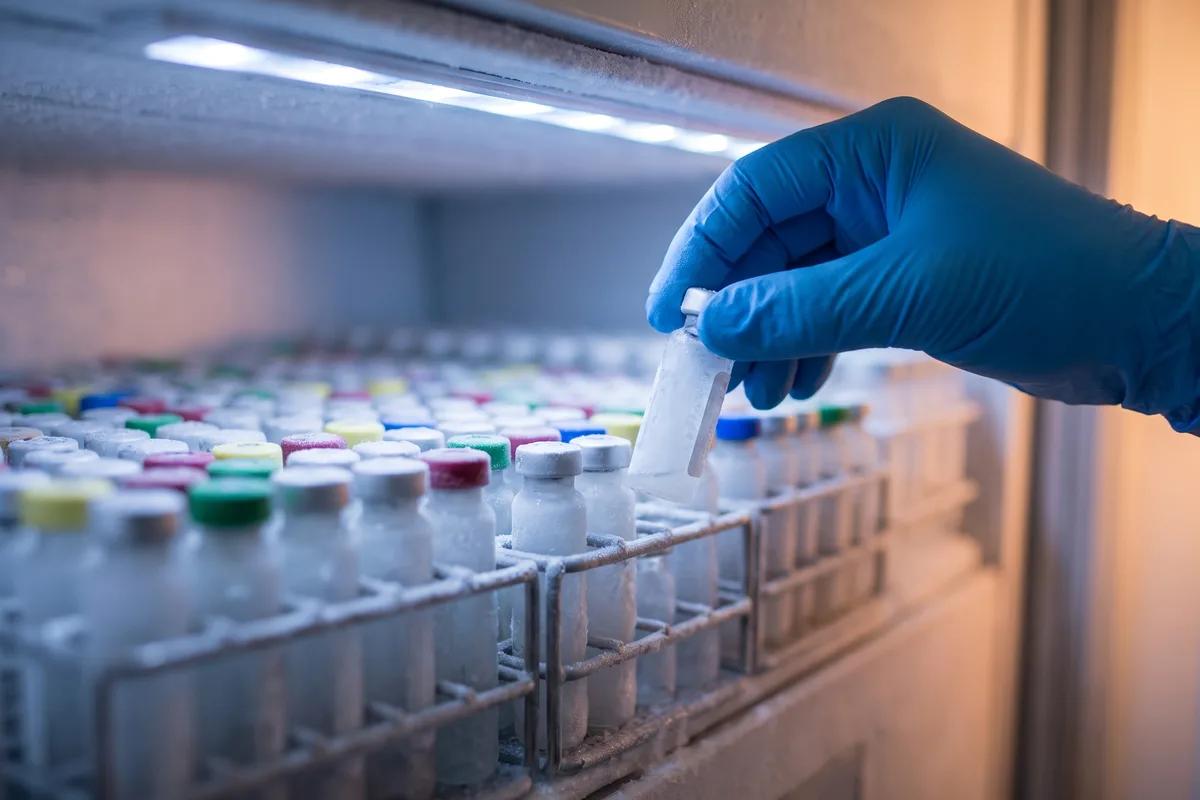
But hidden cases are only half the story, and this is the part that surprised me most. In 2009, researchers thawed blood drawn from 9,133 people at Warren Air Force Base between 1948 and 1954 and tested it for celiac antibodies. The study in Gastroenterology found undiagnosed celiac in 0.2% of them, compared with 0.9% of similar men tested decades later.
Nobody in either group had been diagnosed, so better testing cannot explain that gap. Celiac disease really did become more common. Finland saw the same thing: total prevalence nearly doubled between 1978–80 and 2000–01, and the researchers concluded the rise could not be attributed to better detection.
Better tools then pulled those cases into the open. Researchers identified the protein celiac antibodies attack in 1997, the FDA cleared the first test kit built on it in 1998, and a 2004 NIH panel called celiac “greatly underdiagnosed.” If you want the full prevalence story, our deep dive on whether celiac disease is actually more common now goes number by number.
What We Know: A Bigger Group Started Avoiding Gluten
The other half of what you noticed has very little to do with celiac. In the national NHANES health survey, which tests every participant’s blood, the share of Americans avoiding gluten without celiac went from 0.52% in 2009–10 to 1.69% in 2013–14. The 2016 analysis in JAMA Internal Medicine found celiac itself held steady over the same years.
The culture moved even faster than the diet did. In 2013, 30% of US adults told the market researcher NPD Group they were trying to cut down on or avoid gluten. Mintel found 65% of gluten-free buyers that year thought the food was healthier, and 27% were buying it to lose weight. “Wheat Belly” (2011) and “Grain Brain” (2013) both hit number one on the New York Times bestseller list.
Some of those people do react to something. Gluten sensitivity without celiac got its formal classification from an expert panel in 2012, and a subset of people who report wheat sensitivity show blood markers of gut-cell damage that improve off wheat. But in blinded challenges, only 16 to 30% of people who report gluten sensitivity react to gluten specifically, according to a 2025 review in The Lancet.
The rest is often something else. In a 2018 Oslo trial in Gastroenterology, 59 people on self-started gluten-free diets ate hidden gluten, fructans or placebo for a week each. Fructans, a fermentable carb that often comes in the same foods as gluten, made symptoms worse. Gluten did no worse than the placebo.
What Researchers Suspect
If celiac genuinely increased, something in our environment changed, because genes can’t shift that fast. About 25 to 35% of people carry the genes that make celiac possible, yet only around 3% of those carriers ever develop it. The genes load the gun. Researchers are still working out what pulls the trigger.
Early-childhood infections are the strongest lead so far. In the TEDDY study, which follows thousands of genetically at-risk children in the US and Europe, a stomach infection raised the risk of celiac autoimmunity over the next three months by about a third. And children in Russian Karelia, who share part of their ancestry with Finns and eat similar grains, had confirmed celiac less than a quarter as often as children in neighboring Finland.
The amount of gluten in early childhood is the other suspect. A 2019 TEDDY analysis in JAMA of 6,605 at-risk children linked each extra daily gram of gluten before age 5 to a higher risk of celiac disease. It is observational, it only covers high-risk kids, and the authors call for a trial before anyone changes feeding advice.
Our guide to introducing gluten when celiac runs in the family walks through what that means in practice.
Where the Evidence Is Weak
The most popular explanation online is that modern wheat was bred into something more toxic. It is also the one with the least support. A USDA chemist’s review in 2013 found no clear evidence that the gluten content of US wheat rose during the 20th century. When German researchers grew 60 wheat varieties registered between 1891 and 2010 side by side, total gluten was unchanged.
The timing doesn’t fit either. Per-person US flour use peaked at 146.8 pounds in 1997 and has fallen since, to an estimated 126.6 pounds in 2025, while celiac diagnoses kept climbing. The one real change Kasarda found was added vital wheat gluten in processed food, which roughly tripled after 1977. Even he called its role “difficult to say,” since it is small next to the gluten we get from flour.
The rest of the usual suspects are weaker still. The glyphosate theory comes from a 2013 hypothesis paper with no original data, and we could not find a single epidemiological study linking the weedkiller to celiac. Blaming GMO wheat runs into a simple fact: no genetically engineered wheat is commercially grown in the US.
Food additives and ultra-processed food are plausible ideas, but we found no human study linking them to celiac. Childhood antibiotics are associated with later diagnoses, though the link is strongest in people whose biopsies were normal. That pattern points to more testing among people who see doctors more often, not to the drugs causing celiac.
What This Means If You’re Wondering About Gluten
None of this history changes what you should do today, but it does clarify it. Celiac is common, often hidden, and serious. A trend is not a diagnosis, in either direction.

Get tested before you change anything. The NIDDK says doctors don’t recommend starting a gluten-free diet before testing, because the diet can affect the results. The usual first step is a tTG-IgA blood test, and most adults then need a biopsy to confirm.
Bring These to Your Doctor
- Your symptoms, including the non-gut ones: fatigue, headaches, joint pain, an itchy rash
- Whether a parent, sibling or child has celiac (1 in 22 first-degree relatives has it)
- Whether you have already cut back on gluten, and for how long
- A request for the celiac blood test (tTG-IgA)
If celiac is ruled out and you still feel better without wheat, that is worth taking seriously too. Ask about FODMAPs, since fructans rather than gluten were the trigger in the Oslo trial, and work with a doctor or dietitian rather than guessing. Our undiagnosed celiac symptom checklist and our guide to reading your celiac blood work will help you prepare.
Mistakes People Make With the Gluten Headlines
- Quitting gluten “to see if it helps” — it may help, but it can also throw off celiac testing. Test first.
- Treating sensitivity and celiac as the same thing — celiac is an autoimmune disease in which gluten damages the small intestine, and small amounts count. Sensitivity has no test of its own and is diagnosed by ruling celiac out.
- Assuming ancient grains are safe — einkorn, emmer, spelt, farro and khorasan are all forms of wheat, and the Celiac Disease Foundation lists every one of them as a gluten source.
- Reading “contains wheat” as the whole story — US allergen labeling law covers wheat, not barley or rye. Malt is a gluten source too, and it usually comes from barley.
- Deciding celiac is a fad because gluten-free is trendy — the trend and the disease are separate stories, and the disease is the one with frozen blood samples behind it.
- Blaming yourself or your parents — randomized trials found that when babies first ate gluten, and whether they were breastfed, did not change their celiac risk.
Frequently Asked Questions
Why is everyone gluten intolerant now?
Most of them aren’t, at least not to gluten itself. Celiac disease affects about 0.7% of Americans; it was common but mostly undiagnosed in the ’90s, and it has genuinely increased since the 1950s. The bigger change is how many people without celiac avoid gluten, which roughly tripled between 2009 and 2014, while blinded tests find only 16 to 30% of people who report gluten sensitivity react to gluten specifically.
Does modern wheat have more gluten than it used to?
There is no good evidence that it does. A 2013 USDA review of a century of US data found no clear rise in wheat’s gluten content, and a 2020 trial growing 60 German varieties from 1891 to 2010 side by side found total gluten unchanged. US flour consumption has also fallen since its 1997 peak while celiac diagnoses kept climbing.
Why do so many people say gluten bothers them if they don’t have celiac?
It is usually a mix of causes. Some people have non-celiac gluten sensitivity, but in blinded trials only 16 to 30% of people who report it react to gluten specifically. Fructans, a fermentable carb that often comes in the same foods as gluten, and the nocebo effect account for a large share of the rest.
Did the gluten-free trend make celiac disease more common?
No. The trend describes people without celiac who chose to avoid gluten, and that group roughly tripled in the US between 2009 and 2014. Over the same years, celiac disease held steady at about 0.7% of the population.
Should I get tested for celiac if gluten seems to bother me?
Yes, and before you cut gluten out. Doctors don’t recommend starting a gluten-free diet before testing because it can affect the results. The usual first step is a tTG-IgA blood test, and most adults then need a biopsy to confirm.
Can breastfeeding or the timing of gluten prevent celiac disease?
Not according to two randomized trials published in 2014. Giving high-risk babies small amounts of gluten early, delaying gluten to 12 months, or breastfeeding did not change their risk of developing celiac disease.
The Verdict on the ’90s
So why did nobody seem to have a gluten problem in the ’90s? They did. Celiac disease was common and mostly undiagnosed, and it has also become genuinely more common since the 1950s for reasons researchers are still pinning down. On top of that, a far larger group of people without celiac started avoiding gluten, and that is most of what you see in the grocery aisle.
The wheat didn’t turn on us. The evidence points to our environment, our tests and our culture changing around it. The most useful thing to take from all of this is simple: if gluten seems to be your problem, get tested before you quit it.
Just found out gluten really is your problem?
Our First 30 Days guide is the plan we wish we’d had: a day-by-day transition plan, a label-reading cheat sheet and a pantry restocking checklist.
Something changed. Now you know what it was, and what to do about it.