

In this guide
Gluten-Free Travel
Yes, you can travel gluten-free — safely, and without spending the whole trip hungry or anxious. The secret isn’t luck; it’s a repeatable system you set up before you leave: research the destination, pack a backup stash, and know how to explain your needs wherever you land.
I’m Katie, a registered nurse and a gluten-free mom who has traveled everywhere from road trips to cruises with celiac in the family. This hub is the playbook I use for every trip, plus deeper guides for the trickiest kinds of travel.
Plan Before You Go
The trips that go smoothly are the ones you set up before you leave. A few minutes of planning turns a stressful unknown into a routine you can repeat for every destination.
Your pre-trip gluten-free checklist
- Research dedicated gluten-free or celiac-friendly restaurants near where you’ll stay.
- Call ahead — airlines, cruise lines, and resorts can flag a gluten-free meal request in advance.
- Book lodging with a fridge or kitchenette so you always have a safe fallback.
- Print a restaurant card in the local language if you’re traveling abroad.
- Learn the local words for “wheat,” “gluten,” and “celiac.”
Pack a Gluten-Free Travel Kit
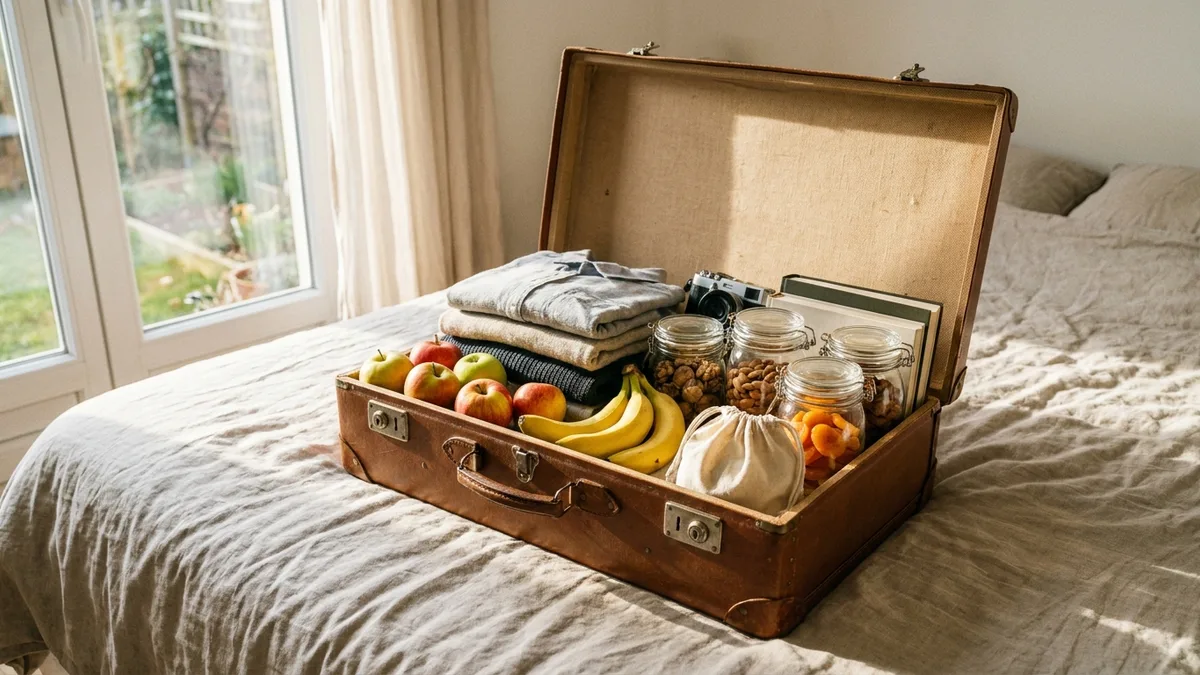
A backup stash is what keeps a delayed flight or a no-options rest stop from leaving you hungry. Pack more shelf-stable food than you think you’ll need, plus the tools that make eating out easier.
- Shelf-stable snacks — certified gluten-free bars, crackers, nut butter packets, trail mix, and jerky.
- A restaurant card — explains your needs in the local language when there’s a barrier.
- Hard-to-replace staples — a few certified gluten-free items you rely on and may not find at your destination.
- Wipes and a zip bag — to clean a tray table or surface and store snacks safely.
Flights, Road Trips & Getting There
Transit is where options get thin, so plan to feed yourself. The TSA lets solid foods through security, so a carry-on of gluten-free snacks travels with you on any flight — and most airlines’ onboard food isn’t safe to count on.
For road trips, map out gluten-free-friendly chains along your route, pack a cooler for the stretches without good options, and keep a snack bag within reach so hunger never forces a risky choice.
Trip Guides
Deeper guides for specific kinds of travel. More are on the way — cruises is just the start.
Frequently Asked Questions
These are the questions I hear most from gluten-free travelers. As always, if you have celiac disease or another medical condition, follow the guidance of your own care team when assessing risk on a trip.
Can you really travel gluten-free safely?
Yes. With a little planning, people with celiac disease travel safely all the time — by car, plane, and cruise, at home and abroad. The key is preparing before you go by researching where you’ll eat, packing backup food, and learning how to communicate your needs clearly at your destination.
How do I bring gluten-free food on a plane?
The TSA allows solid foods through security, so you can pack gluten-free snacks, sandwiches, and bars in your carry-on. (Spreadable or liquid items over 3.4 oz, like yogurt or hummus, follow the liquids rule.) Packing your own food is the simplest way to stay safe in transit, since airport and in-flight options are limited.
What's the easiest kind of trip for someone with celiac disease?
Cruises and all-inclusive resorts are often easiest because you can arrange gluten-free meals in advance with one kitchen for the whole trip. Destinations with strong gluten-free awareness — such as Italy and parts of Europe — are also very manageable. Our trip guides below break down the specifics.
How do I explain gluten-free needs in another language?
Carry a printed restaurant card that explains, in the local language, that you have celiac disease and which foods you must avoid. Handing it to your server removes the guesswork and the language barrier, and it signals that this is a medical need rather than a preference.
What should I pack for a gluten-free trip?
Pack more shelf-stable snacks than you think you’ll need (bars, crackers, nut butter packets, jerky), a restaurant card for your destination, and any certified gluten-free staples you can’t easily replace. A small backup stash means a delayed flight or a tricky meal never leaves you stuck.
Is it safe to eat out at my destination?
Often, yes — but it depends on the destination’s gluten-free awareness and your own sensitivity. Research dedicated gluten-free or celiac-friendly restaurants before you go, read recent reviews, and confirm preparation with staff when you arrive. When in doubt, fall back on naturally gluten-free whole foods and your packed snacks.
Medically reviewed and last updated 2026-06-02.